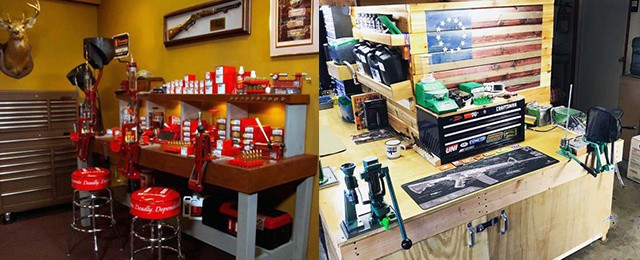

Let’s face it; buying pricey factory match-grade rounds can get rather expensive after a while. Luckily, having own reloading room alongside plenty of spare time makes affordable, accurate ammo easily attainable for most. When it comes to reloading being cheaper, well, you can sort of throw that out of the window when you consider that you’ll probably end up shooting more often.
Of course, if you are a savvy shopper when it comes to buying up primers, powder, and bullets, you can cut your costs significantly. But in reality, taking advantage of efficient powders, building specialty purpose loads, mastering accuracy, and loading up obsolete categories can be far more rewarding than saving a few bucks here and there.
The truth is, reloading has its pros and cons, and I won’t bore you to death with the details. Instead, you’ll find the reloading bench ideas and room designs below.
Regardless if you’re looking for a small workspace or a grand-scale set up to increase your zombie supply stash, you’ll find plenty of inspiration to create the ultimate space.
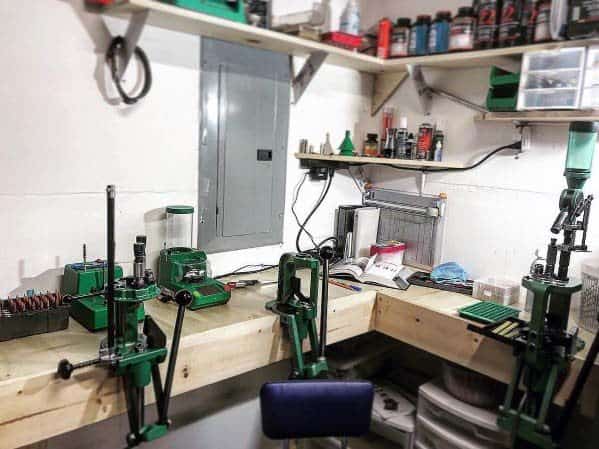
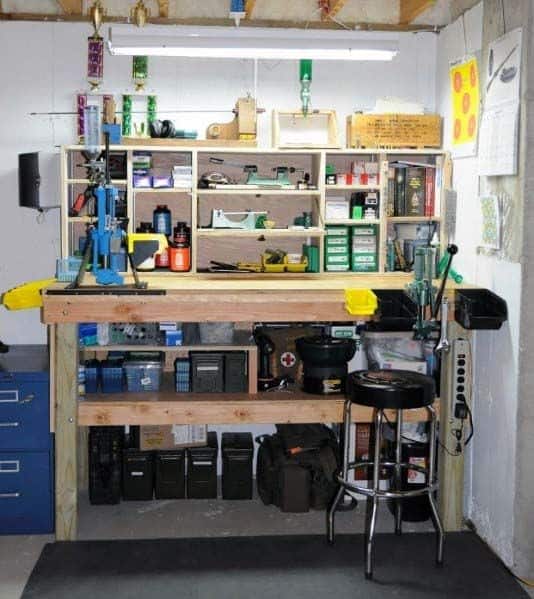
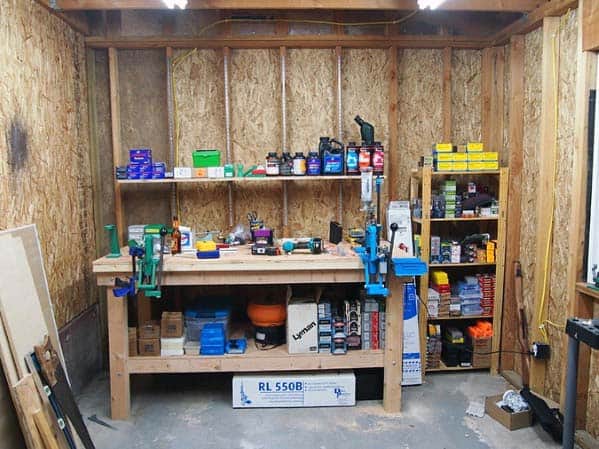
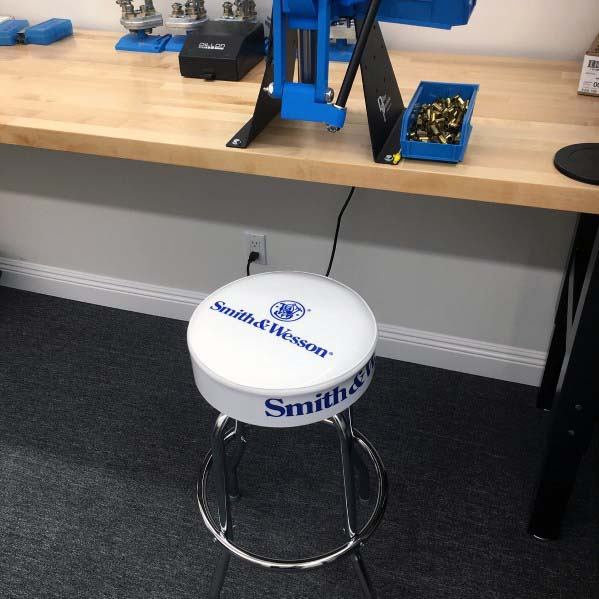
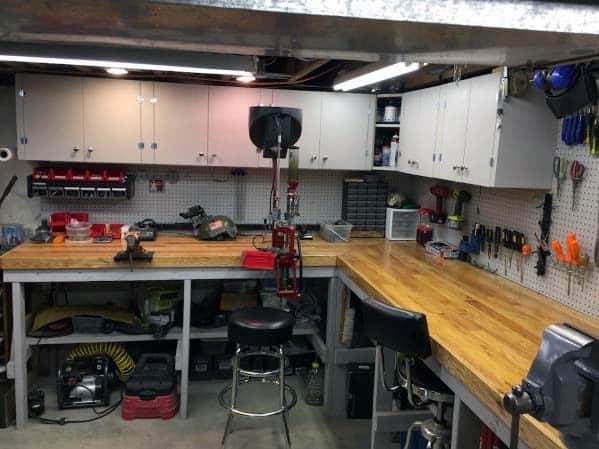

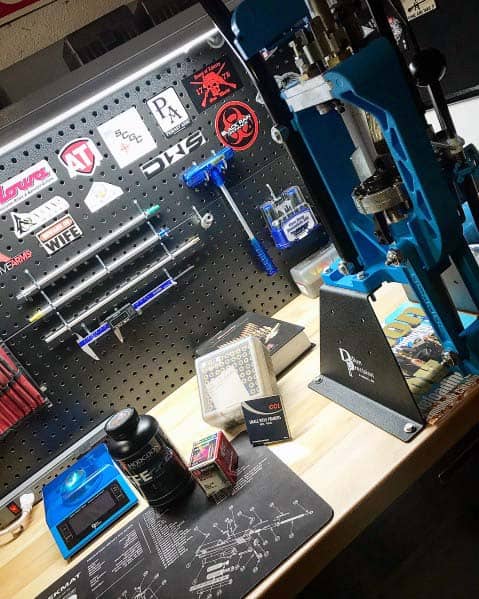
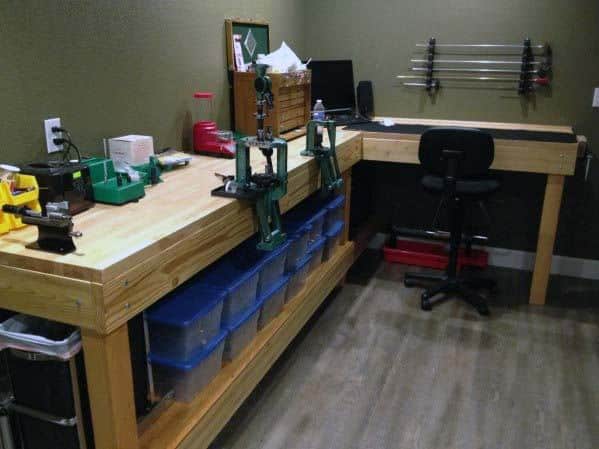
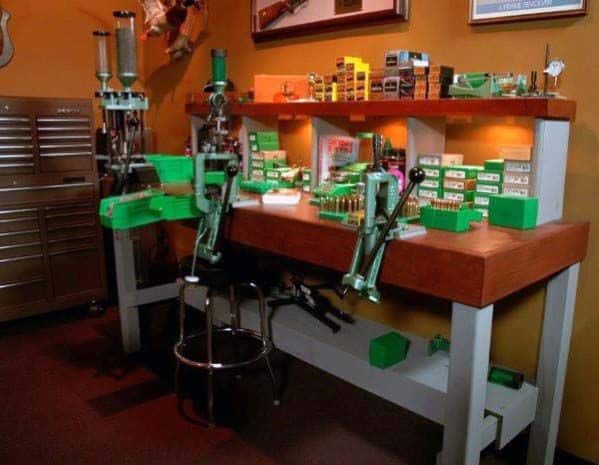
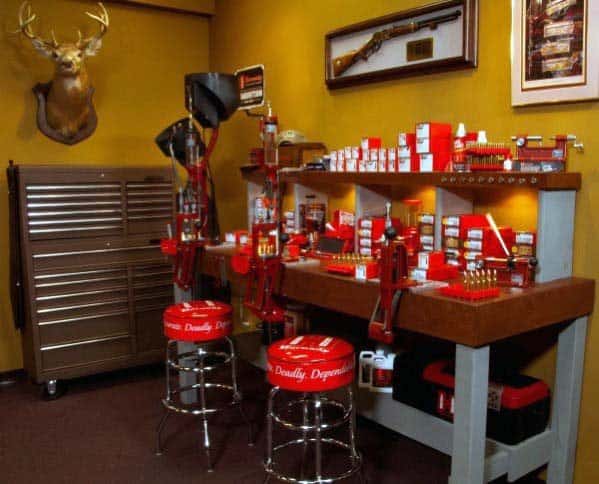
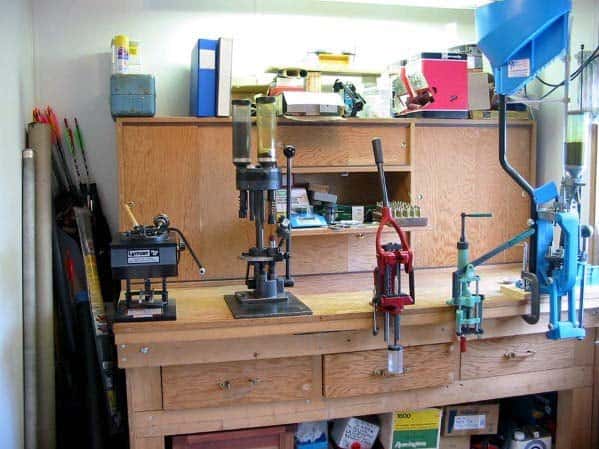
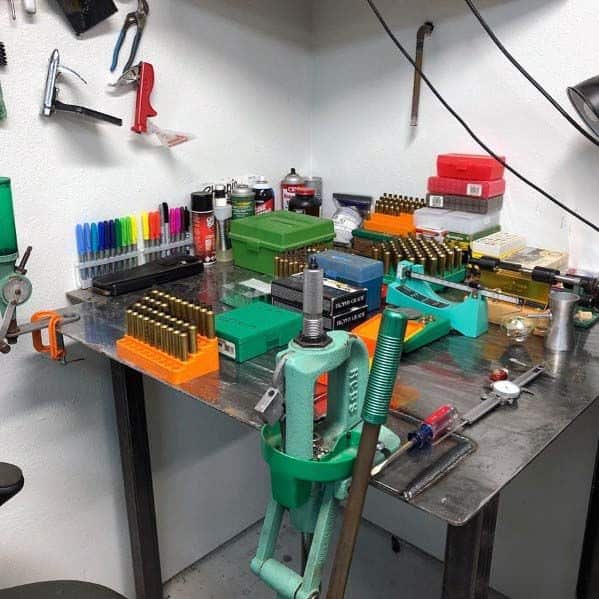
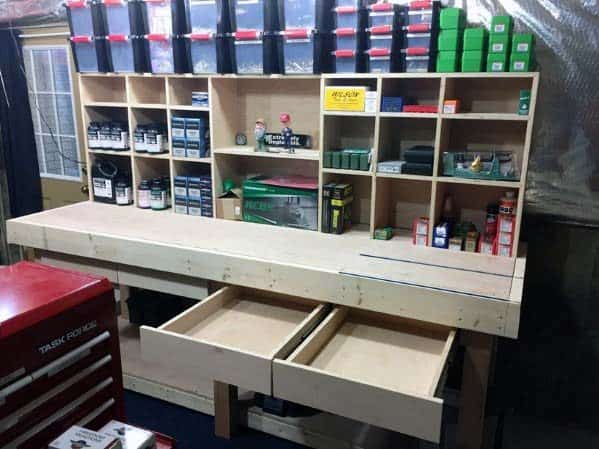
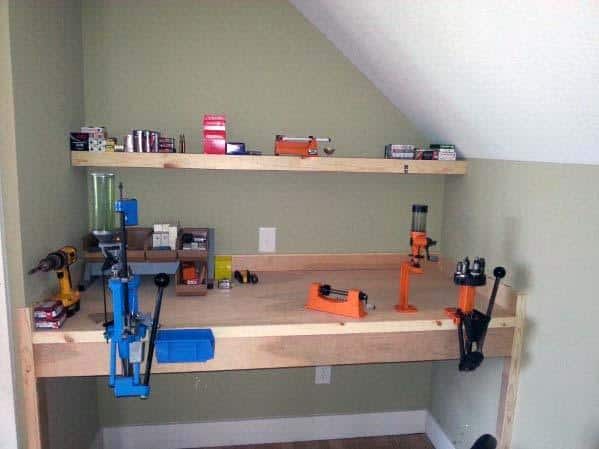
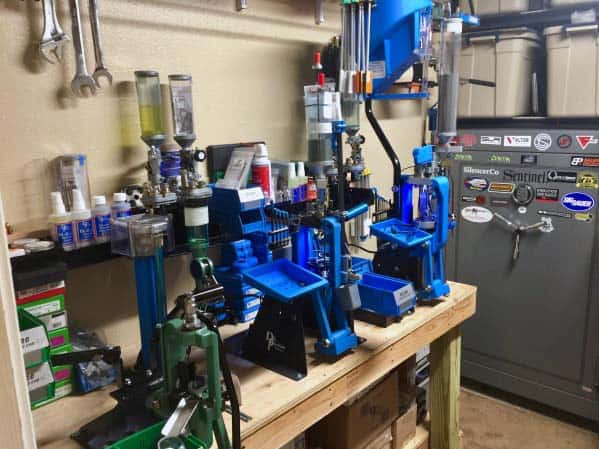
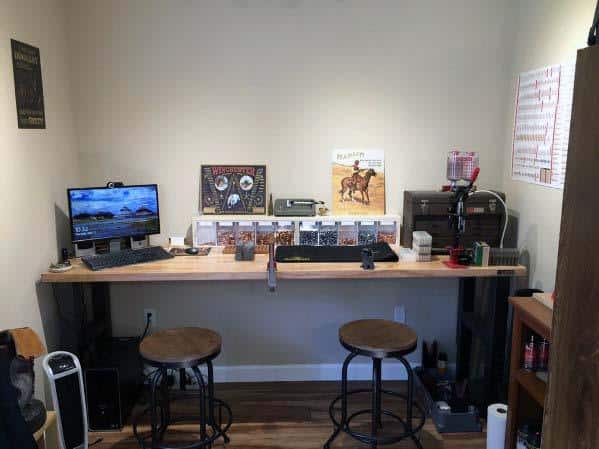
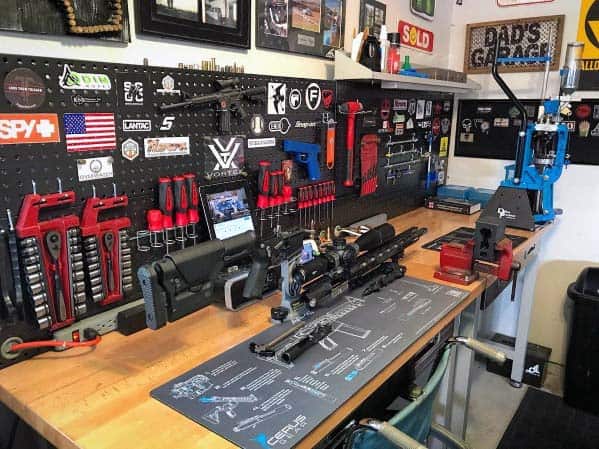
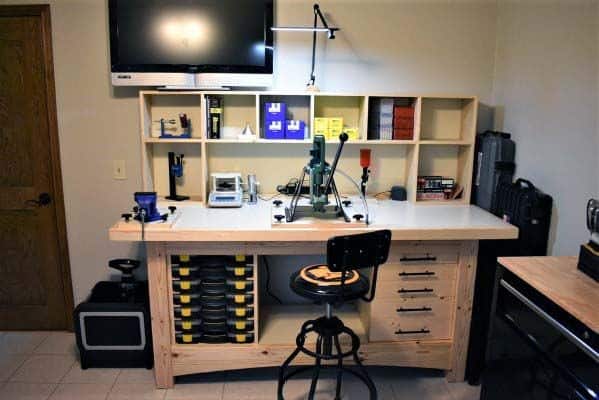
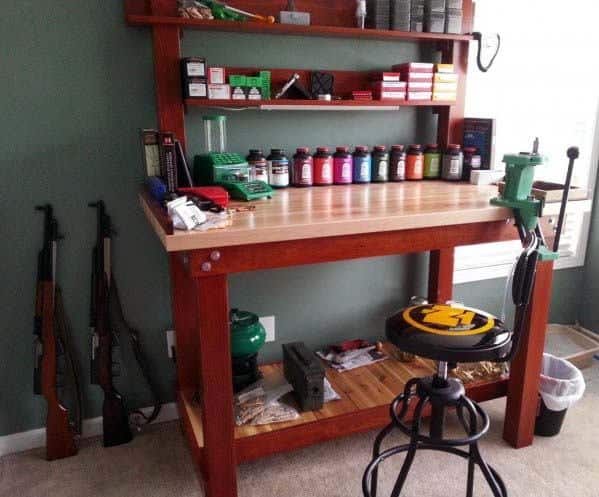
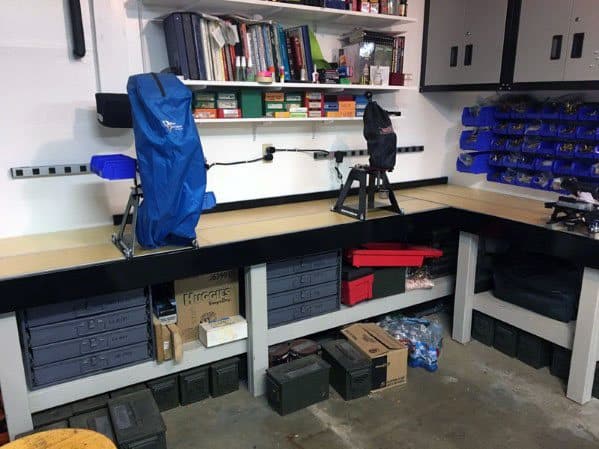
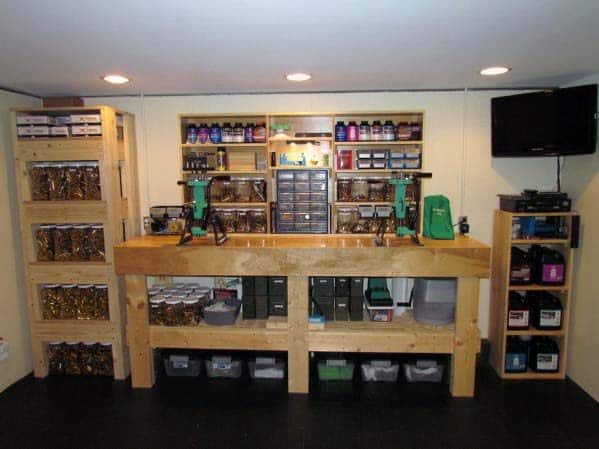
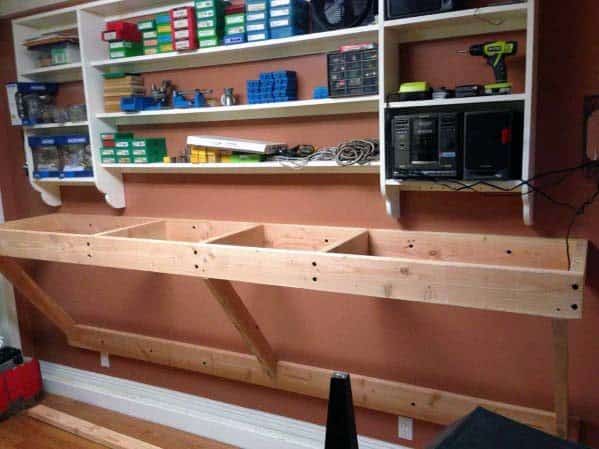
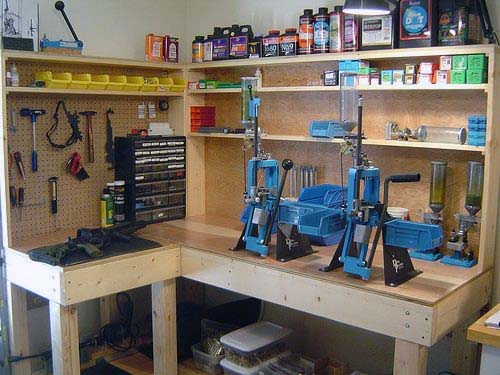
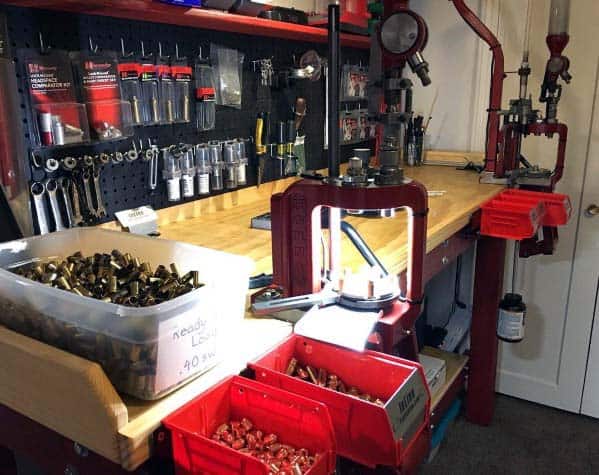
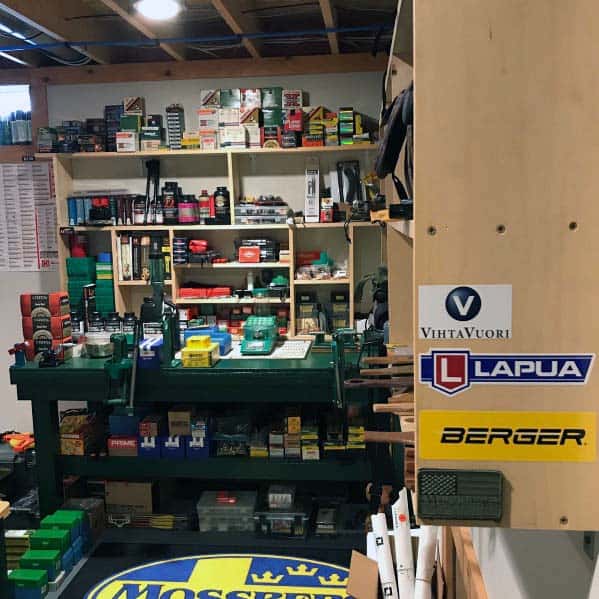
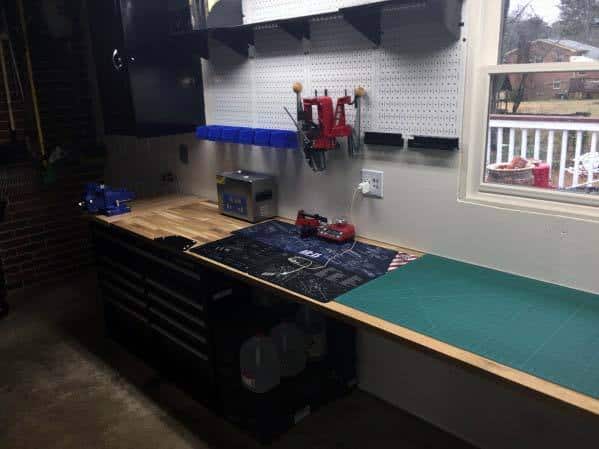
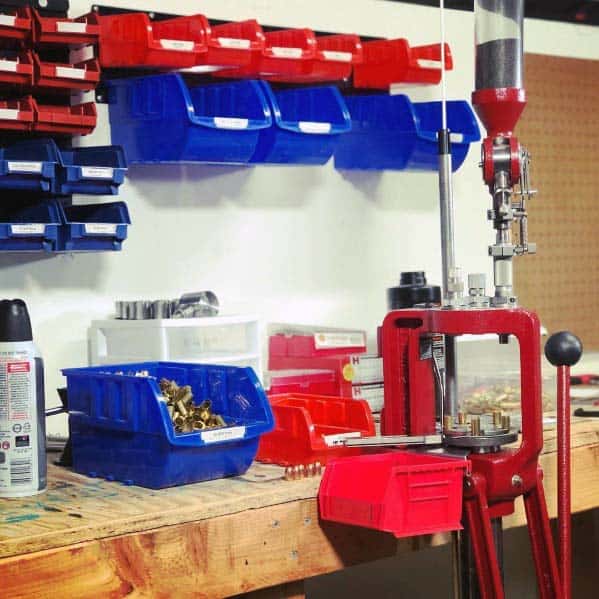
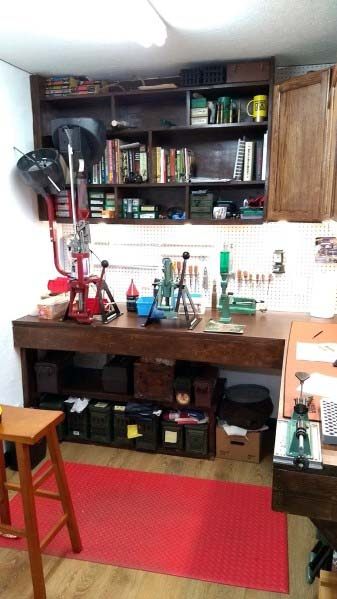
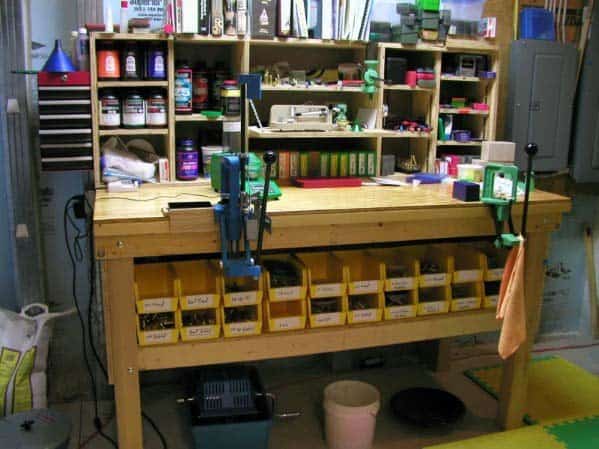
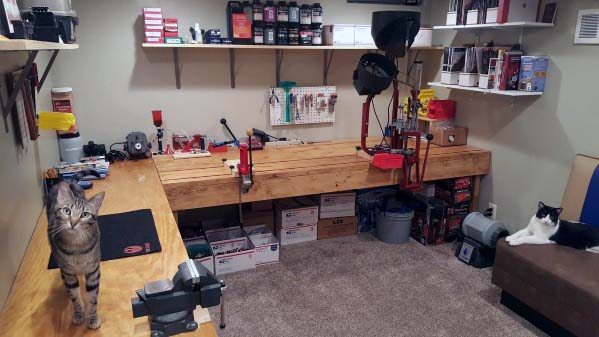
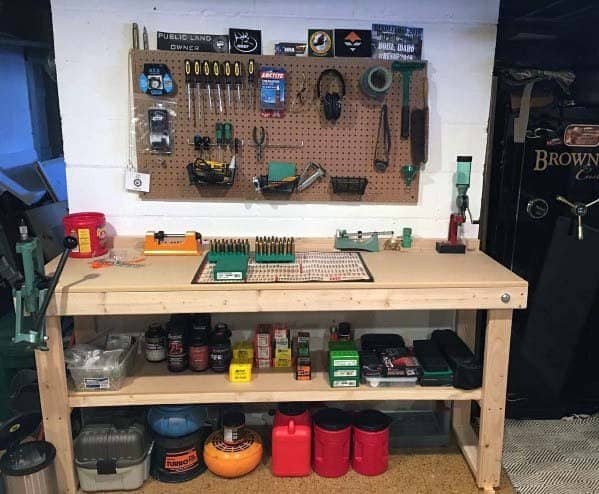
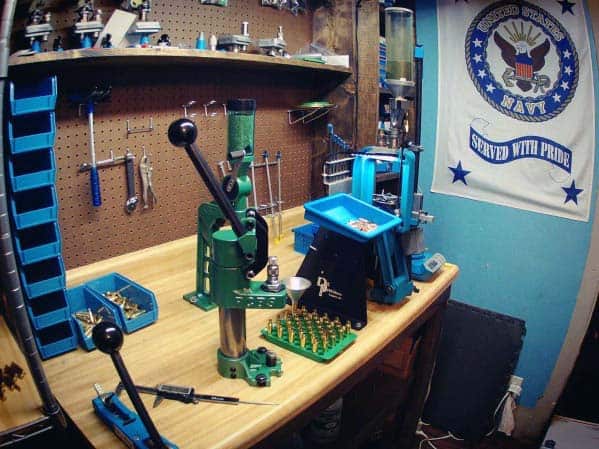
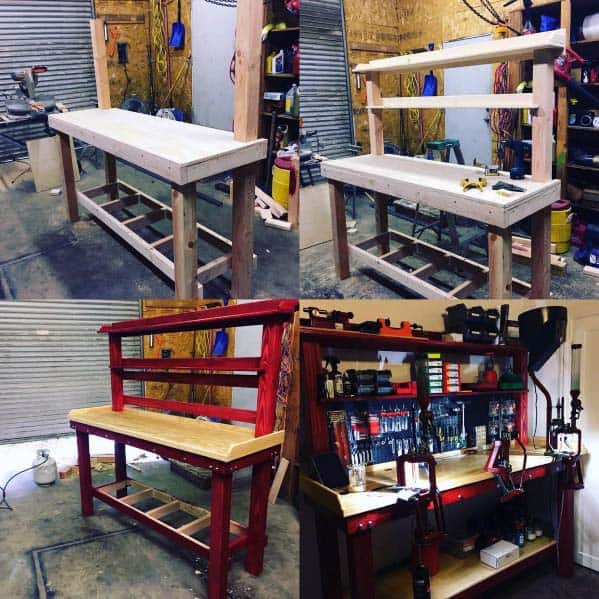
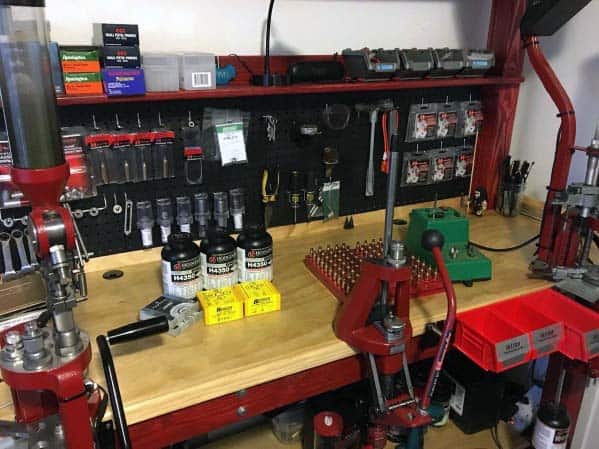
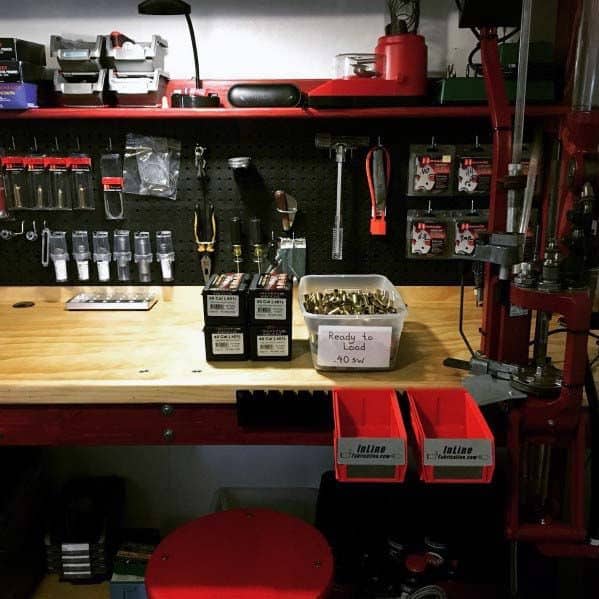
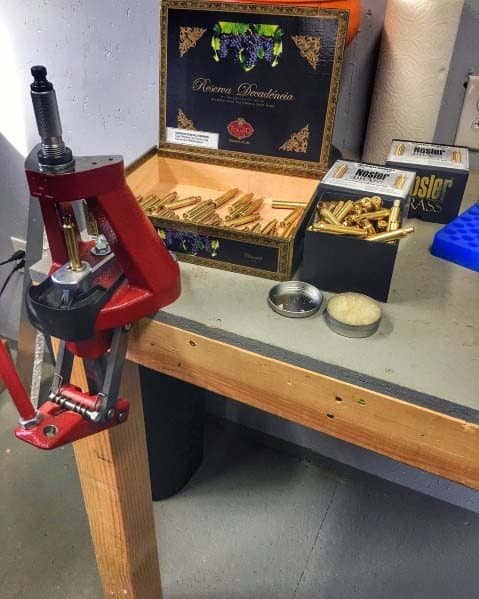
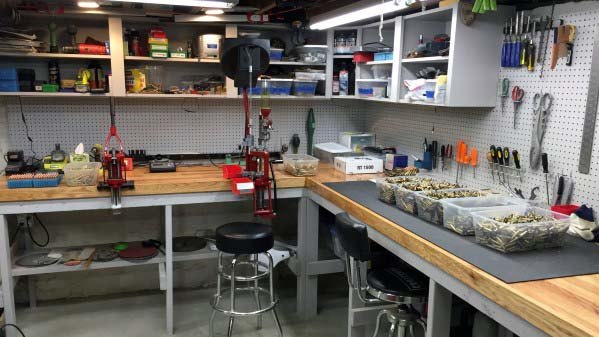
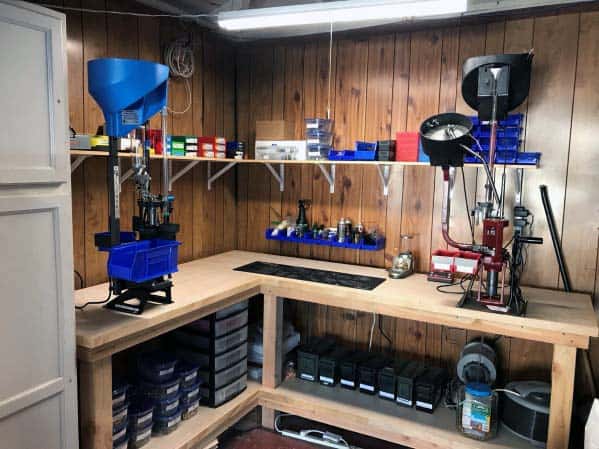
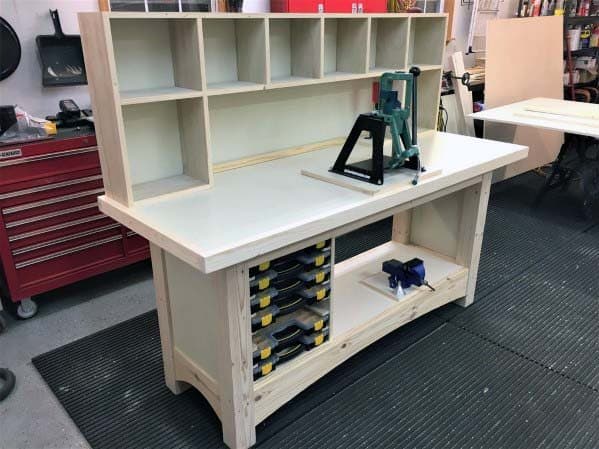
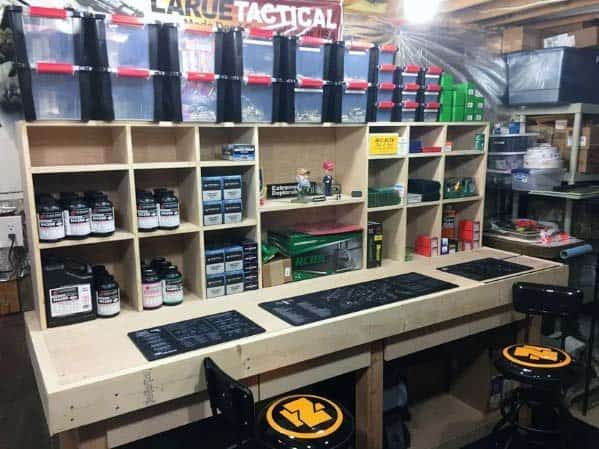
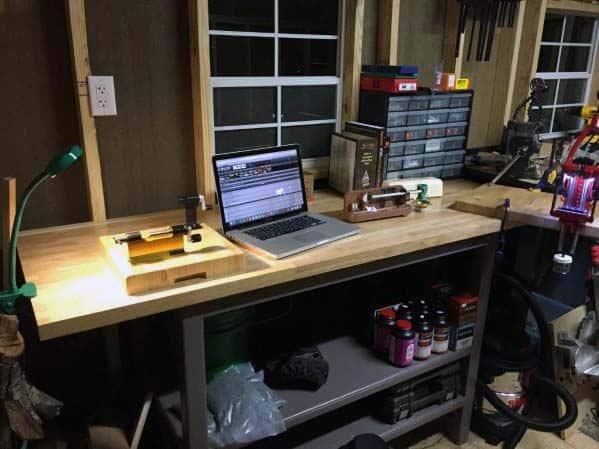
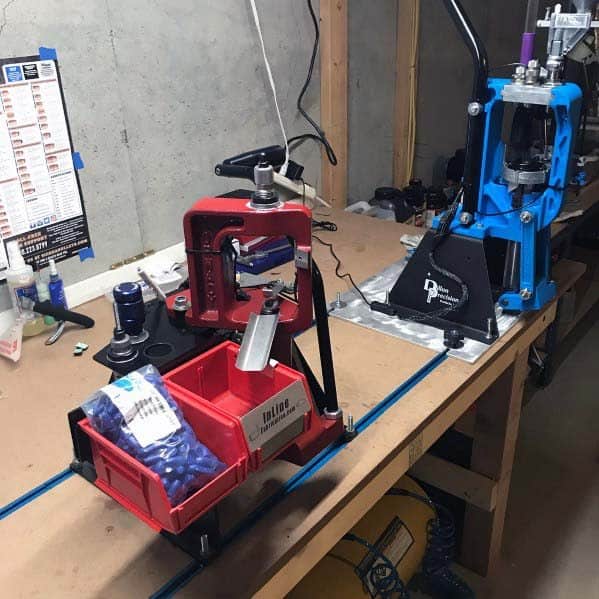
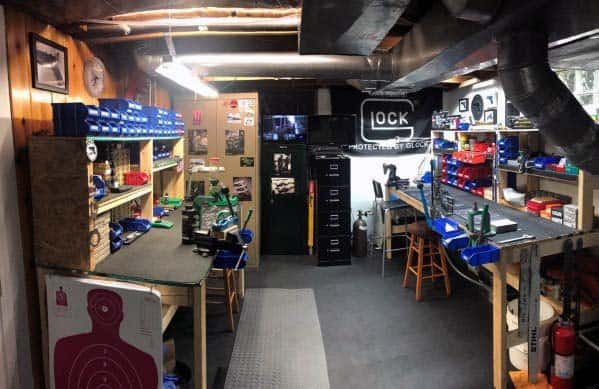
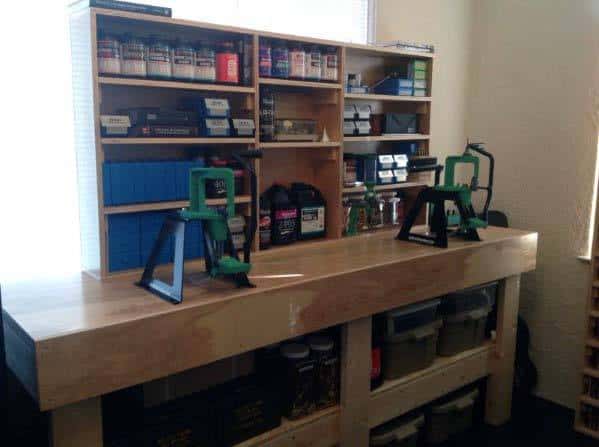
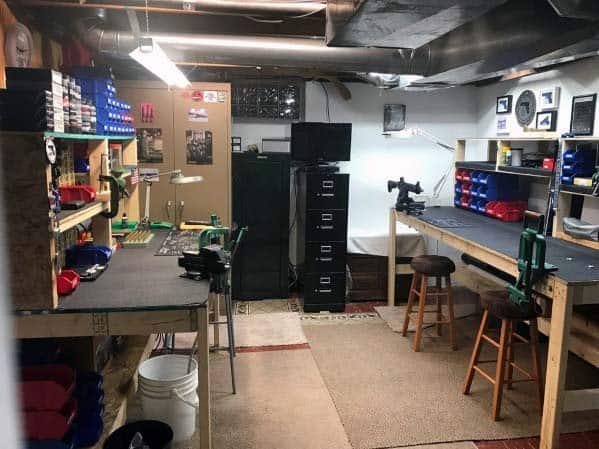
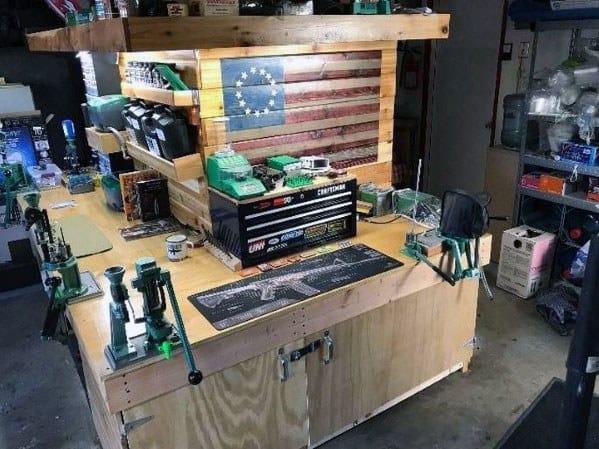
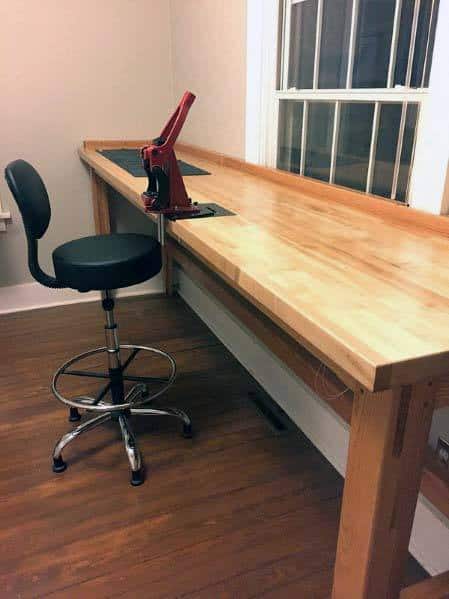
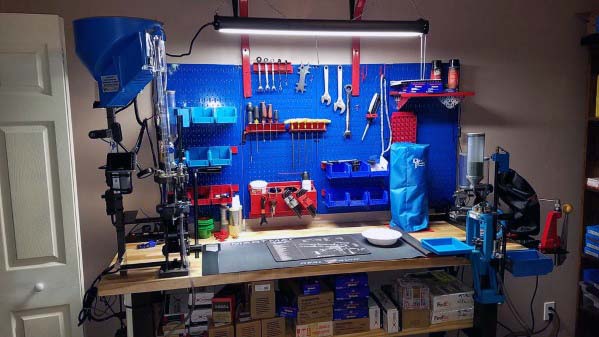
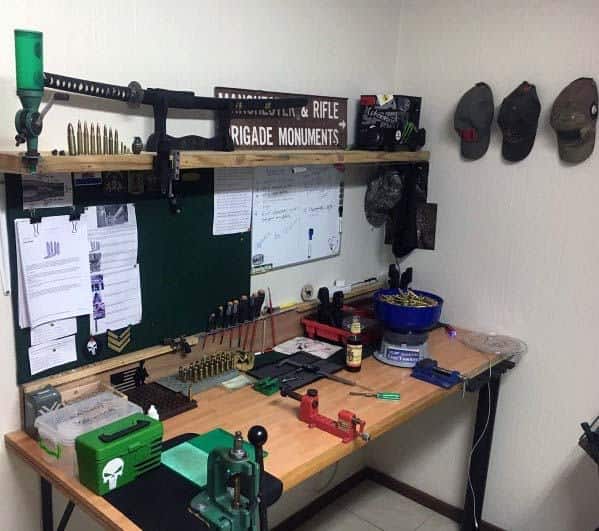
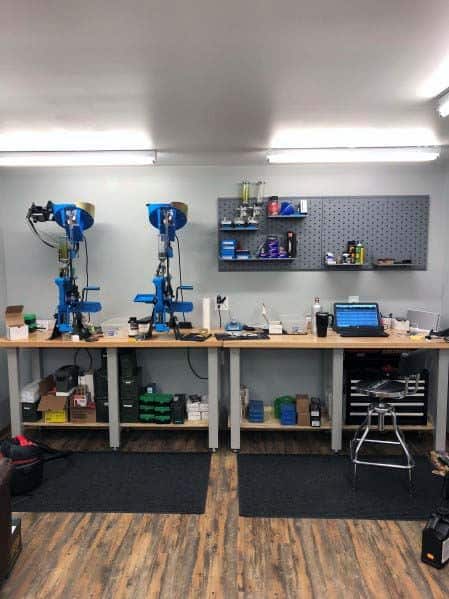
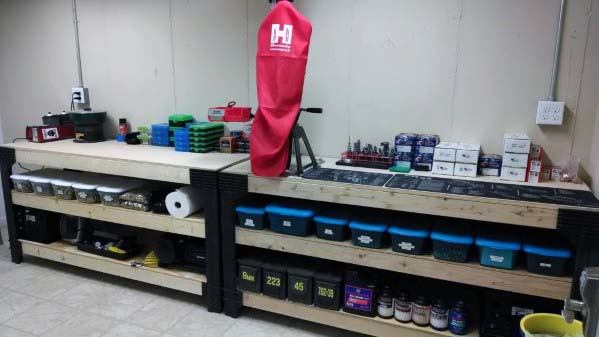
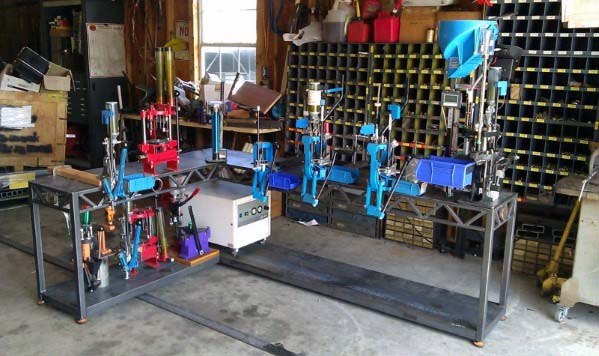
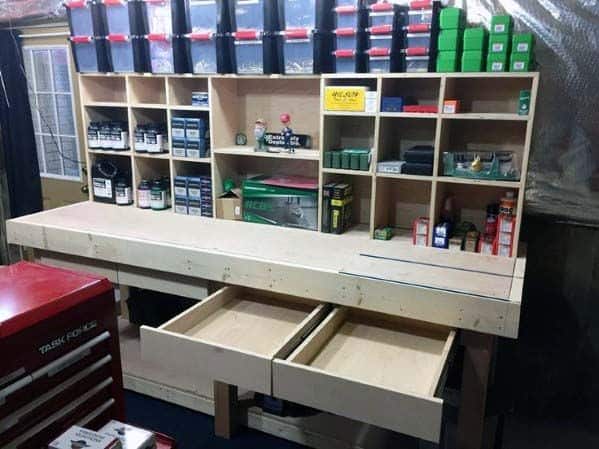
Here are practical tips and ideas for setting up and organizing a reloading room based on the images provided:
1. Prioritize Workspace Efficiency
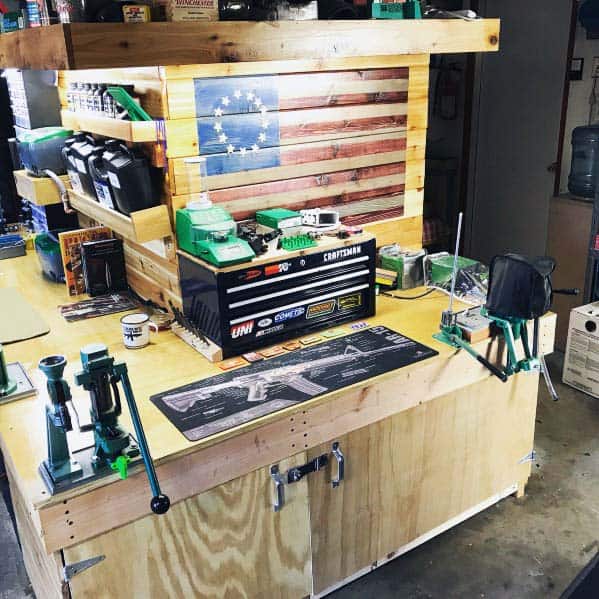
- Dedicated Workbench: Build a sturdy and spacious workbench with a smooth surface to mount reloading presses securely and allow for precise work.
- Workbench Height: Ensure the bench is at a comfortable standing or seated height, depending on your preference.
- Seating: Add an adjustable, ergonomic stool to work comfortably for extended periods.
2. Optimize Storage Solutions
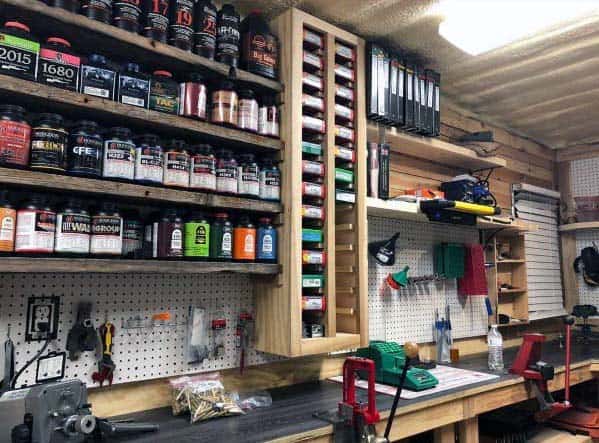
- Overhead Shelving: Use shelves above the bench to store reloading powders, primers, and dies while keeping them within easy reach.
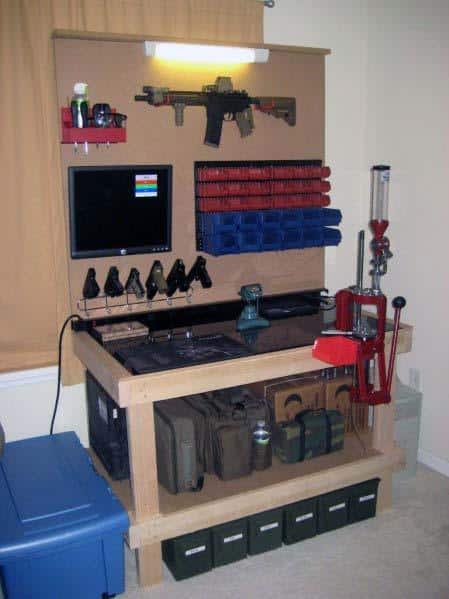
- Under-Bench Storage: Install drawers, cabinets, or open shelving beneath the workbench for storing brass, ammo boxes, and tools.
- Bins and Containers: Use labeled plastic bins (red, blue, or clear) for sorting brass, bullets, and other small components.
3. Use Pegboards for Tools and Accessories
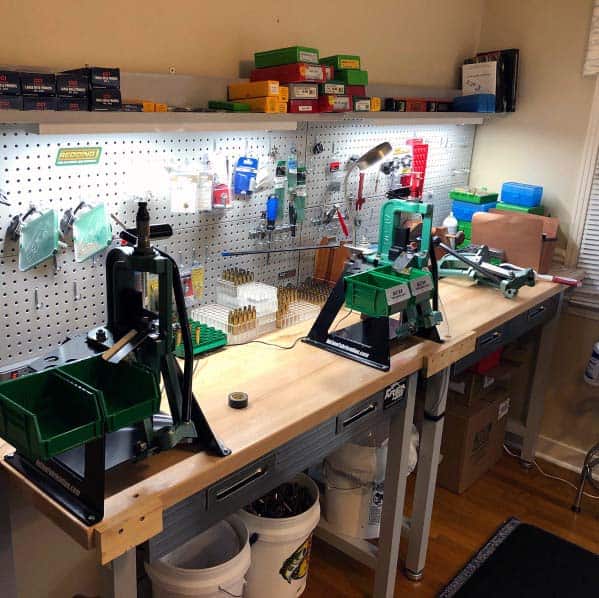
- Tool Organization: Mount a pegboard behind the workbench to hang tools like wrenches, screwdrivers, calipers, and pliers for quick access.
- Hooks and Baskets: Add hooks, shelves, and small wire baskets to store case trimmers, scales, and other reloading equipment neatly.
4. Separate Work Zones for Each Task
- Reloading Press Zone: Dedicate one section of the bench for reloading presses.
- Measuring and Inspection Zone: Use another section for scales, powder measures, and case inspection.
- Ammo Organization Zone: Allocate space for sorting and storing finished rounds in ammo boxes.
5. Install Proper Lighting
- Bright Overhead Lights: Use LED strip lights or fluorescent fixtures to eliminate shadows and improve visibility over the work area.
- Task Lighting: Add adjustable desk lamps or under-shelf lighting for precision tasks like measuring powder or inspecting brass.
6. Keep Safety a Top Priority
- Storage for Powders and Primers: Store reloading powders and primers in a cool, dry place away from heat sources.
- Ventilation: Ensure good airflow, especially if working with primers and solvents, by installing a small exhaust fan or keeping a window open.
- Fire Safety: Keep a fire extinguisher handy and within reach.
7. Label Everything
- Use labels or tags to identify containers for brass, bullets, primers, and powders. This saves time and avoids mistakes.
- Create a system for tracking components, such as keeping a digital or written inventory log.
8. Incorporate Security Measures
- Lockable Cabinets or Safes: Store powders, primers, and ammunition securely to ensure safety and prevent unauthorized access.
- Wall-Mounted Racks: Use dedicated racks for securing firearms, empty brass, or reloading manuals.
9. Add Comfort and Personalization
- Floor Mats: Add anti-fatigue mats in front of the bench to provide comfort when standing for long periods.
- Wall Decor: Personalize the space with flags, signs, and charts to make the room inspiring and visually appealing.
- Reference Area: Keep reloading manuals, charts, and important notes on a small bookshelf near the bench.
10. Cleanliness and Maintenance
- Bench Mats: Use rubber mats or gun cleaning mats to protect the bench surface and make cleanups easier.
- Trash and Recycling: Keep small bins nearby for discarded brass, primers, and packaging waste.
- Regular Maintenance: Routinely clean and organize tools, presses, and work surfaces to maintain an efficient workspace.