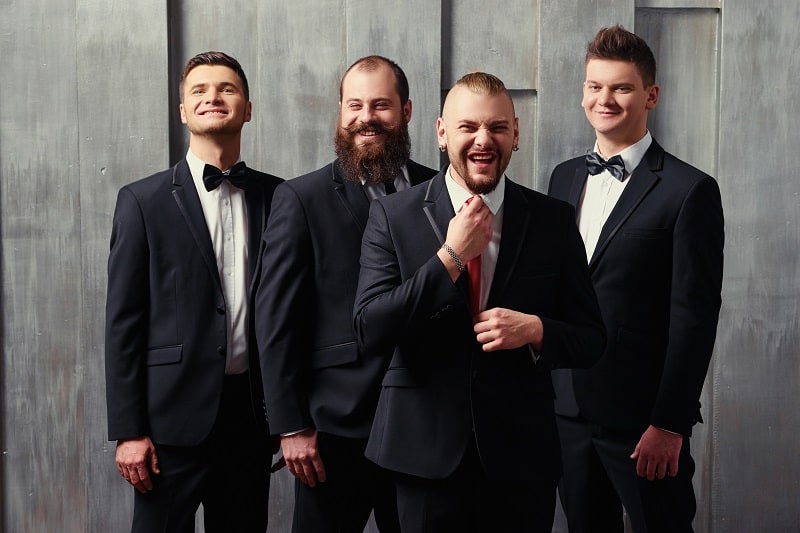

As we start easing back into activities that resemble the social lives we once had, we’re starting to be invited to attend events that require clothing other than sweatpants and joggers. For some of you, that may be a tough pill to swallow, and for others, you’ve never been more ready!
So as those invitations start rolling in, let’s break down the difference between a tuxedo and a suit so you can be the best-dressed chap at the party.
Fabric
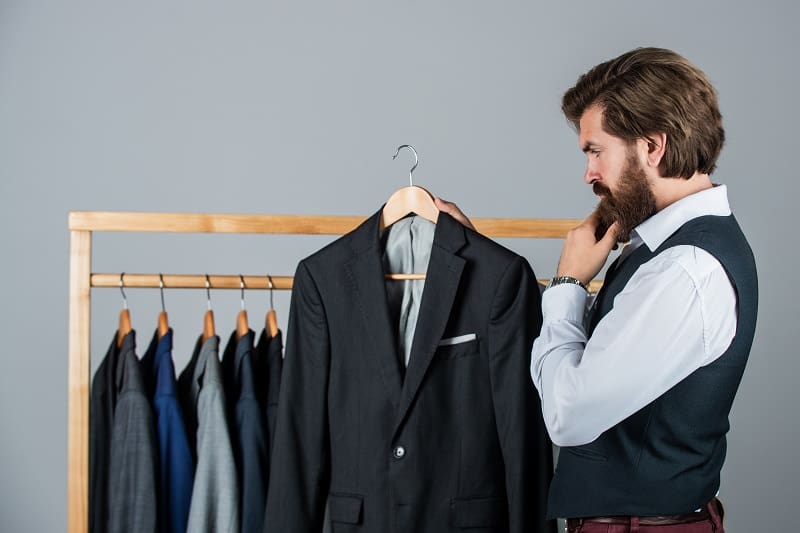
One of the biggest differences between a tuxedo and a suit is the fabric. Tuxedos tend to have satin details – satin-side stripe down the pant legs, satin-faced lapels, and satin buttons. Some of the more modern tuxedos limit the amount of satin to a thin trim on the lapel and a skinny stripe on the leg.
On a suit, the pants, lapels, and buttons tend to consist of any material other than satin. Sometimes the buttons will be made with bone, plastic, or fabric-covered buttons. The higher-end the suit, the better the material.
Shirt Styles

There is an entire article on this site dedicated to this exact topic but here are the highlights: there is a difference in the fabric, shirt collar, cuffs, and cufflinks, while a tuxedo shirt also has bibs and plackets. All of these differences add up to one main takeaway – never wear a dress/suit shirt with a tuxedo. They are not interchangeable.
Accessories
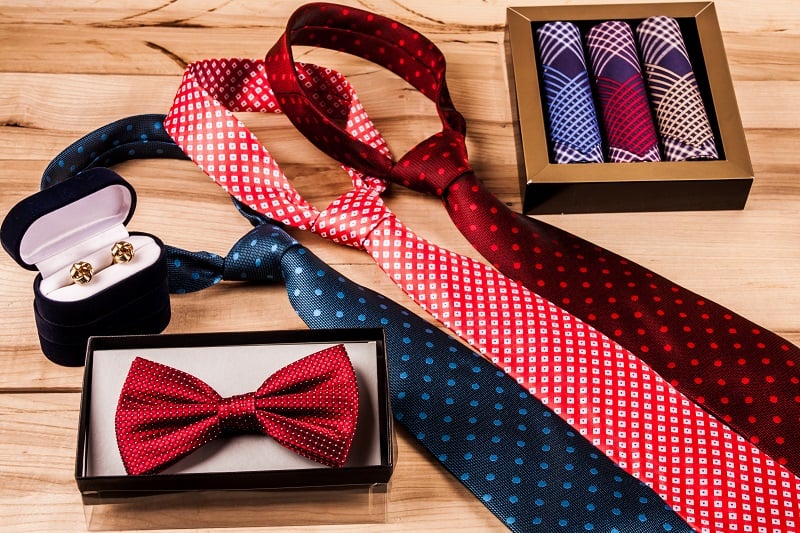
If you wore a tux to your Prom then you probably remember renting or buying your tuxedo and it coming with a cummerbund, waistcoat, suspenders, a pocket square, and a bowtie. This is still the standard these days, but a lot of men prefer less formal accessories, such as a long tie and high-stance vests. It all depends on your personal style and how formal the event is.
Suits are more adaptable – they can be dressed up or down, worn with and without a vest, with a bowtie, or a long tie (or no tie at all! Gasp!). Also, suits tend to come in a much wider array of fabric choices, patterns, and colors.
Cufflinks
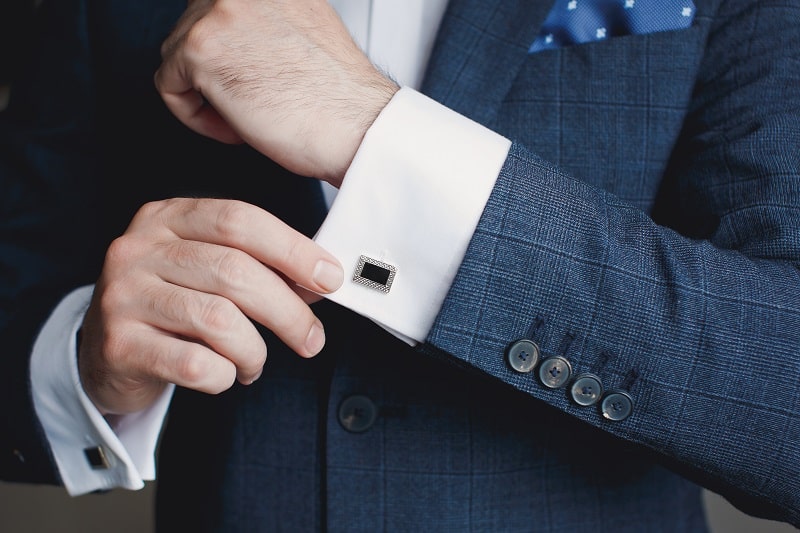
It is not wrong to wear cufflinks with your suit, but not necessary. However, with a tuxedo, cufflinks are always a great idea. French cuffs are the ideal and favored choice for a tuxedo and ups the ante when it comes to formality.
[see_more_about title=”Tuxedo Shirt vs. Dress Shirt: Everything You Need To Know” link=”https://nl.jahaweb.com/mens-style-and-fashion/tuxedo-shirt-vs-suit-shirt/”]
Plackets
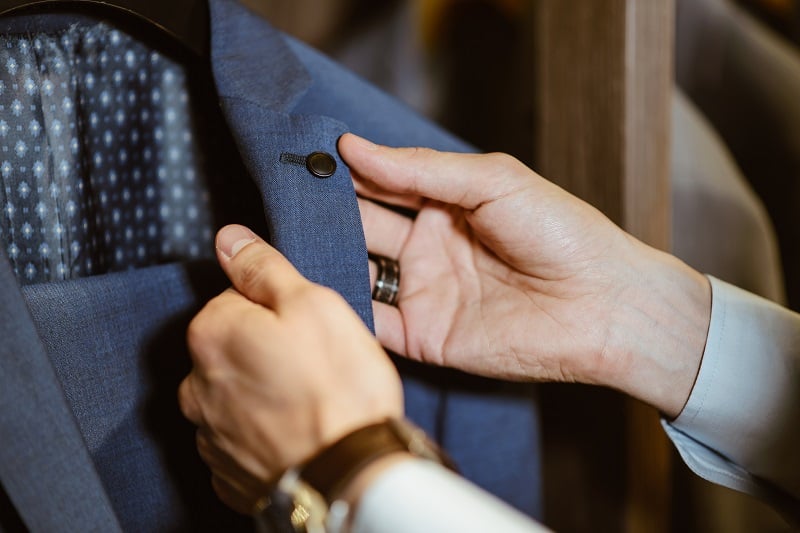
The placket of the shirt is the narrow strip down the front where the buttons and buttonholes reside. This is one area where the difference between a tuxedo shirt and a suit shirt is made evident.
Tuxedo shirts can come with plackets that are meant to be worn with tuxedo studs (metal buttons that are inserted into buttonholes on both layers of the placket) or standard plackets with an extra layer of fabric covering the buttons (often referred to as a hidden placket).
The chest area adjacent to the placket on tuxedo shirts can also feature pleats or a bib front that doubles up the shirt fabric for an intentionally starched and stiffer look. Suit shirts do not have these extras, hence why they should never be worn with a tuxedo.
Pocket Squares
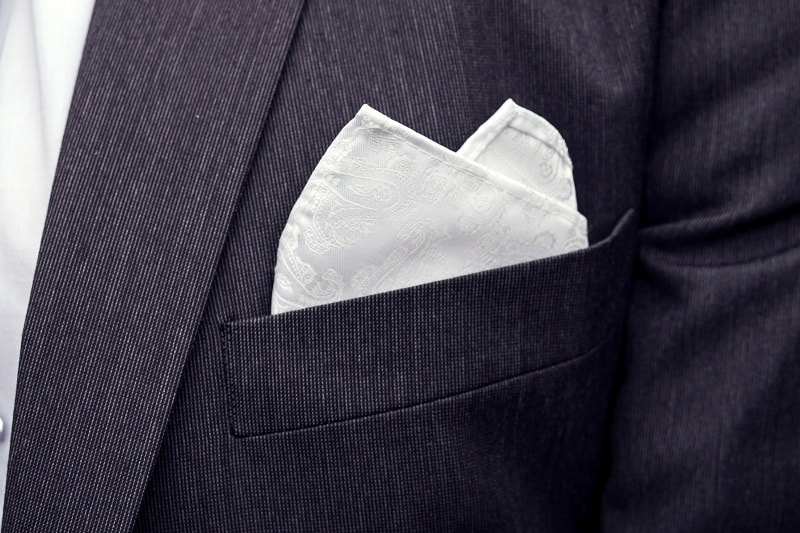
A white pocket square is not only standard but really the best choice to wear with your tuxedo. However, with your suit, you can wear whatever you would like. This is the best place to interject some personality.
Collars
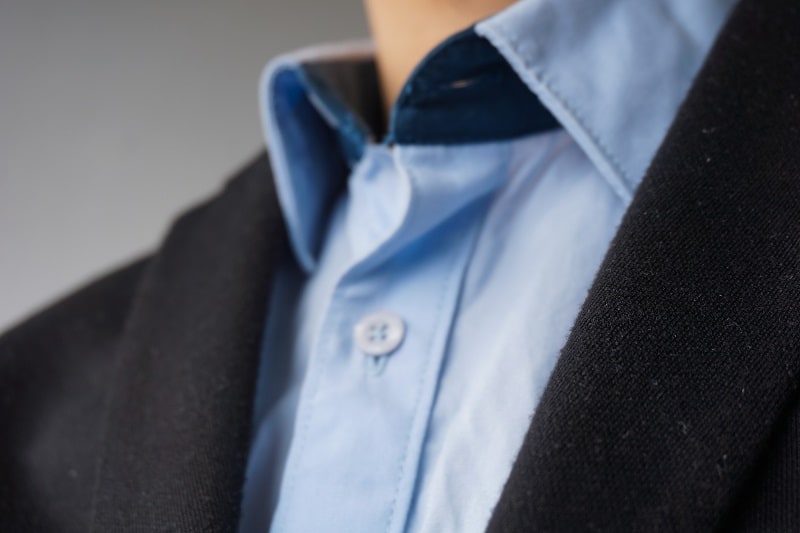
When it comes to tuxedo shirts there are two main styles of collars – wingtip and turn-down. The majority of the time, pair your tuxedo with a white turn-down collar shirt. According to formal standards, the only time you actually need a wingtip collar shirt is when wearing a tailcoat. With your suit, choosing a button-up shirt with a basic collar style is your best bet.
Pants
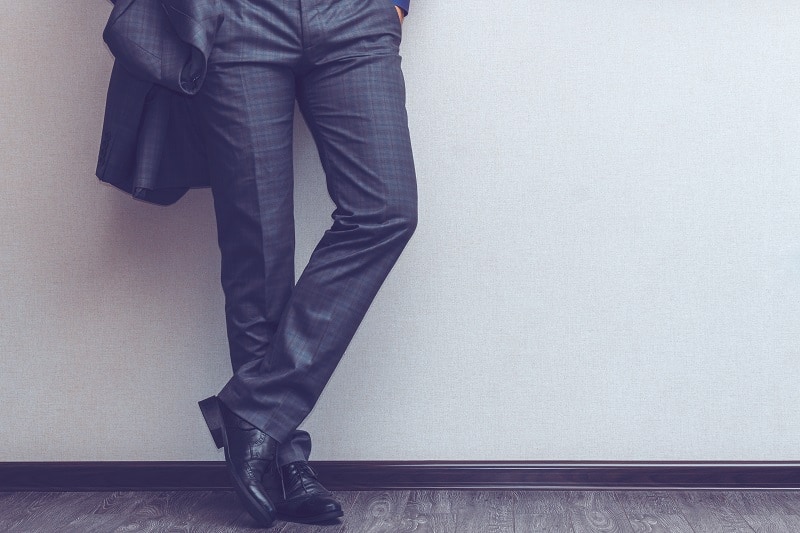
Tuxedo pants, and sometimes suit pants as well, will also feature side adjusters. These are usually made of a metal buckle and fabric strip on each side that can be used to adjust the snugness of the fit. Or sometimes the pants will feature a button system that works with an elastic strip of fabric inside the waistband to achieve the same effect.
As far as your suit pants, these will have traditional belt-loops. However, suit pants can also be worn with suspenders and sometimes there will be buttons added along the inside of the pant waistbands and makes for a nice alternative to not wearing a belt.
Shoes
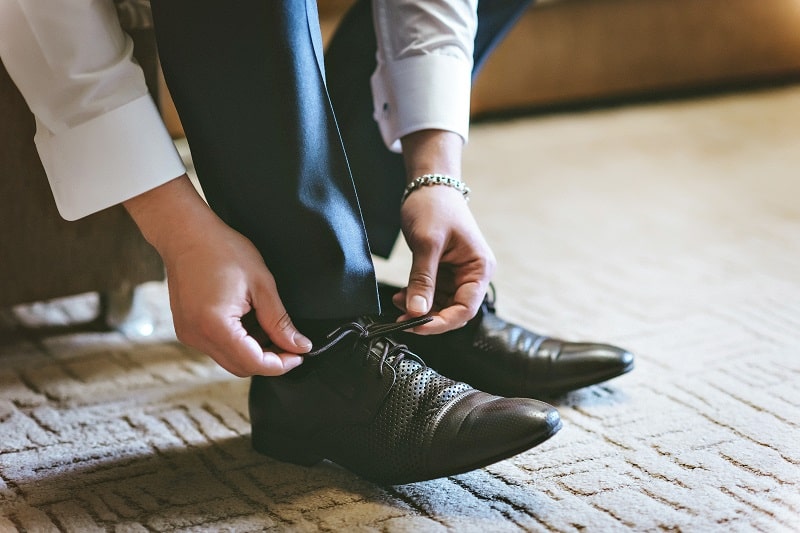
Usually, patent leather shoes are worn with tuxedos (black is the obvious standard) while loafers, oxfords, and pretty much anything else are acceptable with a suit.
Socks
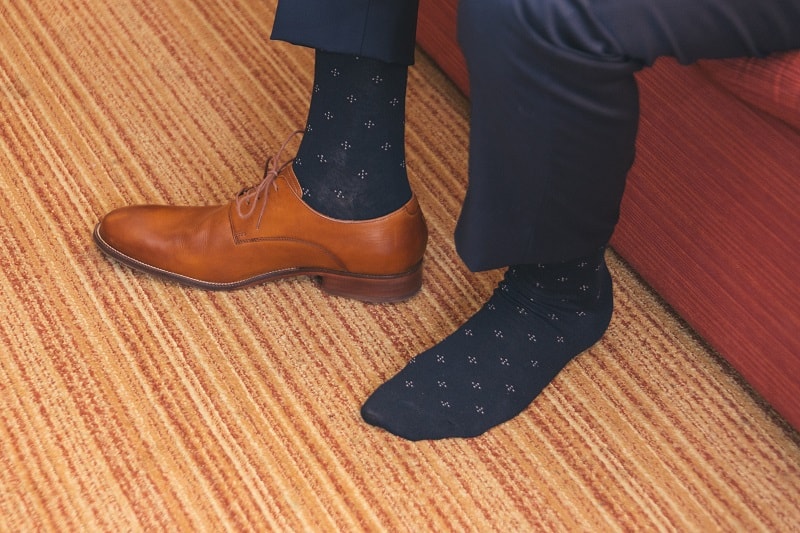
You didn’t think we would get through this article without talking about socks, did you? With your suit, feel free to wear whatever socks work with your shoes, just make sure that they aren’t white, too thick, or can be seen too much. A patterned sock is nice to break up the monotony of the suit as well as can showcase a little personality.
When it comes to your tuxedo, there are a few rules when it comes to socks:
- Wear them. Don’t forgo socks. People do it and it takes away from all the hard work put into wearing a tuxedo to begin with.
- Wear black socks. Unless you are wearing a white or ivory tuxedo, always wear black socks. This is not the place to wear your socks with the popcorn or puppies. You can show your personality with a pocket square.
- Make sure you are wearing formal socks. These are thinner and stretchier than your average sock.
Events
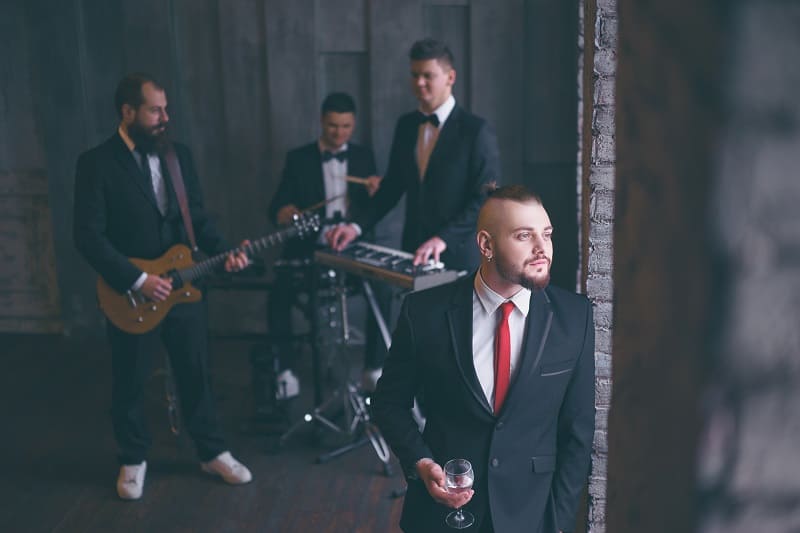
So now that you know the differences in the garments themselves, it’s time to address the most important difference of all – where do you wear them? Tuxedos are normally reserved for black tie events and the evening.
They are perfect for formal weddings, galas, charity events, and the opera. They signal that an event is special and thus, are more appropriate way less often than a suit which can pretty much be worn at any time of day or almost any occasion (other than black tie, obviously).
Wear your suit to work, a nice dinner, and most weddings. However, if the wedding invite says “black tie optional,” see how the groom is dressing and follow suit (pun intended!).
[see_more_about title=”Sport Coat vs. Blazer: Everything You Need To Know” link=”https://nl.jahaweb.com/mens-style-and-fashion/sport-coat-vs-blazer/”]