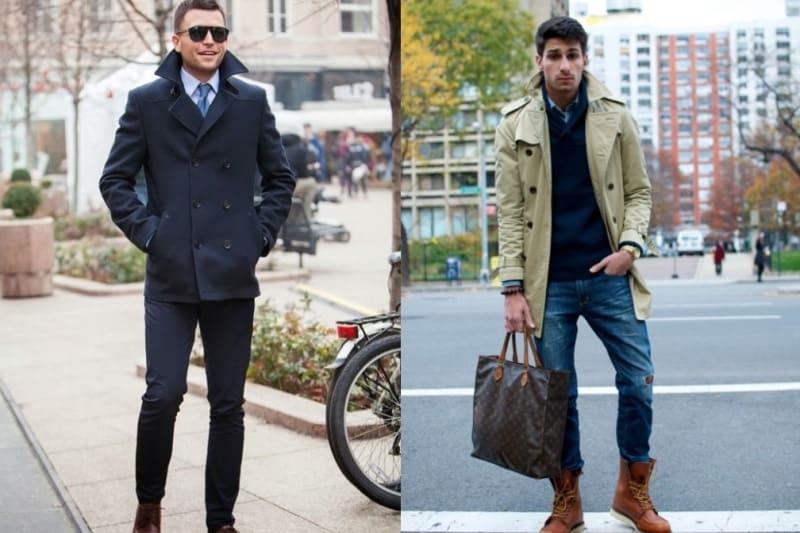

Fall and winter are around the corner and it’s almost time to start trading out your summer staples for your winter wardrobe. This includes coats. I don’t know about you, but outwear is one of my favorite parts of the cooler months. A great jacket can really pull a whole look together. Until you have to go inside, where it’s hot, and take it off. Uhg. But until then, when getting from A to B, outwear is of the utmost importance.
Two basic options are the peacoat and the trench coat. You may own just one or the other, or both. But do you really know the origin of these classic coats? Or the difference in design and what they were intended for in the world of style?
[see_more_about title=”Blucher vs. Derby: Everything You Need To Know” link=”https://nl.jahaweb.com/mens-style-and-fashion/blucher-vs-derby/”]
What Is a Peacoat?

Peacoats were originally worn by European and American sailors to stay dry and have become synonymous with maritime style. This type of jacket has been around since the 1800s. The first variation was worn by the Dutch navy. The name “peacoat” originated from the Dutch word “pije,” which was used to describe a coat made from coarse wool fabric.
Even though we credit the Dutch for inventing the peacoat, it was the British navy who can take the credit for the popularization of the jacket. The British version of the coat was designed to be a uniform for petty officers. Most peacoats are made from wool and therefore are soft and naturally comfortable, but because of the wool fabrication, they also provide extra warmth against cold temperatures.
Peacoats have double-breasted fronts with large buttons, broad lapels, and either slash or vertical pockets. The buttons are usually made of plastic, wood, or metal. Some modern pea coats also have anchors etched on the buttons as a reminder of their nautical past. Peacoats used to be exclusively navy, but are now available in an array of colors.
Peacoats are versatile when it comes to styling them. They look equally polished when worn with a suit as well as with jeans and a nice button-up or sweater. If you are on the thinner side, a peacoat is a great way to look thicker. Skinny men can sometimes look frail in a trench coat, but a thick wool peacoat will add bulk to your shoulders and chest without adding the illusion of an elongated torso.
Key features of a peacoat are:
- Short length that extends to your waist when worn
- A double-breasted front
- Made from wool
- High-quality buttons
[see_more_about title=”Panama Hat vs. Fedora: Everything You Need To Know” link=”https://nl.jahaweb.com/mens-style-and-fashion/panama-hat-vs-fedora/”]
What Is a Trench Coat?
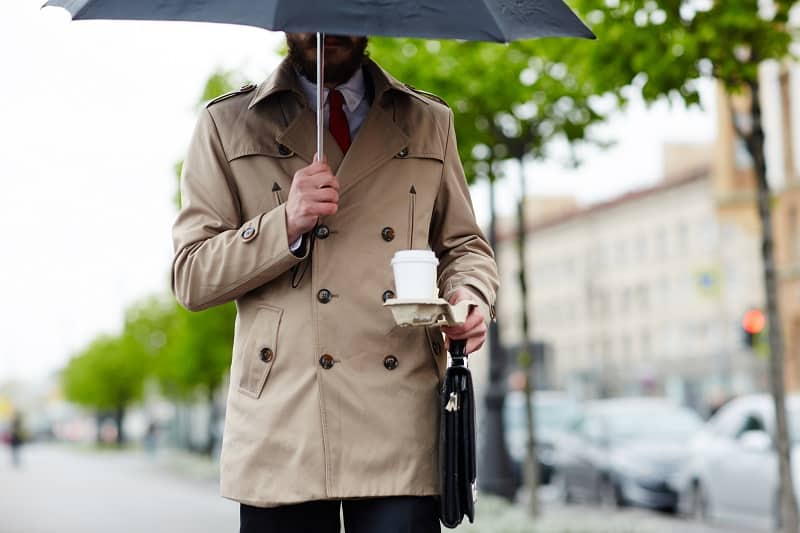
While peacoats were made for sailors, trench coats were made for the Army. Officers used to wear them in order to show off their rank and upper-level hierarchy, while also keeping them warm with a thick layer of insulation.
Originally, 19th-century trench coats were made from rubber. Yes, you read that correctly. Rubber. Although this material provided the wearer with amazing protection from the wet and the rain, it was soon realized that perhaps that was not the best material to use.
The rubber may have kept the water from getting the wearer’s clothing wet from the rain, but this material is not breathable and kept the sweat in. They also had a distinctive and relatively unpleasant smell of their own, not including the added stench of sweat, and a propensity to melt in the sun.
That’s when trench coats started to be made from heavy-duty cotton known as gabardine, introduced to the world by Thomas Burberry. Gabardine is a breathable weatherproofed twill made by coating individual strands of cotton or wool fiber rather than the whole fabric. Gabardine turned out to be ideal: lightweight, yet durable and waterproof.
A trench coat is outwear made from pretty much any fabric except for wool, although I’m sure you can find one. Never say never. Trench coats feature heavy-duty construction and are available in multiple fabrications. They may not keep you as warm as a peacoat, but they tend to be more waterproof, offering you protection from the rain. You can always throw your trench over your peacoat for added warmth and protection against the cold for your torso as well as your legs.
Traditionally, they have double-breasted fronts with 10 buttons, wide lapels, pockets that button-close, and a storm flap. This coat also has a belt at the waist and straps around the wrists that can be buckled. Trench coats also have turned-down collars that can be worn flipped upwards. Traditionally, they were khaki but can now be found in just about any color imaginable.
They can also have a slimming effect if you have a thicker build or are short and stocky. If this is your body type, invest in a trench coat first, and perhaps later, add a peacoat to your rotation.
Key Feature of a trench coat:
- Long length
- Heavy-duty construction, available in different materials
- Double-breasted front
- Protection from the rain
[see_more_about title=”Levi’s 511 vs. 512: Everything You Need To Know” link=”https://nl.jahaweb.com/mens-style-and-fashion/levis-511-vs-512/”]
Differences in Peacoats and Trench Coats
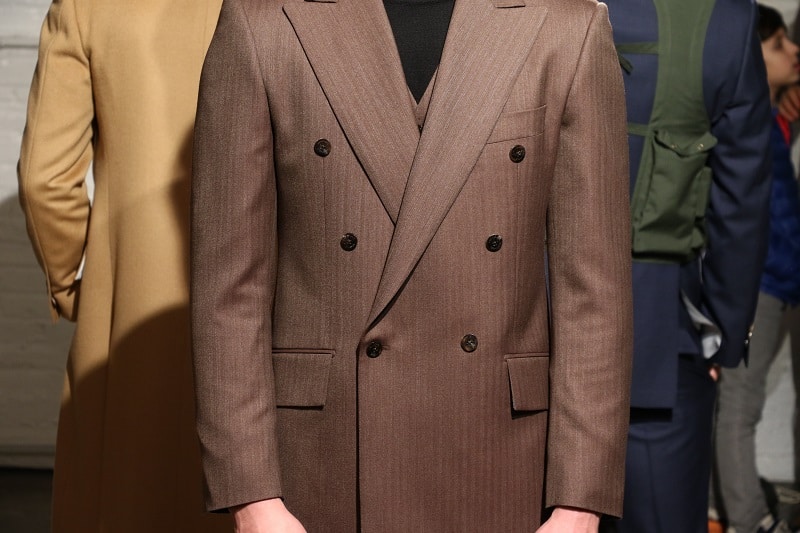
The main difference between a peacoat and a trench coat is their design. Peacoats are shorter, to allow for easier movement, and made of heavy wool. Trench coats are long and loose coats with belts at the hip and are made of waterproof material.
Also, there is a difference in how to care for them. Since they are made from wool, peacoats will need to be dry-cleaned or washed by hand. Lay them flat to dry. Trench coats can also be hand-washed or you can put them in your washer on a gentle cycle. Wash the lining separately and lay both pieces flat to dry. Putting them in the dryer will not only shrink them, but you run the risk of shortening the life of the fabric and therefore, the coat itself.
Proper care and maintenance will extend the life of your coats. Basically, you can’t go wrong with having either of these classic coats in your wardrobe. In fact, having both gives you more versatile ways of dressing properly for all weather conditions and any occasion.
Peacoats and trench coats are popular and versatile outwear you can wear for both casual and professional looks and are worn by both men and women.
[see_more_about title=”Converse Chuck 70 vs. Converse All Star: Everything You Need To Know” link=”https://nl.jahaweb.com/mens-style-and-fashion/chuck-70-vs-all-star/”]