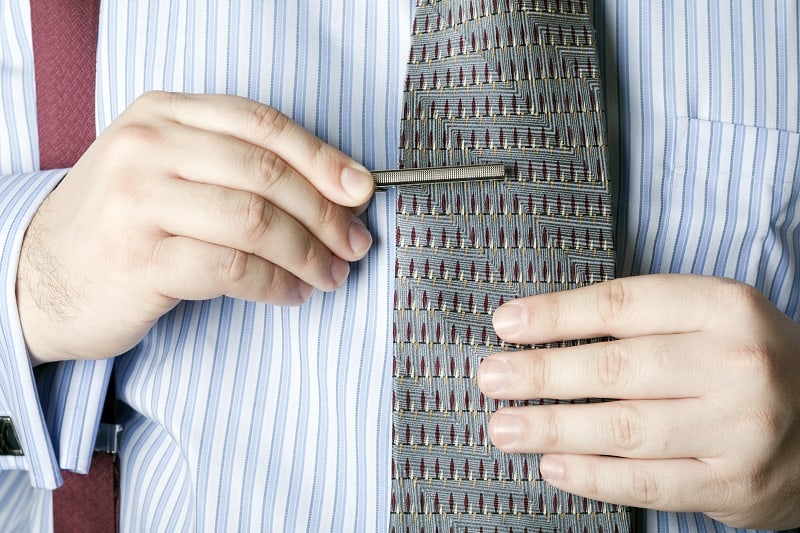

Essentially there are two categories of people that wear ties – those that wear them daily and those that only don one every once in a blue moon. But both of these sects of people can use a little extra flair with a tie clip or tie bar. There are a multitude of reasons to choose one of these accessories to add a little pizazz to your next adventure, even if it’s just a Tuesday meeting.
The Difference Between Tie Clips and Tie Bars
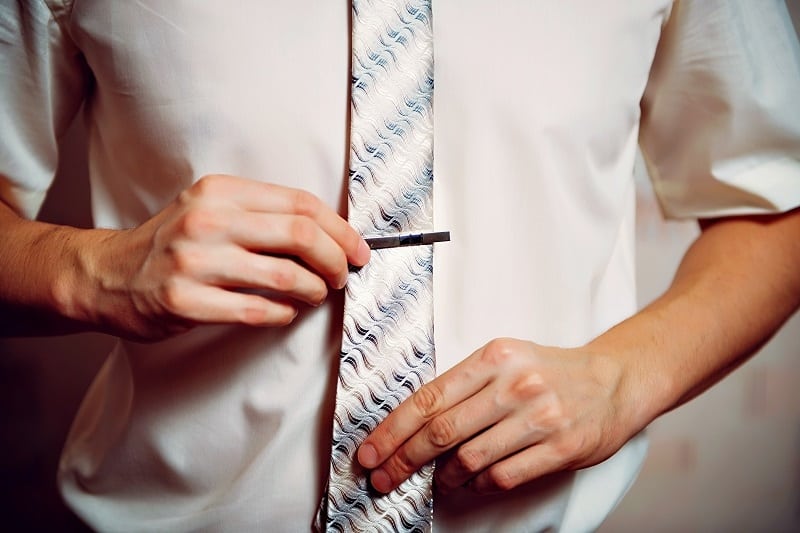
From the outside, these two accessories look the same. The most common versions of these are metal and horizontal and usually look like bars, but you can find them in all kinds of shapes, sizes, metals, and enamels. But the main difference is a tie clip opens like a jaw with a spring to secure your tie to your shirt and a tie bar slides over the tie and shirt.
Neither one should be longer than the width of your tie. A good rule of thumb is to keep it about 3/4 the width of your tie. Use this handy guide to help you decide:
| TIE WIDTH | TIE BAR or TIE CLIP WIDTH |
| Standard (approx 3.25″) | 1.75″ – 2.25″ |
| Narrow (2.35″ – 2.9″) | 1.5” |
| Skinny (less than 2″) | 1″ – 1.25″ |
Purposes for Wearing Tie Clips and Bars
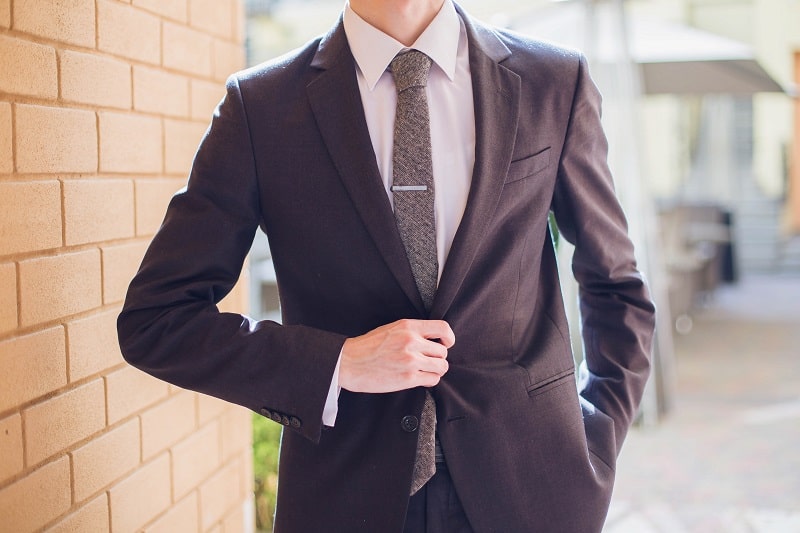
They keep popping tie knots down. A tie bar or clip can help to keep the knot in place.
They keep your ties clean. A tie clip or bar keeps your tie in place. When you lean over things like a kitchen table you run the risk of collecting food onto your tie, so a clip or bar keeps you from getting dirty and embarrassing yourself and others.
They are decorative. Tie clips and bars come in a variety of different styles, colors, and shapes. This is when you can add a personal touch to your wardrobe choices to stay basic and formal or get fun and wacky with character pins and mustache-shaped bars.
A fix for men with uneven shoulders. How can a small accessory fix uneven shoulders caused by scoliosis, uneven leg length, or a pinched nerve? They can’t but they can help a crooked tie, caused by uneven shoulders, to stay straight.
What Are Tie Bars?
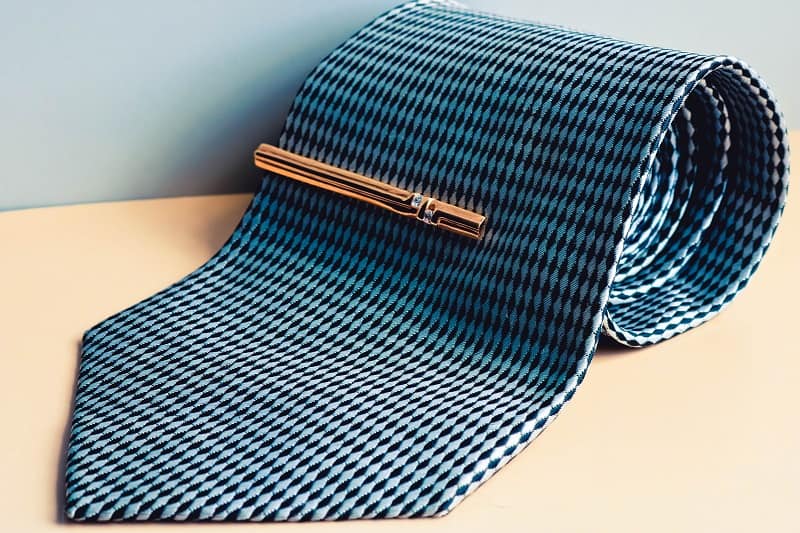
Introduced during the Victorian era, ties bars held the tie down so it could no longer fly in the wind or ruin soup dinners. However, these originals punctured the neckwear, leaving holes. So in the 1900s, the spring-loaded tie bar was born, and soon after that, an even simpler slide version of this tie bar came to be.
Why Wear a Tie Bar

Tie bars hold your tie in place by binding your neckwear to the front placket of your shirt.
Tie Bar Placement
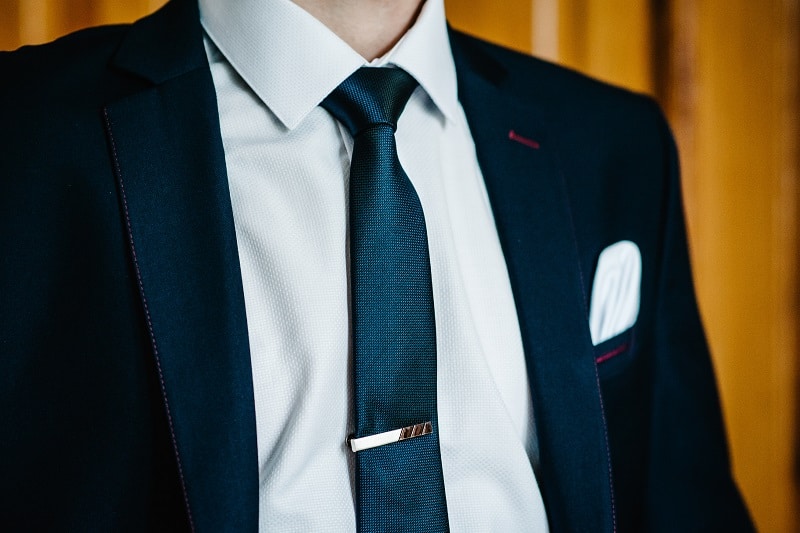
As for tie bar placement, it should sit right over your sternum, between the third and fourth buttons. This is what is referred to as the “sweet spot” where the bar can truly shine in all its glory while maintaining its functionality.
Tie Bar Materials
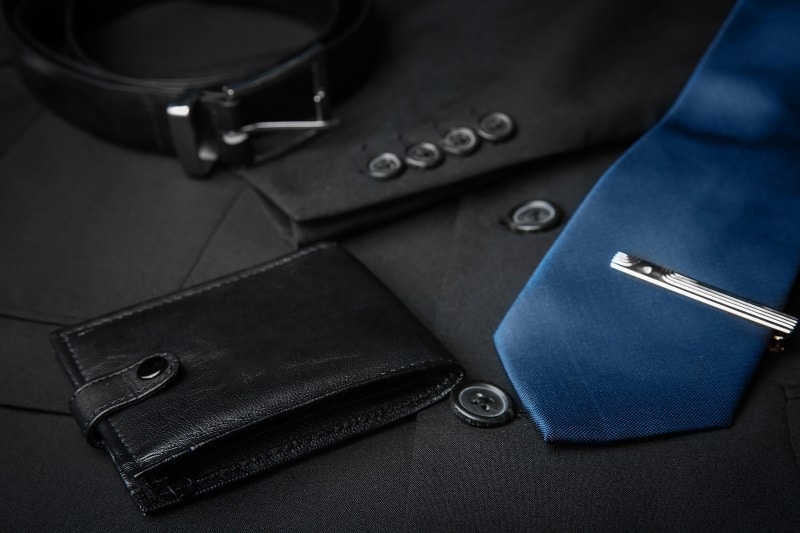
There was a point in time in the history of the tie bar when colors were limited to gold and silver. Silver works well with practically any tie combination. Gold tie bars tend to pair best against darker hues or a solid-colored tie.
Now tie bars are made from a variety of materials and come in a multitude of shapes making it easier for you to match your bar to your tie and show off some personality should you choose to do so.
Adding Clothing Layers
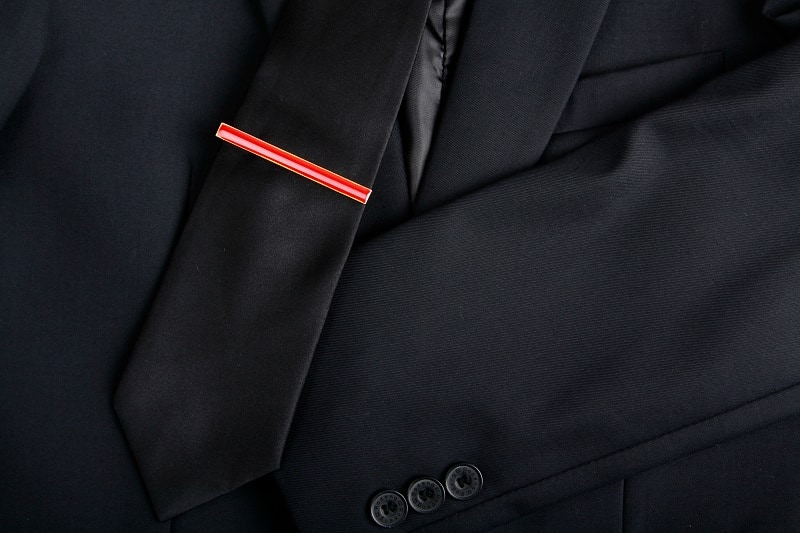
The two primary functions of the bar are to hold the tie in place and add some extra style. Just keep the position of the tie bar in mind if you are adding a jacket or cardigan. You might want to move it up toward the second or third button so that it will still be visible if you wear another layer, but that is up to you.
[see_more_about title=”Blazer vs. Suit Jacket: Everything You Need To Know” link=”https://nl.jahaweb.com/mens-style-and-fashion/blazer-vs-suit-jacket/”]
What Is a Tie Clip?
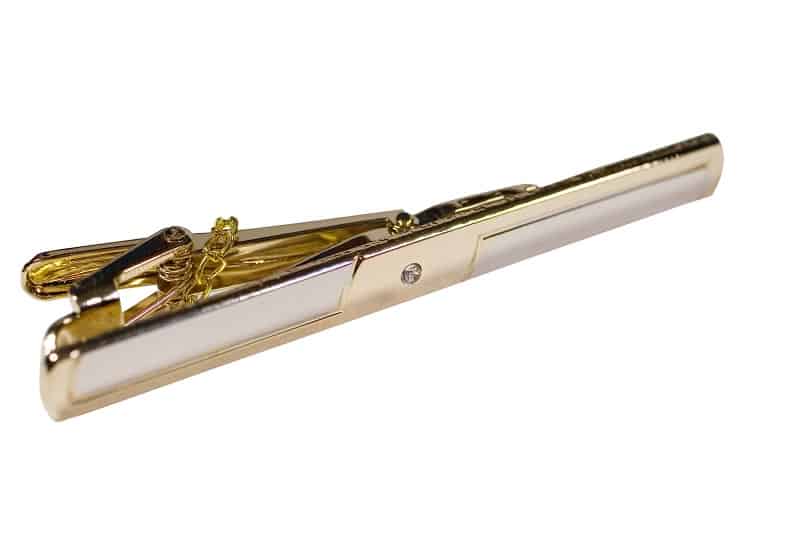
A tie clip is a clothing accessory that is used to clip a tie to the underlying shirt front, preventing it from swinging and ensuring that the tie hangs straight, giving you and your look a clean, uniform appearance. You’ve now tricked everyone into thinking you have your life together. Success!
Where Does a Tie Clip Go?
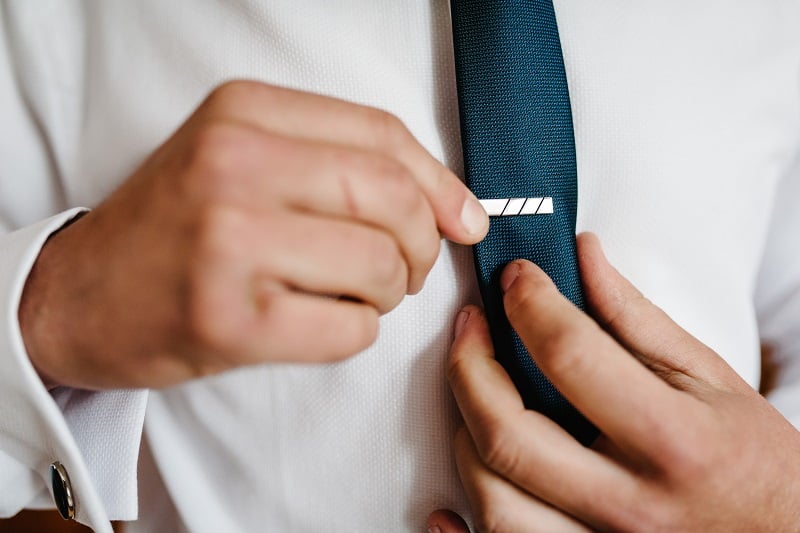
Ideally, your tie clip should sit around the middle of your sternum, between the third and fourth buttons on your shirt. It should be attached from right to left to capture both your tie and shirt placket. If it’s too high then it will not hold your tie down and keep it from dipping into your food, and if it’s too low, it just looks silly.
When to Wear a Tie Clip

There are two looks most likely to have a tie involved – smart casual and formal. If you’re going for smart casual, wearing jeans with your shirt, tie, and blazer, feel free to have a little more fun with your tie clip. Look out for unique statement designs that will complement your outfit and show off your style and personality.
Tie clips and formal outfits go hand in hand. So, if you have a wedding, fancy dinner, or business event coming up, consider upping your game from your usual suit, shirt, and tie combination and add a tie clip. Opt for a more understated and elegant clip. A simple silver design always works well.
How to Wear a Tie Clip or Tie Bar
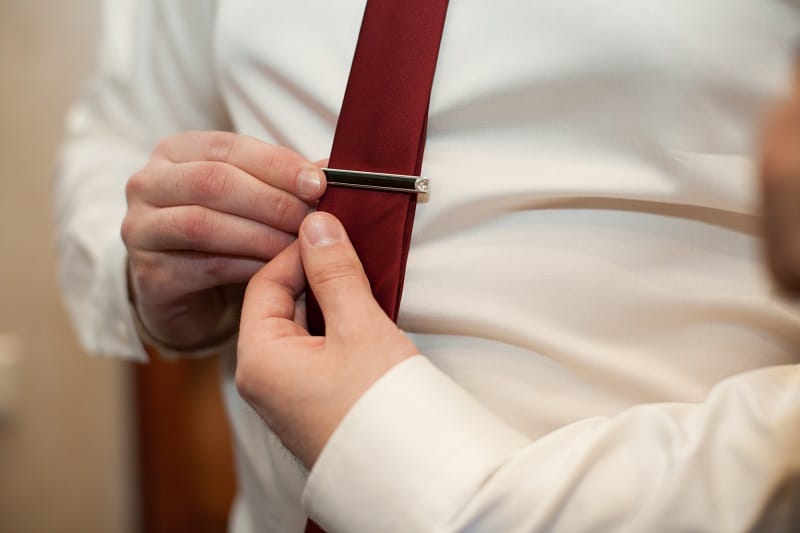
Hold the wider part of the tie (the blade), the narrow part behind it (the tail) and the shirt placket (the front part with the buttonholes) together. Secure the clip or bar between the tie knot and the fourth shirt button.
For both clips and bars, you want to make sure all the parts of your tie are aligned before securing it to your shirt. Not only does this look good, it also ensures your tie won’t be flapping in the wind, which is kind of the whole point of this to begin with.
Parting Thoughts
Regardless of whether you wear a tie clip or tie bar, there are a few key points to remember:
- Select thin tie clips or bars for skinny ties and larger ones for wide ties
- Balance a patterned tie with an understated tie clip or bar or choose to enhance a solid style tie with a unique, bold clip or bar
- Keep them sleek and minimalistic for formal outfits
- When wearing smart casual attire, have fun with statement pieces that show off your personality
[see_more_about title=”Suspenders vs. Belts: Everything You Need To Know” link=”https://nl.jahaweb.com/mens-style-and-fashion/suspenders-vs-belts/”]