
A paradox is a fascinating concept that appears in television shows, movies, and literature. Some of history’s most brilliant writers, such as William Shakespeare, George Orwell, and William Woodsworth, used a paradox as a literary device, while it’s also a popular device in science fiction movies. As it turns out, paradoxes aren’t just for old writers and sci-fi flicks.
Paradoxes are part of everyday life. These mind-bending ideas and theories are fun to think about as they get more confusing. A paradox starts as a logical statement that makes common sense but is a contradiction defying expectations. In the end, it reaches a self-contradictory and unacceptable yet logical conclusion. Simple right?
Paradoxes fall into several categories: circular definitions, infinite regress, and self-reference. Many of these ideas can be confusing with an impossible ending. Despite being a contradiction, these concepts are related and exist at the same time.
For example, time travel lends itself to paradoxes that have time travelers caught in an endless loop without an ending. A paradox can also apply to rules and regulations within a bureaucracy. There are hundreds of different paradoxes covering a wide range of topics, so let’s dive deep into the paradox rabbit hole and find some great examples.
1. The Grandfather Paradox
The grandfather paradox relates to time and the idea of time travel. The theory of time travel is a popular device in science fiction movies like Terminator, Back to the Future, and Bill and Ted’s Excellent Adventure. Going back in time and changing the past automatically creates a paradox.
For instance, the grandfather paradox proposes going back in time and killing an ancestor, like a grandfather. By killing the time travelers’ grandfather, their parents are never born. Thus, the time traveler was never born. However, that means the time traveler never goes back in time to kill his grandfather.
With the grandfather alive, the parents are born. Therefore, the time traveler is born and goes back in time to kill their grandfather. It’s an endless loop and a fascinating paradox that often creates plot holes in time-travel movies.
2. Catch 22 Paradox
Author Joseph Heller invented the term catch-22 for his critically acclaimed 1961 novel, Catch-22. This paradox relates to a situation an individual cannot escape due to arbitrary bureaucratic rules and procedures. The person is powerless in the scenario because fighting the rule means embracing it. The novel’s main plot revolves around a U.S. Army Air Forces bombardier, John Yossarian. Yossarian wishes to be grounded to avoid combat because he’s “crazy” for wanting to participate in dangerous missions.
But to be deemed “crazy” and unfit to fly, Yossarian must request the squadron’s flight surgeon to conduct an evaluation. The belief is a person must be “insane” to volunteer to be a bombardier and risk their life. The catch is if a pilot requests an evaluation, it means he’s “sane” and thus is fit to fly. So Yossarian must be “insane” to risk his life, but if he requests an evaluation, that’s proof he isn’t crazy. But if he doesn’t demand an evaluation, he must be “crazy.” In other words, this is what’s known as a catch-22.
3. The Raven Paradox
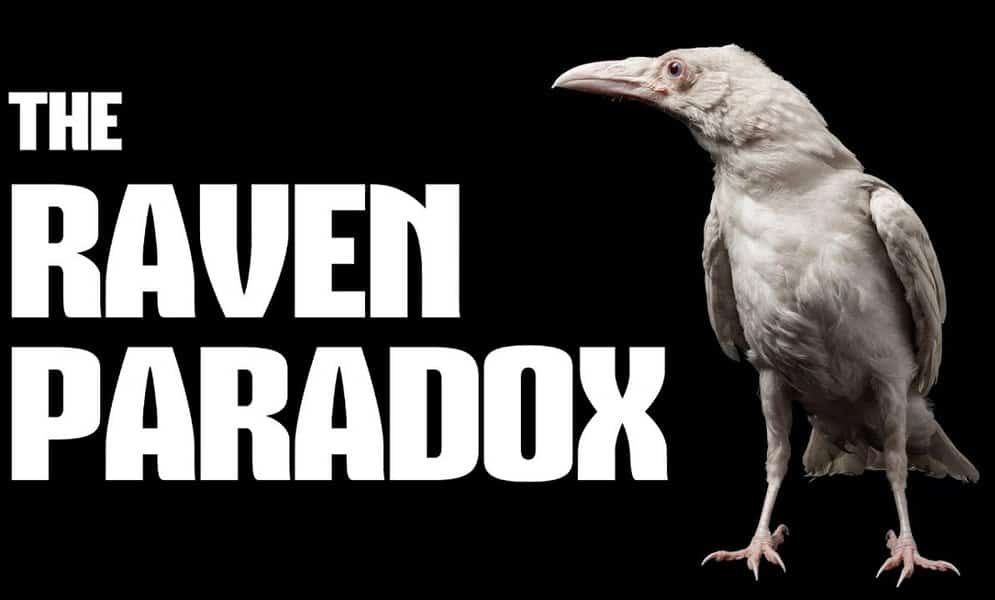
Initially proposed by Carl Gustav Hempel, the raven paradox suggests that all ravens are black. The evidence to support this statement is that apples are green and red, do all ravens are black. The paradox is an apparent contradiction pitting instincts against reasoning. It’s a simple idea that only gets more confusing. Since all ravens are black, if something is a raven, it’s black.
If something is non-black and non-raven, it’s proof that all ravens are black. In this case, green apples prove that ravens are black. The contradiction stems from the fact that ravens and apples are unrelated. Confused?
4. Arrow Paradox

Philosophers and scholars have debated the arrow paradox since the Greek philosopher Zeno introduced the concept. The arrow paradox relates to motion and spacetime. Zeno suggests that the arrow must change its position for a motion to occur.
According to the theory, the arrow is not in motion when in flight because it never changes position. Therefore, it’s always resting, even when in flight. The arrow cannot move to where it is since it’s already there. At the same time, it cannot move to where it is not either because everything is motionless at every moment.
5. Russell’s Paradox
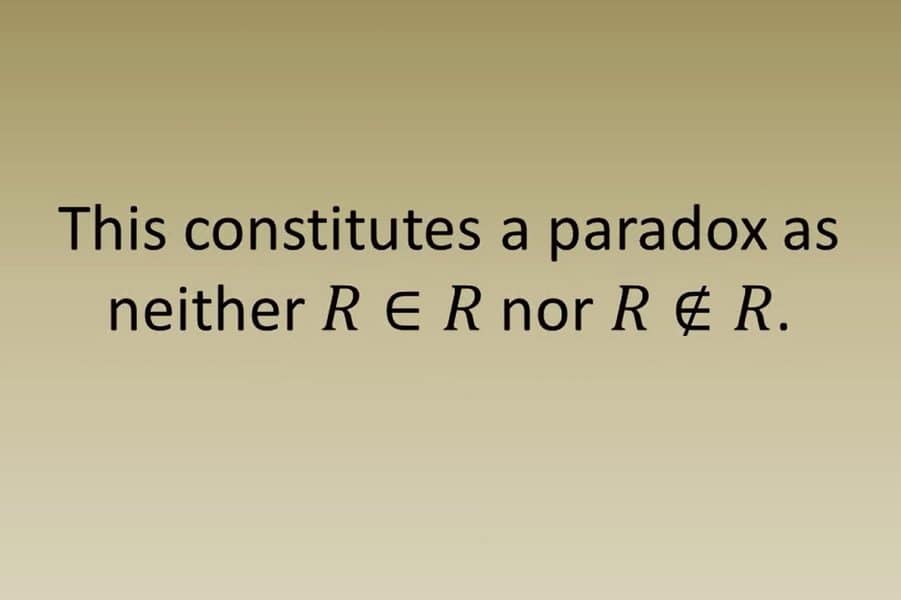
In the early 1900s, mathematician Bertrand Russell discovered a paradox that profoundly impacted mathematical logic. Better known as the Russell paradox, it challenges Georg Cantor’s set theory about infinite numbers established in the 1890s. Russell’s paradox shows that every set theory containing an unrestricted comprehension principle leads to a paradox.
For example, allow R to represent all sets of sets that are not members of themselves. If R is not a member of itself, it’s a member of all sets. If it is a member, then it’s not a member of itself. The complex theory is impossible for the average person to understand, so Bertrand Russell used the barber paradox (read more below) to explain his theory best.
[see_more_about title=”18 Weird Coincidences You Won’t Believe Are True ” link=”https://nl.jahaweb.com/interesting/weird-coincidences/”]
6. The Barber Paradox
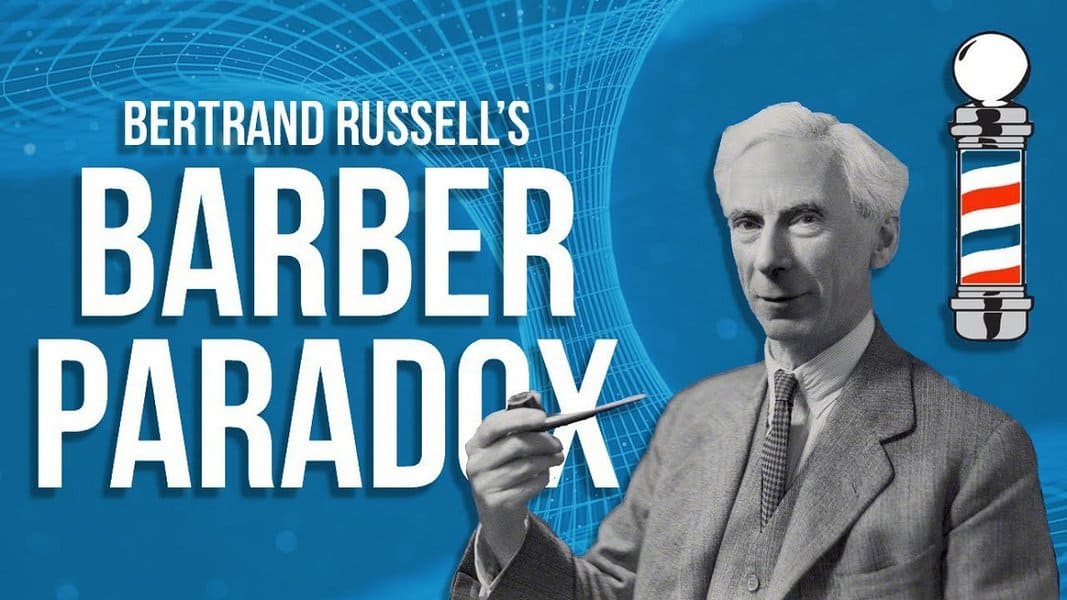
Since most people aren’t math wizards, Bertrand Russell realized he needed a more straightforward way to convey his paradox to the average person. An unnamed source gave Russell the barber paradox.
As the paradox explains, the barber is the one who shaves everyone and only those that don’t shave themselves. This leaves the question, who shaves the barber? If the barber shaves himself, that means he’s not the barber by definition. However, if he doesn’t shave himself, then he’s not the barber that shaves those that don’t shave themselves. Like Russell’s paradox, it has an impossible answer.
7. The Liar Paradox
The liar paradox is possibly one of the oldest paradoxes. Evidence suggests it dates back to Ancient Greece and even further. The paradox revolves around a liar who declares that he’s lying. If he’s lying, then he’s not a liar. But if he’s telling the truth, he’s also not the liar.
Another version of this is the assertion, “this statement is false.” If the statement is false, it must be true, meaning the information is false. The statement is both true and false, which is impossible and very confusing.
8. Achilles and the Tortoise
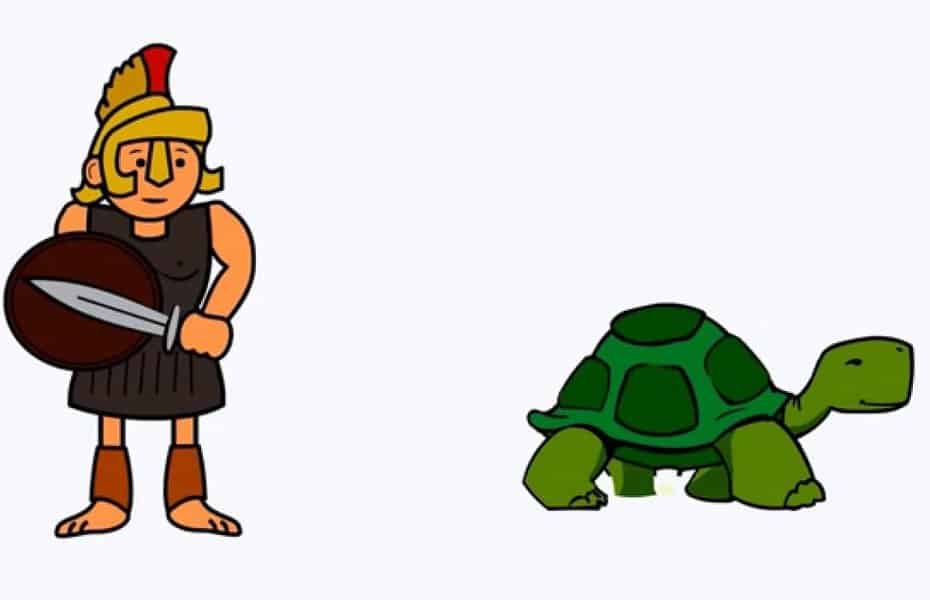
Achilles and the tortoise is a race that creates an endless paradox. The paradox revolves around a race between Achilles and a tortoise in which the faster runner cannot catch up to the slower one. Achilles decides to give the tortoise a 500-meter head start, meaning Achilles must first run to the tortoise’s starting point before he officially starts the race.
By that point, the slow-moving tortoise has already moved about 50 meters. Achilles must reach the tortoise’s last point to pass the tortoise, which gets smaller and smaller. Despite Achilles’ speed, he cannot pass the tortoise as it plods along, making it an endless race with no finish line in sight.
9. The Barbershop Paradox

Author Lewis Carroll is best known for writing the classic Alice’s Adventures in Wonderland. In the late 1800s, Carroll disagreed with Oxford Professor of Logic John Cook Wilson. They often argued, but this led to Carroll’s theory, the barbershop paradox. Carroll published his work in the 1894 issues of The Mind and used a short story to demonstrate his point.
In the tale, Uncle Jim and Uncle Joe head to the barbershop. At any given time, some or all three barbers, Allen, Brown, and Carr, are always in the shop. Jim heard that Carr is a talented barber and only wants to go if Carr is working. So Joe uses logic to prove that Carr is in the shop for certain.
Joe and Jim know two things for sure. First, the shop is open, and one of the barbers needs to be working. Second, Allen is a nervous wreck and takes Brown with him when he leaves the shop. Therefore, Joe assumes that if Carr is out and Allen is out, Brown is in the shop. Of course, Allen always takes Brown with him when he leaves. Therefore, Brown cannot be both in and out.
10. The Dichotomy Paradox
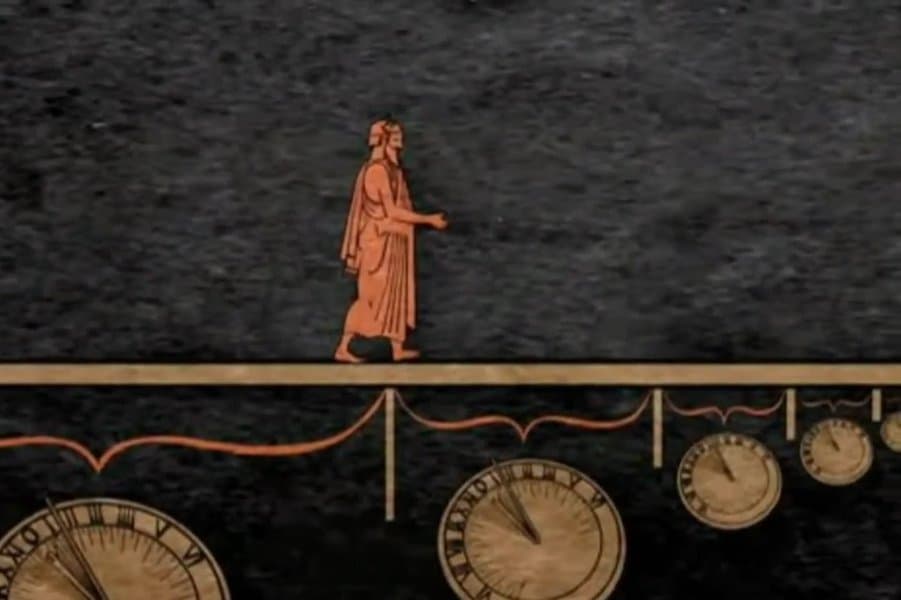
The Greek philosopher, Zeno of Elea, created a series of paradoxes that had a profound impact. The greatest minds have come together to discuss these theories. The dichotomy paradox suggests that an infinite number of tasks must be performed to reach the end, which is impossible.
“Zeno’s Dichotomy Paradox is the philosophical argument that states that an infinite number of things cannot be performed in a finite amount of time. The paradox is based on the idea that if you are in the middle of a room and want to get to the door, you must first walk halfway to the door, then halfway from the point where you previously stopped. You need to keep repeating this until you reach the door, but you will never actually reach the door because, with each motion, you only cover half the distance of the previous steps.”
[see_more_about title=”11 Leonardo da Vinci Inventions That Changed The World ” link=”https://nl.jahaweb.com/interesting/leonardo-da-vinci-inventions/”]
11. Casual Loop
The causal loop is another paradox related to time travel. The paradox refers to a future event that causes a past event. It’s also a common literary device for time travel. It even appears in numerous movies and TV shows, notably the hit show Lost. In his book, The New Time Travelers, Professor David Toomey suggests a perfect example of this paradox.
A time traveler purchases William Shakespeare’s classic play Hamlet from a local bookstore and travels back to Elizabethan London. The time traveler seeks out a young Shakespeare and hands him the play. Shakespeare copies the play and it becomes a timeless classic that transcends time. Thousands of copies hit bookstore shelves around the globe and in the future, the time traveler buys the play and travels back in time to show Shakespeare. It creates a paradox regarding the identity of the original author of Hamlet.
12. Sorites Parado

Sorites paradox relates to the vagueness of language. Also known as the paradox of the heap, it involves a “heap” of sand, which is a vague term with no clear meaning.
Say there is a large heap of sand in the middle of the floor. The pile is still a heap if a person takes away only one grain. But if an individual then removes one grain at a time from the heap until only one grain remains, is the pile still a heap when there is only one grain of sand left? If not, when did it stop being a heap?
The paradox also works in reverse. If one grain of sand is not a heap, then 100,000 grains of sand aren’t a heap either. In other words, it’s impossible to win with a “heap” of sand.
13. The Ship of Theseus
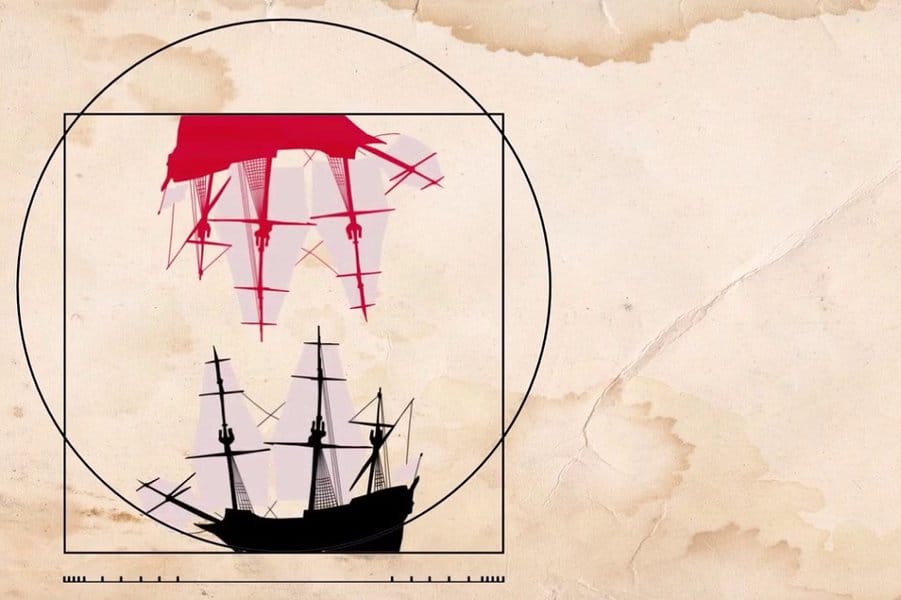
Paradoxes often have a deeper meaning beyond the original story. The ship of Theseus presents a thought-provoking paradox that leads to an impossible conclusion.
According to myth, the King and founder of Athens, Theseus, defeated the minotaur and rescued a group of children from King Minos. With his trusty ship, Theseus took the kids to safety on Delos island. To commemorate the event, the Athenians would take the ship back to the island of Delos every year.
The tradition continued for decades, resulting in damage to the vessel. It required new parts and pieces over time. Soon, philosophers questioned if it was even the same ship anymore. Their point was if the ship is now made up of new parts, is it still the same ship? This is another great example of a paradox that is a little easier to understand than some of the others on this list.
14. The Interesting Numbers Paradox

Technically, the interesting numbers paradox isn’t really a paradox. It all started from a conversation between mathematicians G. H. Hardy and Srinivasa Ramanujan. It centered around the existence of “interesting” numbers versus “uninteresting” numbers. Most people assume that all numbers are uninteresting, but the fact that numbers are uninteresting makes the numbers interesting.
The conversation between the two math geniuses revolved around the number 1729. Hardy noted it was the number on his taxicab, which he deemed boring. However, Ramanujan stated that it’s an interesting number since it contains the smallest number, the sum of two cubes in two different ways. This paradox is one for the thinkers.
15. Hitler’s Murder Paradox
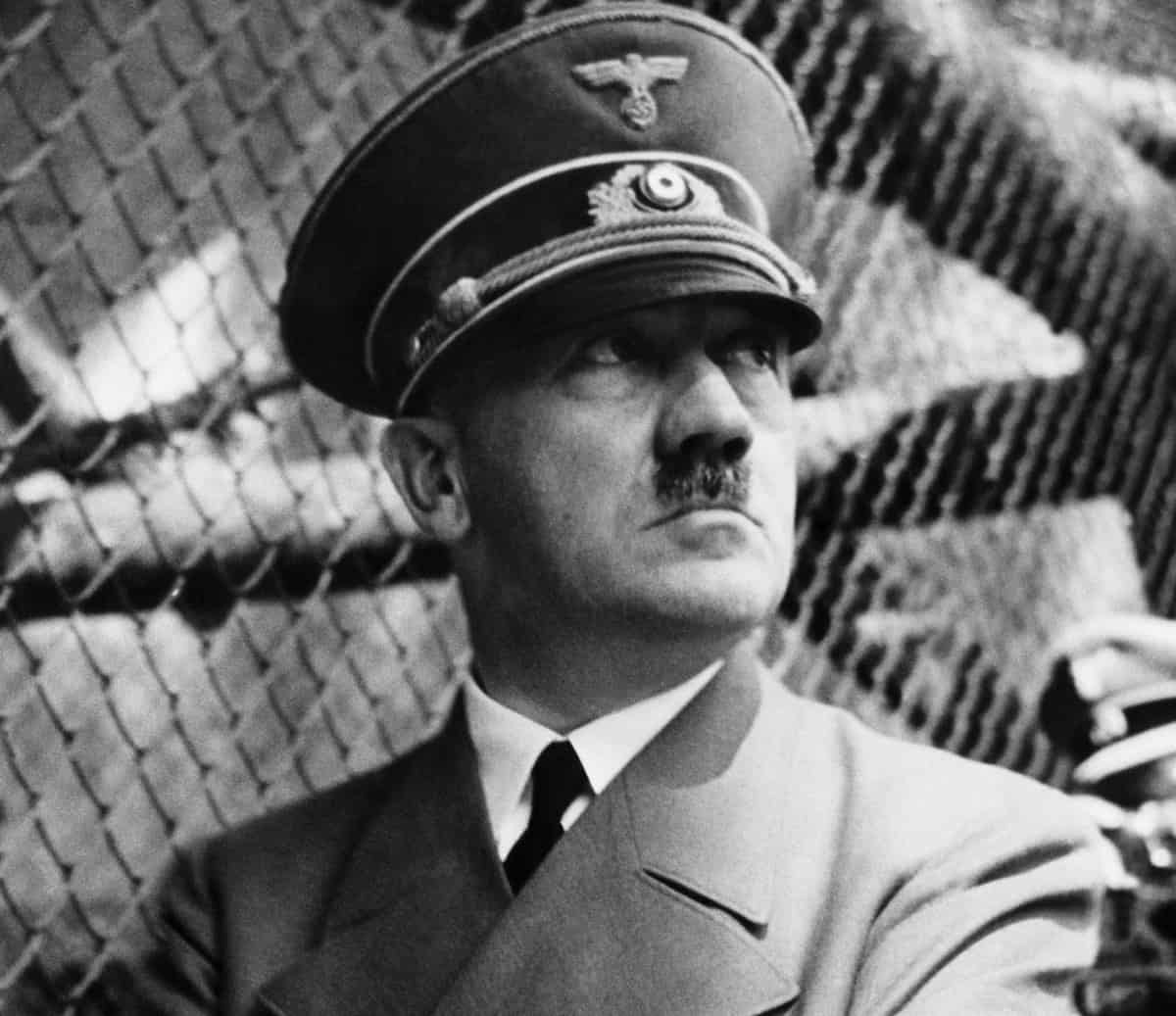
In the 1930s, Adolf Hitler’s rise to power instigated the Holocaust and World War II. While Hitler’s actions were evil and vile, they profoundly impacted the world and anyone born after his rise to power.
The Hitler murder paradox is a famous paradox that involves traveling back in time to murder Hitler before his rise to power. Murdering Hitler before he rises to power eliminates the need to travel back in time in the first place, creating a time paradox for the ages.
[see_more_about title=”11 Weird Rules In The Bible” link=”https://nl.jahaweb.com/interesting/weird-rules-in-the-bible/”]