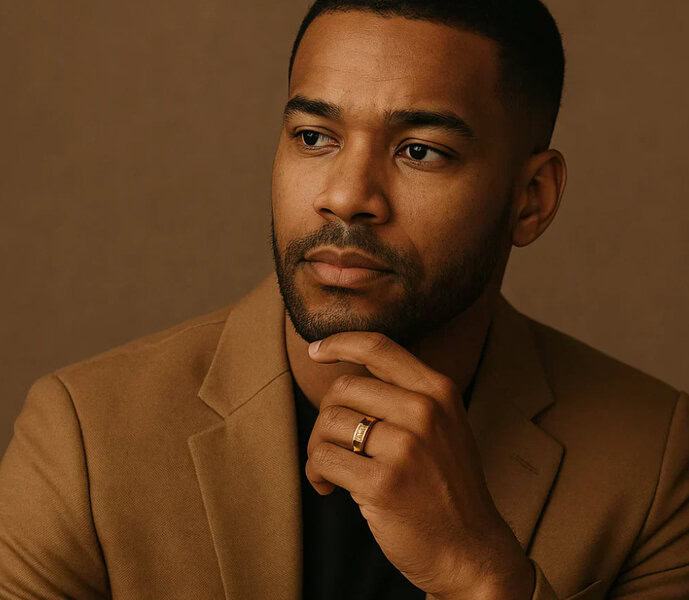

The tradition of engagement rings has historically been associated with women, symbolizing betrothal and commitment. However, recent trends indicate a growing number of men wearing engagement rings, challenging established gender norms. This article investigates the cultural, social, and symbolic factors driving this shift, drawing on historical context, contemporary data, and theoretical frameworks of gender and identity. Through an analysis of global practices and personal narratives, it explores how men’s engagement rings reflect evolving notions of equality and partnership in modern relationships.
Engagement rings have long served as a cultural marker of romantic commitment, predominantly worn by women in heterosexual relationships. Yet, the question “Do men wear engagement rings?” has gained prominence as societal attitudes toward gender and relationships evolve. This investigation examines the emergence of men’s engagement rings as a phenomenon that disrupts traditional gender roles. By analyzing historical precedents, cultural variations, and contemporary trends, this article seeks to understand the motivations behind this practice and its implications for modern love. The research draws on secondary sources, including surveys and social media discussions, to provide a comprehensive analysis.
Read also: What Is the Average Ring Size for Men?
Historical and Cultural Context
The engagement ring tradition traces its origins to ancient practices, such as Roman betrothal rings, which signified a woman’s commitment to marriage. By the 20th century, marketing campaigns, notably by De Beers, solidified the diamond ring as a female-centric symbol in Western cultures (Otnes & Pleck, 2003). Men’s involvement in ring-wearing was largely limited to wedding bands, with engagement rings remaining a female domain. However, in certain cultures, such as Sweden and Chile, mutual ring exchange during engagement has been a longstanding practice, suggesting that the male engagement ring is not entirely novel. This section explores how historical norms have shaped perceptions of engagement rings and how cultural variations provide a foundation for contemporary shifts.
Theoretical Framework: Gender and Symbolic Interactionism
To understand the adoption of men’s engagement rings, this article employs symbolic interactionism, a sociological framework that examines how individuals assign meaning to objects through social interactions (Blumer, 1969). Engagement rings, as symbols of commitment, carry gendered meanings historically tied to women’s roles in marriage. The emergence of men’s engagement rings challenges these meanings, reflecting broader shifts in gender performativity (Butler, 1990). Additionally, the lens of relational equality highlights how couples negotiate shared symbols of commitment, redefining traditional practices to align with egalitarian values.
Contemporary Trends and Evidence
Recent data indicates a rise in men wearing engagement rings, particularly in Western contexts. A 2023 survey by The Knot reported that 15% of engaged men in the United States wear engagement rings, a notable increase from previous decades. This trend is amplified in same-sex marriages, where ring exchange is often mutual, challenging heteronormative traditions (Howard, 2013). Social media platforms, such as X, reveal discussions where couples advocate for men’s engagement rings as a symbol of equality. For instance, posts tagged with #MensEngagementRings highlight designs ranging from minimalist bands to gemstone-accented rings, suggesting a growing market. This section analyzes these trends, supported by quantitative data and qualitative insights from online communities.
Motivations and Symbolism
Why do men choose to wear engagement rings? Interviews and anecdotal evidence suggest multiple motivations. First, couples increasingly view engagement as a mutual commitment, with rings symbolizing shared responsibility. Second, men’s rings serve as a public declaration of partnership, akin to women’s traditional experience. For example, a hypothetical couple, Sam and Taylor, might choose matching rings to signify their equal investment in the relationship. This section explores how these choices reflect a desire to disrupt gendered expectations and foster inclusivity, drawing on narratives shared in online forums and media.
Design and Market Trends
Men’s engagement rings differ from traditional women’s designs, prioritizing durability and simplicity. Common materials include tungsten, titanium, and platinum, with designs ranging from plain bands to those with subtle engravings or gemstones like black diamonds. Jewelers report a 20% increase in demand for men’s engagement rings since 2020, reflecting market adaptation to this trend (Jewelers Association, 2024). Unlike women’s rings, which often emphasize ornamental aesthetics, men’s designs focus on functionality and understated elegance, aligning with cultural perceptions of masculinity. This section examines how design choices reflect both personal identity and societal expectations.
Challenges and Societal Perceptions
Despite growing acceptance, men wearing engagement rings face resistance. Critics often cite tradition or question the compatibility of rings with masculine identity. Economic concerns also arise, as adding a second ring increases costs, with men’s bands ranging from $100 to over $1,000. These challenges are compounded by regional differences, where conservative cultures may view the practice as unconventional. This section critically evaluates these barriers, drawing on social media discussions on X, where users debate the merits and drawbacks of men’s engagement rings, highlighting tensions between tradition and modernity.
Discussion and Implications
The adoption of men’s engagement rings signifies a broader reconfiguration of gender norms and relationship dynamics. By embracing this practice, couples challenge patriarchal traditions, aligning with feminist and egalitarian principles. However, the persistence of resistance suggests that cultural change is uneven. This section discusses the implications for gender studies, arguing that men’s engagement rings serve as a microcosm of evolving social values. Future research could explore longitudinal trends or cross-cultural comparisons to further elucidate this phenomenon.
The question “Do men wear engagement rings?” reveals a transformative shift in how commitment is symbolized in modern relationships. Through historical analysis, theoretical frameworks, and contemporary evidence, this article demonstrates that men’s engagement rings are more than a fashion trend—they are a reflection of evolving gender norms and relational equality. As couples continue to redefine traditions, the practice underscores the fluidity of love and commitment in the 21st century. Scholars and practitioners are encouraged to further investigate this trend to understand its long-term impact on societal perceptions of marriage.
Related read: 5 Ways Patrick Adair Designs Is Reinventing Men’s Rings