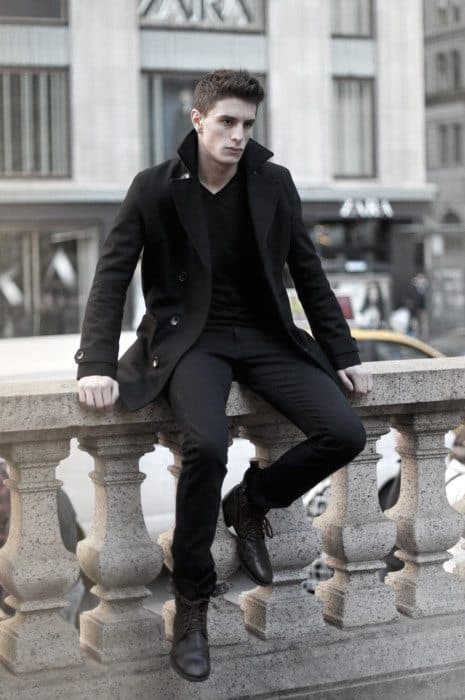

Outerwear is doing more than just keeping people warm. According to recent market research, the global men’s coats and jackets segment is worth over 50 billion dollars and is on track to approach 76 billion dollars by 2030, so this category is not slowing down. A well cut peacoat for men can move from office to rooftop bar with almost no effort, especially when it is paired with the right knit underneath.
What makes a great peacoat truly versatile is how it works with layers. Choosing a classic navy or charcoal style like a tailored peacoat for men gives a clean foundation, then the texture and color of the sweater underneath can dial the look up or down. The coat sets the structure, the knitwear adds personality.
What should you look for in a men’s peacoat?
Start with fabric weight, shoulder construction, and button stance, because those three details dictate how often you will reach for the coat. Midweight wool or wool cashmere blends usually cover most of the season. A slightly structured shoulder keeps the line sharp over suits, while a higher button stance traps warmth when the wind picks up.
Length matters as well. A peacoat that hits just below the seat feels modern and works with both tailored trousers and denim. Anything much longer starts to look like a classic overcoat, while a very short cut can feel more like a casual jacket that struggles over a blazer.
How do you match your sweater to your peacoat?
The easiest approach is to treat the coat as your neutral frame and the knit as the focal point (it does not need to be more complicated than that). This is where fiber choice becomes important. A fine gauge merino Men’s Sweater slides cleanly under a slim peacoat without bulk, while a chunkier cable knit works better when the coat has a little extra room in the chest.
Color pairing is surprisingly forgiving. Navy outerwear with light gray or camel knits is the dependable option, but small shifts make a big difference. For example, dark olive wool worn under a navy peacoat gives a subtle, modern contrast that still feels workplace friendly.
Real world style playbooks
Retail observations show that men rarely buy a coat in isolation. Shoppers tend to pick up at least one sweater in the same visit, which means they are already thinking in outfits rather than single pieces. Many European multi brand menswear stores actually merchandise peacoats directly above stacks of matching knits to encourage this kind of outfit planning.
One practical example is the commuter wardrobe. Many professionals keep one coat on a wall hook by the door. A navy peacoat paired with a small rotation of knits can cover most scenarios:
- A fine merino crew for client meetings
- A half zip for casual Fridays
- A heavier rib knit for cold evening walks
Fit checks and small tailoring tweaks
Even the best fabric underperforms if the fit is off. When trying on a peacoat, people should always test it while wearing their typical winter knit. If the lapels pull or the side seams flare, sizing up or letting out the back seam slightly can transform comfort.
Sleeve length is another overlooked detail. A useful rule is to let the shirt cuff disappear completely, with the sweater just brushing the wrist bone. This framing keeps the overall line clean and prevents wind from sneaking in at the cuff.
Building a long term wardrobe
A peacoat and a tight edit of knitwear form a reliable winter toolkit. Pick one or two structured coats, then add high quality sweaters in different textures: smooth merino, airy cashmere, maybe one rugged lambswool piece for weekend trips.
Over a few seasons, this mix offers dozens of combinations without feeling repetitive. When the proportions are right and the peacoat and sweater quietly complement each other, you get on with your commute, your meetings, your dinner plans. The coat does its job, the knit keeps you warm, and style feels effortless instead of staged.
Read also: Car Coat vs. Peacoat