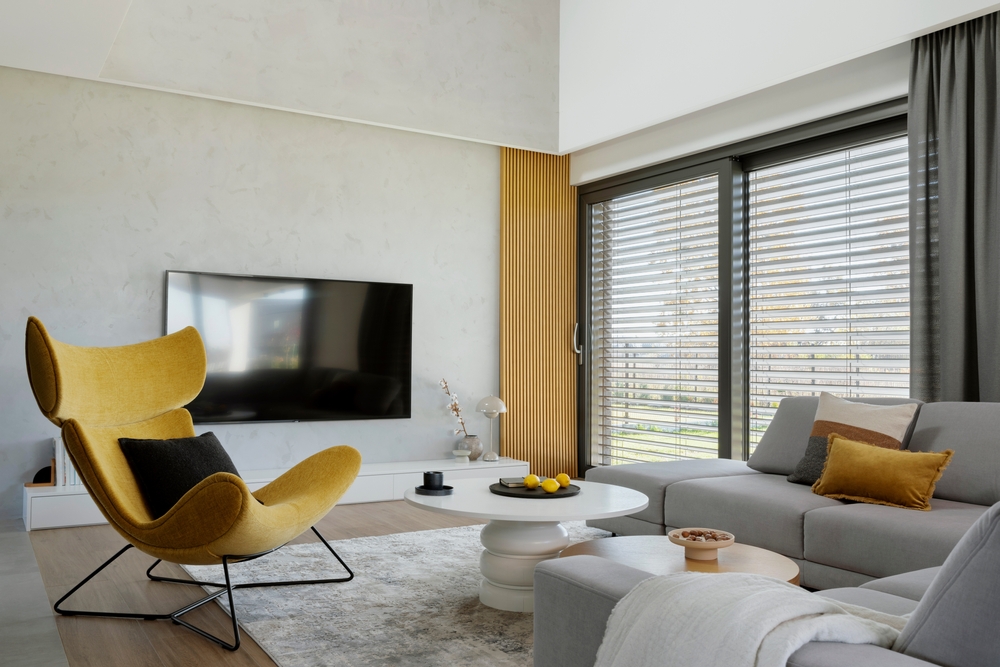

Minimalist interiors are loved for their calming simplicity: clean lines, neutral tones, and uncluttered spaces create a sense of peace that’s hard to match. But sometimes, a neutral home can start to feel too quiet — or even a little flat.
The solution? A thoughtful touch of color.
Adding color to a minimalist space doesn’t mean abandoning your aesthetic. With the right approach, you can introduce vibrancy, personality, and warmth while keeping your home serene and balanced. Here’s how to do it with intention and style.
Start With a Neutral Foundation
Minimalism works because it creates visual clarity. Before adding color, make sure your base is consistent:
- Soft white or beige walls
- Natural wood elements
- Simple, streamlined furniture
- Light textiles in cream, gray, or sand
A neutral foundation makes any added color look intentional — never overwhelming.
Choose a Color Palette That Matches Your Mood
Color affects how a room feels. Think about the emotion you want to create:
- Warm tones (terracotta, deep red, golden yellow) → cozy, inviting
- Cool tones (blue, forest green, soft teal) → calm, refreshing
- Bold tones (magenta, emerald, mustard) → energetic, expressive
Pick 1–2 primary colors and 1 accent shade. This ensures cohesion throughout the room.
Brands known for their strong color expression — like marimekko — make it easy to experiment with colorful home accessories that still feel artful and intentional.
Use Textiles as Your First Step Into Color
Textiles are the easiest and safest way to introduce color because they can be swapped out seasonally or whenever your mood changes. Try adding:
- Cushions
- Throws
- Curtains
- Table runners
- Kitchen towels
Start with one area — for example, the sofa — and build around it.
Introduce Color Through Patterns (Gently)
Patterns are powerful, but in a minimalist space they must be handled with care. The key is contrast.
Use pattern in one focal point, such as:
- A striking printed cushion
- A bold tablecloth
- An eye-catching mug set
- A framed textile print
Scandinavian patterns, especially those with clean shapes and strong repetition, pair beautifully with minimalist homes because they contain just the right amount of structure.
Add Small Decorative Items for Subtle Highlights
Color doesn’t always need to come from textiles. You can introduce it through:
- Ceramic vases
- Colorful mugs
- Decorative trays
- Planters
- Wall art
- Candleholders
These accents add personality and can be easily rearranged when you feel like refreshing your space.
Balance Color With Plenty of Negative Space
Minimalism is as much about what you remove as what you add.
For every colorful object in the room, make sure there’s space around it. This gives the item room to “breathe” and helps maintain a clean, calm aesthetic.
Use color as an accent — not a layer.
Let Nature Do the Work
Plants add color, depth, and texture without disrupting minimalism. They create a soft contrast against neutral interiors and pair wonderfully with patterned textiles or colorful ceramics.
Choose plants with distinct shapes:
- Monstera
- Olive tree
- Snake plant
- Eucalyptus
- Ferns
These add elegance without visual noise.
Final Thoughts
Minimalist interiors don’t have to be strictly monochrome. With a thoughtful approach to color, you can bring warmth, character, and modern Scandinavian charm into your home without disrupting the minimalist feel.
Whether through textiles, ceramics, or patterned elements, brands like marimekko offer an easy way to experiment with color while keeping your space refined and balanced.