
Tribal tattoos are most often connected with rites of passage or a significant transformation. Modern designs feature all kinds of unique styles for a more masculine appearance.
Tribal tattoos are most often connected with rites of passage or a significant transformation. Modern designs feature all kinds of unique styles for a more masculine appearance.
Although nowadays sick tribal tattoos are often made from tattoo artists themselves, there are still a few traditonal designs that derive from certain various historic tribes.
The shoulders, arms, and sides are the most popular areas on the body for tribal tattoos. The designs are made to accent or emphasize the shapes of the athletic body, or just to look awesome.
Many men get tribal tattoos for the ink durability so the appealing designs last longer, especially when it’s all black ink. Many traditional shapes from tribal tattoos originate or are inspired by different ancient tribes such as Native Americans, Hawaii, Polynesian, Celtic, or Haida.
There are also different themes the wearer can choose, from specific tribal gods all the way to personal lucky charms. These symbols can represent one’s personality, sort of like wearing your heart on your sleeve.
One of the best things about tribal tattoos is that they are highly customizable, so you can really get creative with several patterns inspired by the traditional classics. The combination of bold lines and clever use of negative space makes for infinite possibilities.
This group of sick tribal tattoos is sure to entice some ideas on how far and intricate these designs can go.
1. Traditional Polynesian & Maori Tattoos
Here are some great examples of these traditional tribal pieces that blew the minds of Captain Cook and his men all that time ago.
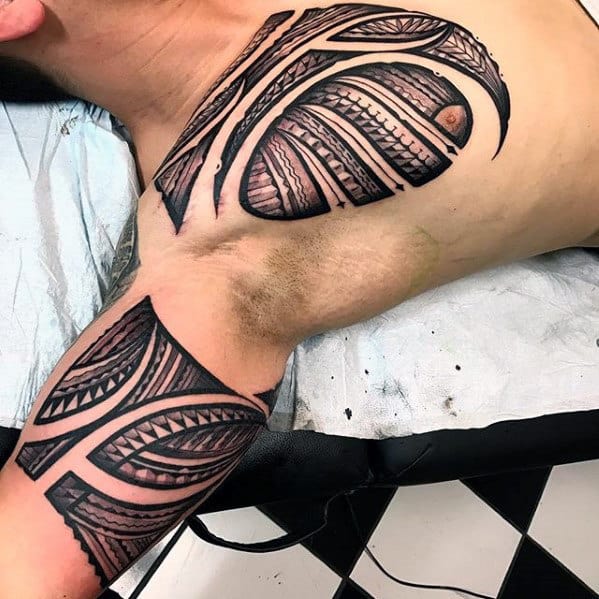
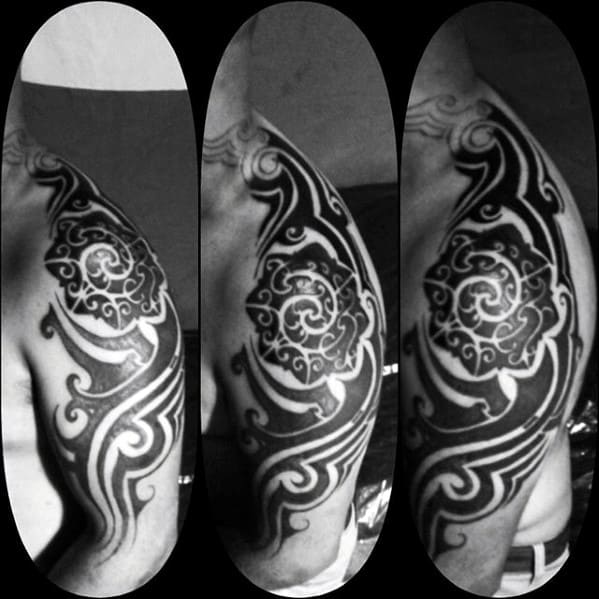
This interesting piece draws inspiration from the Maori and Polynesian tattoos designs, with layered patterns and an informed use of negative space to create a dynamic tattoo.
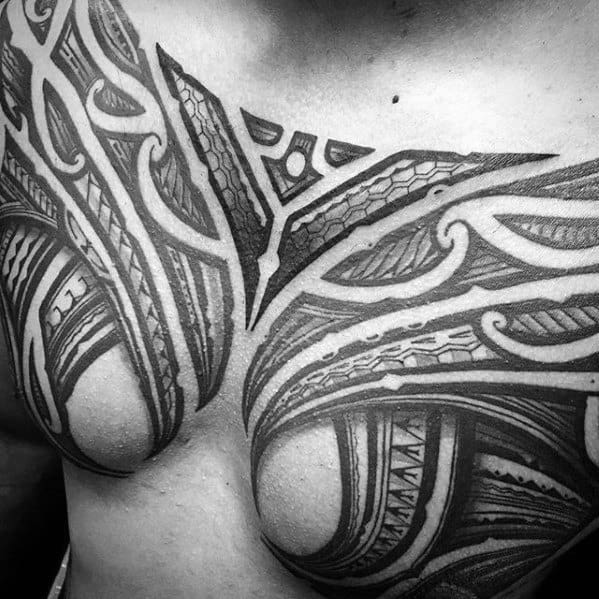
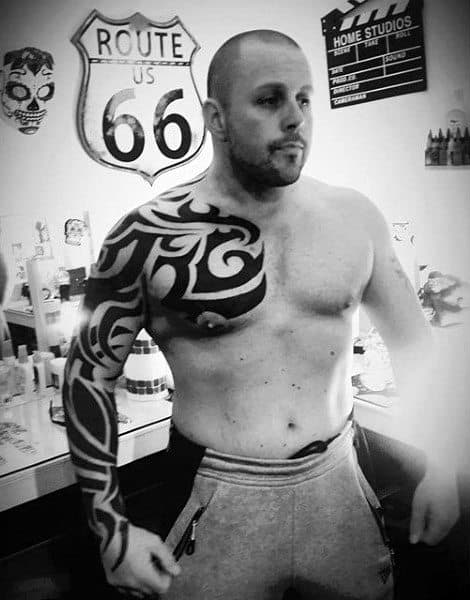
This large chest piece uses bold black ink, consistent shading and excellent negative space to create the alternating patterns typical of these powerful tattoos.
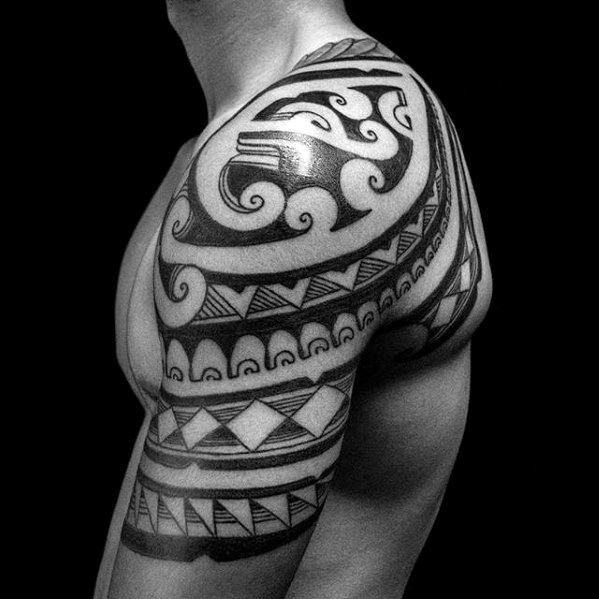
Here, the artist takes an approach that utilizes larger, looser shapes to create this tribal tattoo that uses big areas of negative space to create the swirls and whorls symbolic of ocean waves.
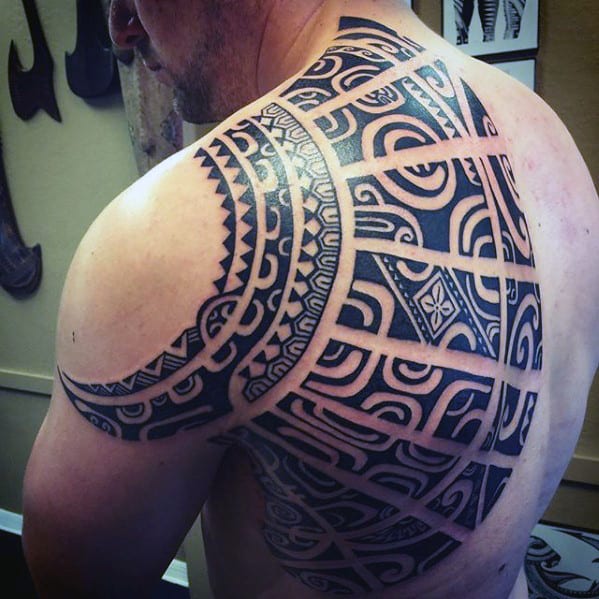
This tattoo uses fully saturated black ink to increase contrast and help the patterns to pop, while an interesting composition is created the makes use of the natural contours of the wearer’s body.
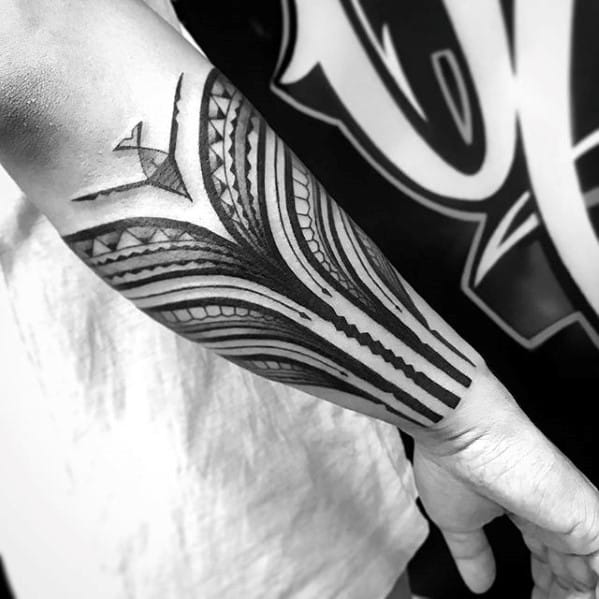
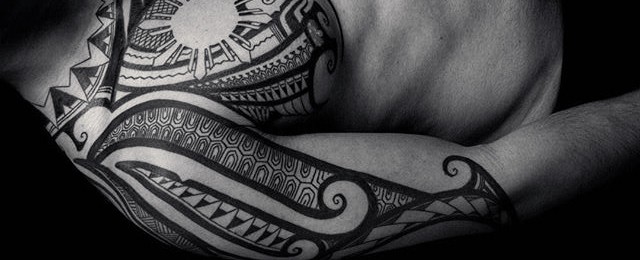
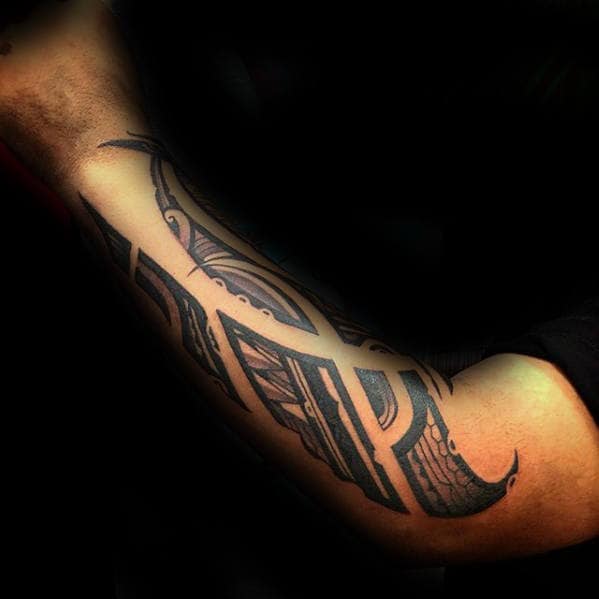
Here is a clean piece that takes the essential elements of the Polynesian style like the bold lines and geometric patterns and applies them to the forearm to create a quality tattoo.
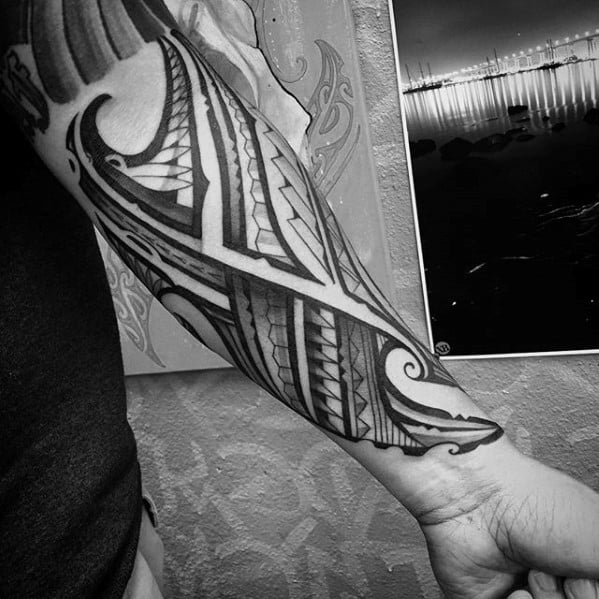
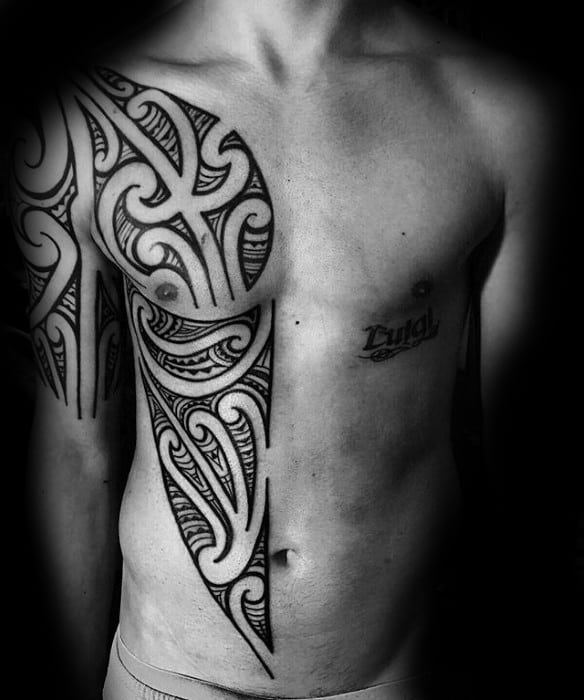
This is a stunning piece that takes the flowing lines and alternating patterns and uses well planned negative space to enhance these designs and excellent composition and placement to make for a more interesting tattoo.
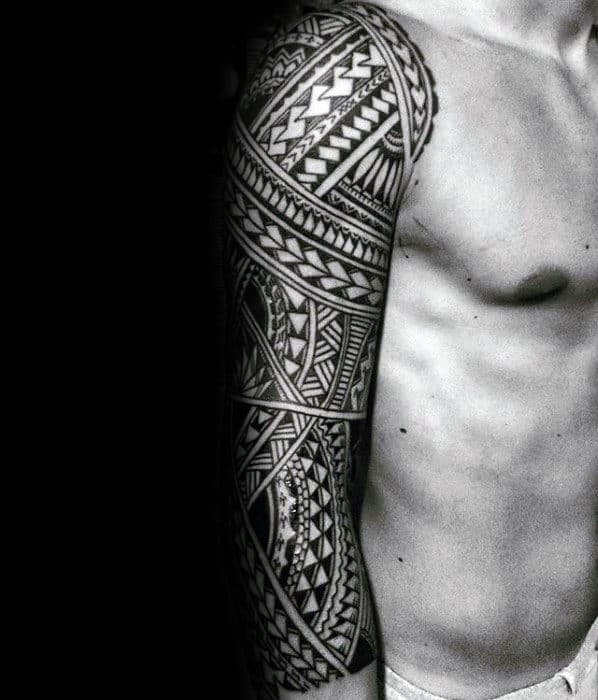
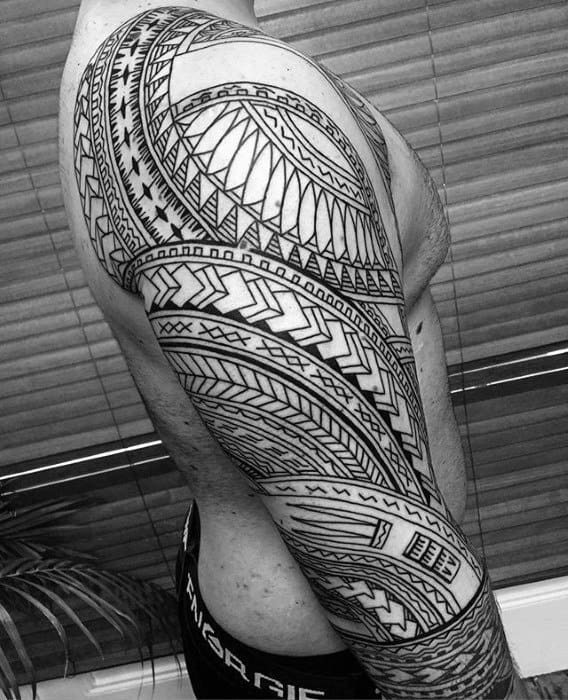
Here is a complex three-quarter sleeve that uses fully saturated black ink and precise negative space to create densely packed shapes that form the patterns in this clean tattoo.
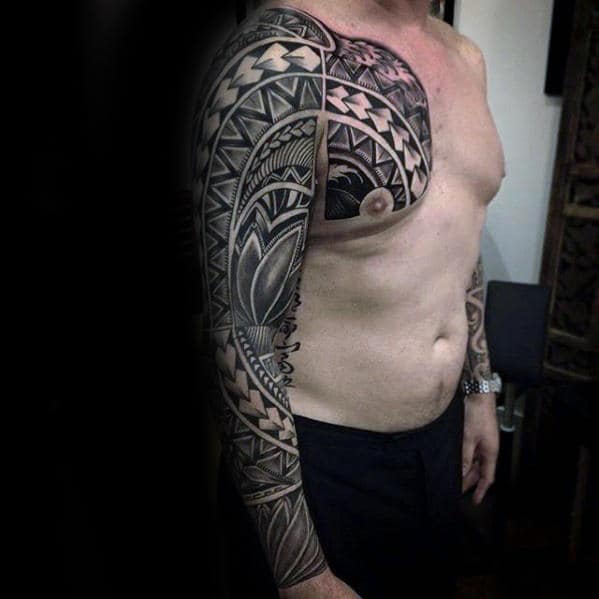
This is piece stands out from other Polynesian tattoos thanks to the clean black and gray shading that is incorporated into the patterns, giving this piece an added layer of depth.
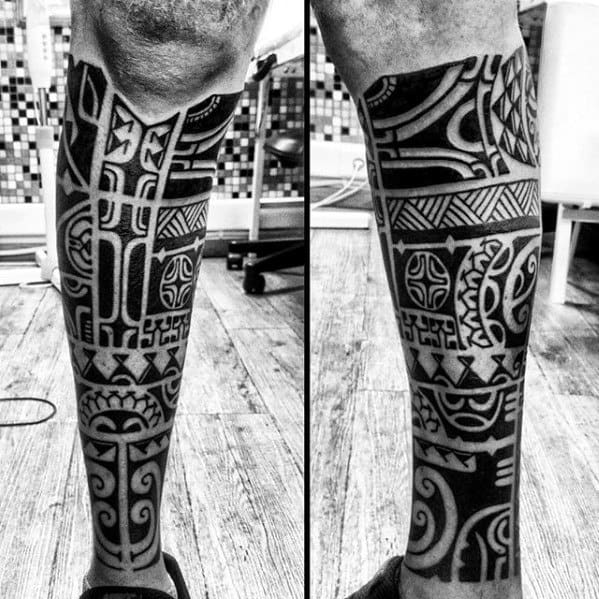
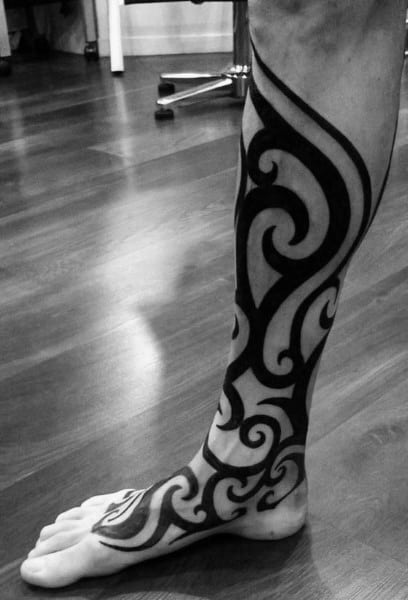
This half leg sleeve takes the complex patterns of these island inspired designs and applies them with fully saturated black ink and creates a balanced composition that follows the natural lines of the wearer’s body.
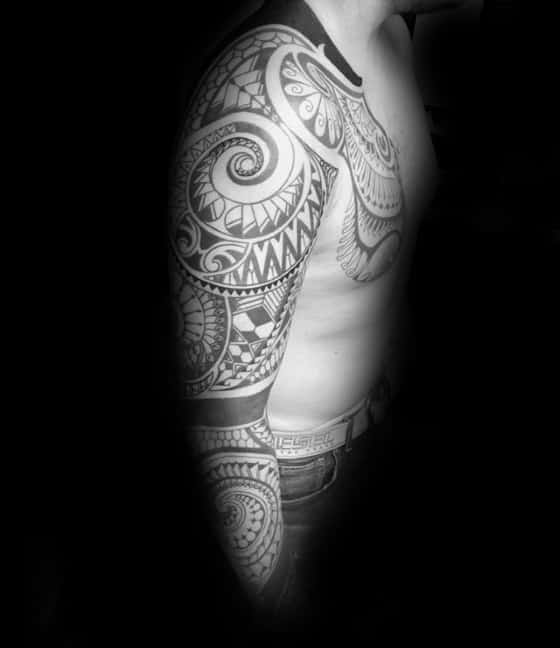
In this excellent full sleeve, the artist uses the classic patterns of Polynesian tattoo work and incorporates them into larger, swirling shapes that are reminiscent of roiling seas, or perhaps even a nautilus shell.
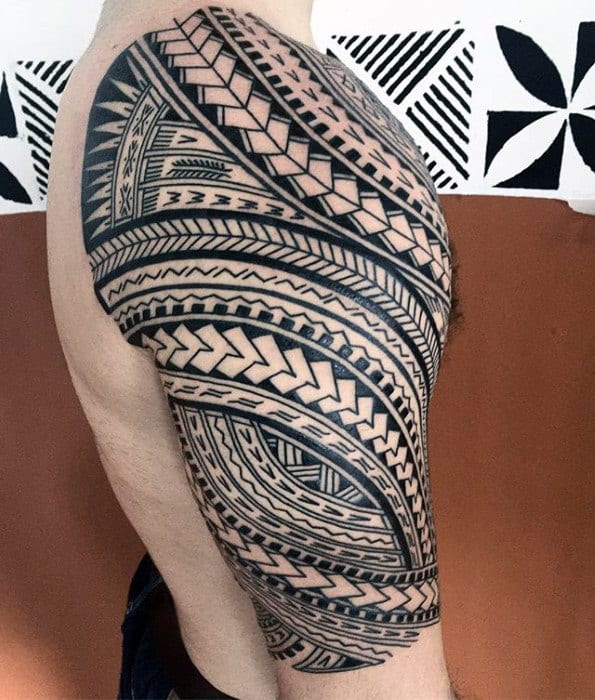
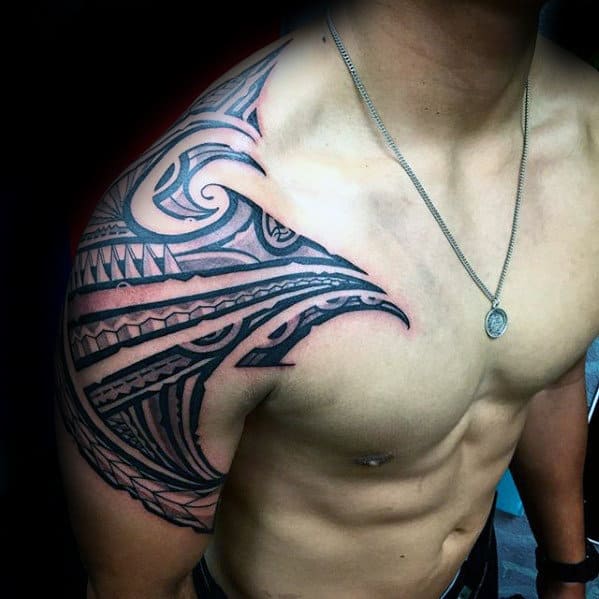
This is a well-executed example of a Polynesian inspired piece that uses clean application to create the quintessential patterns and balanced composition that highlights the musculature of the wearer’s arm and shoulder.
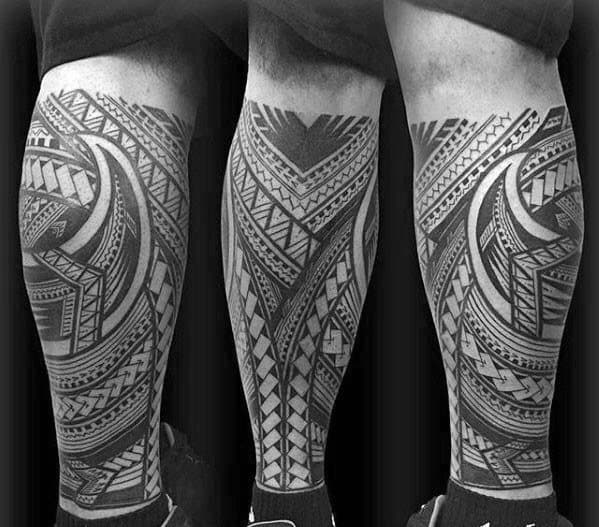
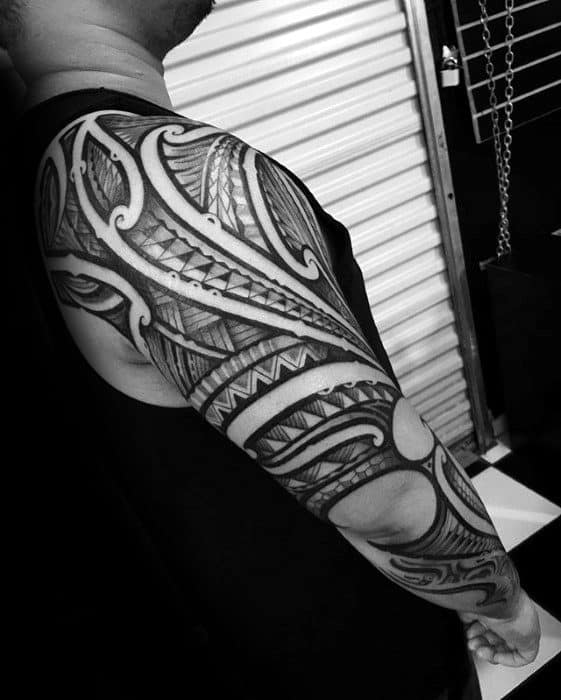
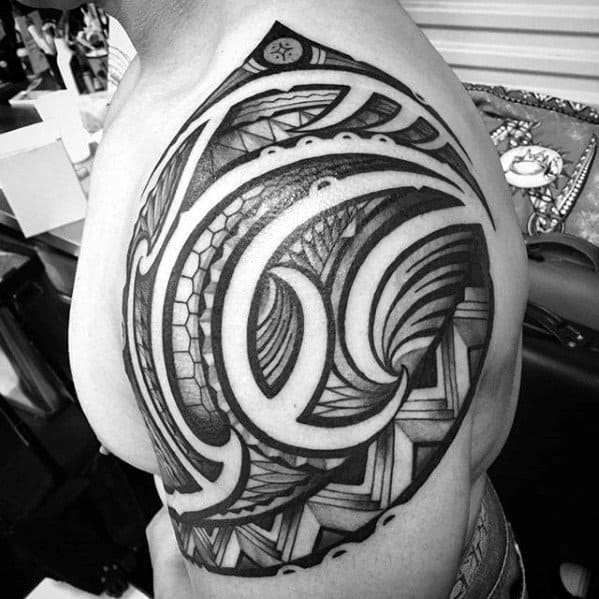
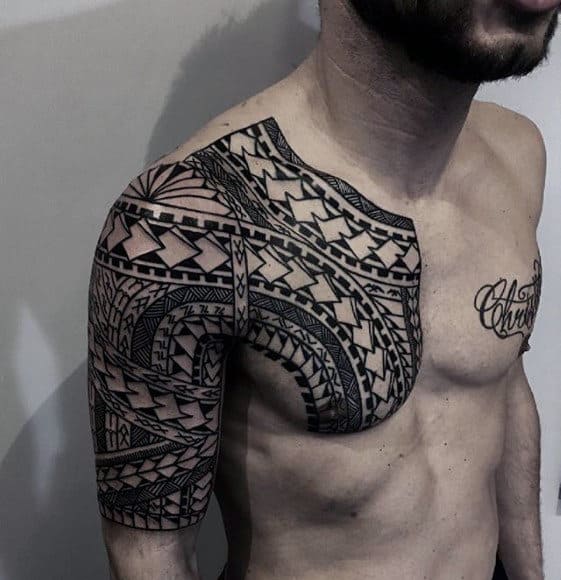
This is where it all began. The modern tradition of tattooing in the West can be directly traced back to these tribal designs that are so bold and striking. In the 18th century, Captain Cook led a number of expeditions into the South Pacific, eventually dying in Hawaii on his final voyage. These trips were some of the first times that Europeans were exposed to the tattoos of the native Pacific Islanders, and while they were at first shocked by the fearsome visages of these powerful tribes, the sailors soon became enamored with this fascinating tradition.
The word tattoo itself is borrowed from the Tahitian word tatau, further demonstrating the inextricable link between these islands and the worldwide tattoo culture we see today.
These traditional Polynesian designs are identifiable thanks to their large size and the layers upon layers of alternating patterns, many of which resemble the natural island features of fish scales, palm fronds and crashing waves. While these pieces were originally applied with a chisel-like tool made from seashells, in the contemporary world these stunning designs are most often given with modern tattoo machines.
2. Neo-Traditional Polynesian
These contrasting styles can make for some complex and interesting tribal tattoos and the following pieces are great examples of traditional pieces with a modern twist.
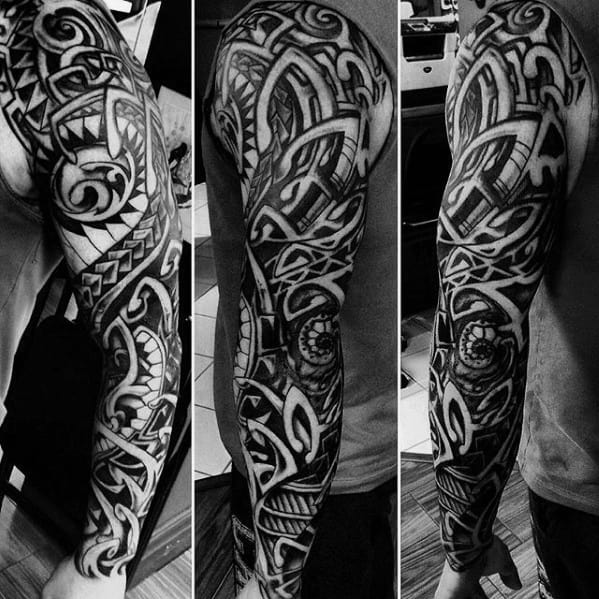
This an interesting piece that takes the instantly recognizable Polynesian geometric patterns and uses negative space to create lines that break up the tribal designs and add another layer the helps set this piece apart from other, more traditional tribal tattoos.
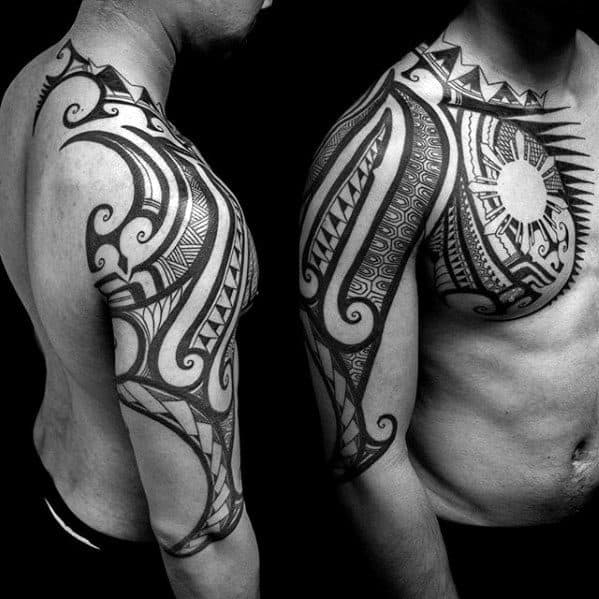
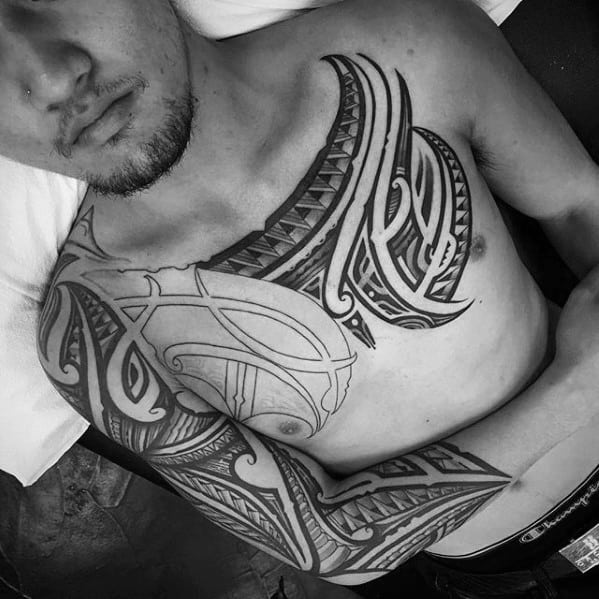
Here is an interesting chest and half sleeve tattoo that takes the traditional tribal patterns that are typical of Polynesian designs and uses well planned negative space to create a more interesting composition as well as forming the stylized sun shape over the chest.
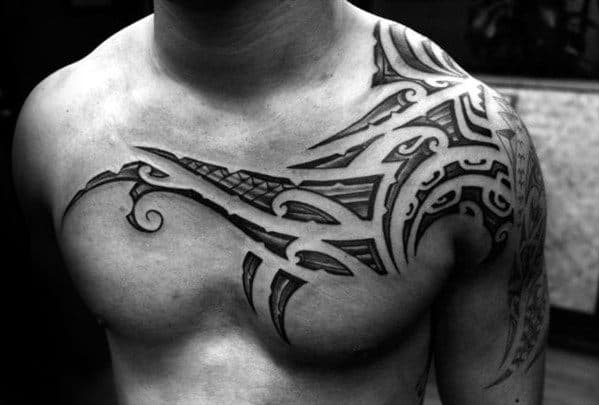
This artist uses the alternating patterns of South Pacific island work and clever negative space to create this tattoo whose overall shape brings to mind an octopus crawling up the shoulder and across the wearer’s chest.
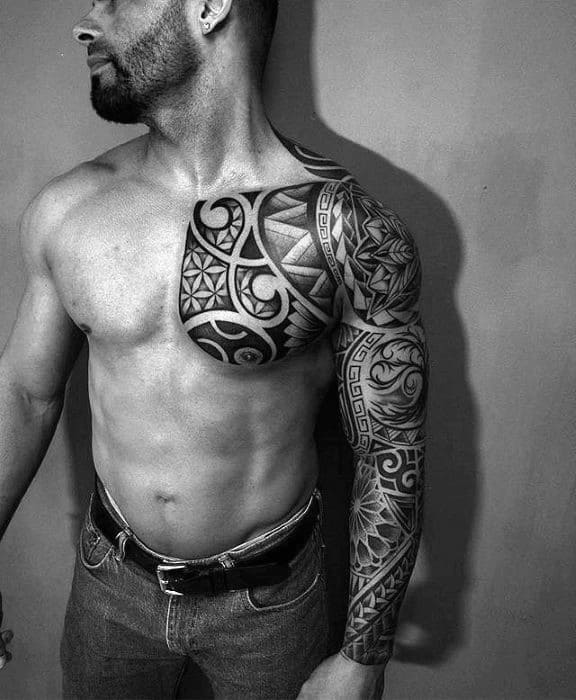
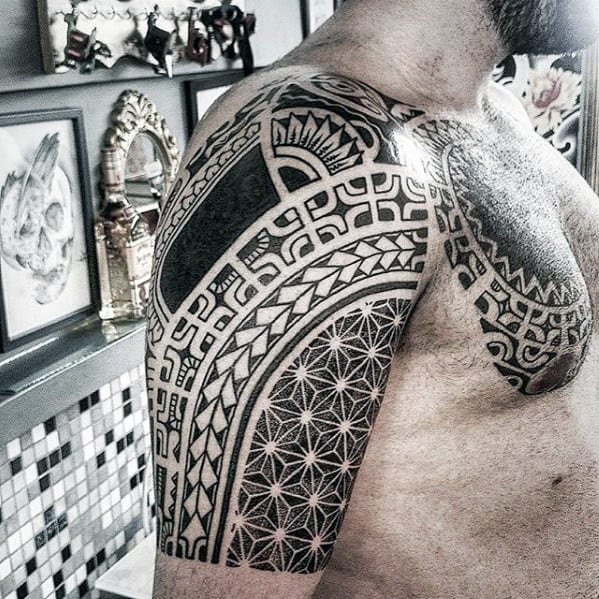
Here is another tribal inspired piece that takes elements from sacred geometry, applied using clever negative space and dense stipple shading to create a piece that is undoubtedly tribal, while managing incorporate other patterns important to the wearer.
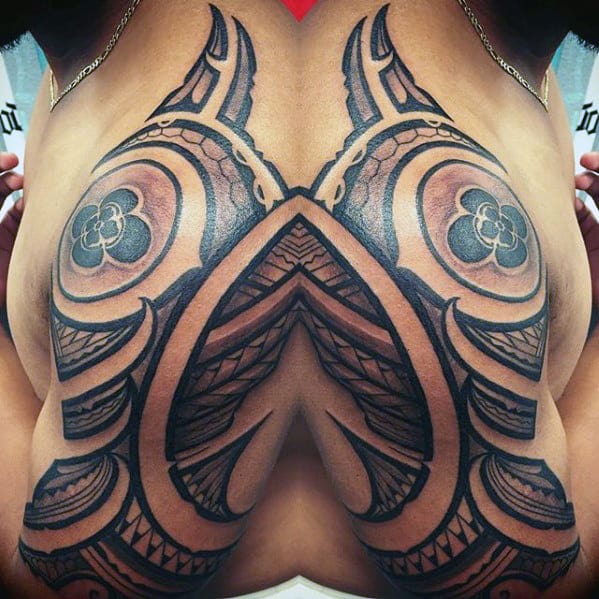
In this interesting piece, the artist uses large areas of negative space to create space that lets the patterns breathe while saturated black ink and smooth shading are used to create the flower on the shoulder that is reminiscent of Japanese designs.
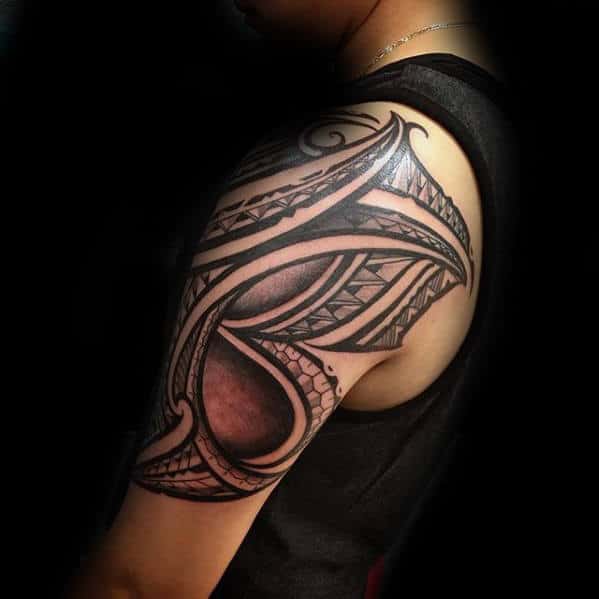
In this piece the artist takes the different patterns common in Polynesian tattoo designs and uses an interesting composition as well as consistent shading to create a unique tattoo.
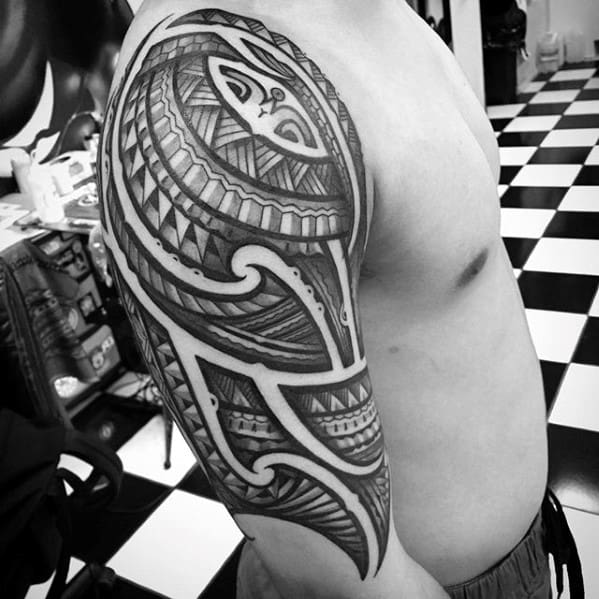
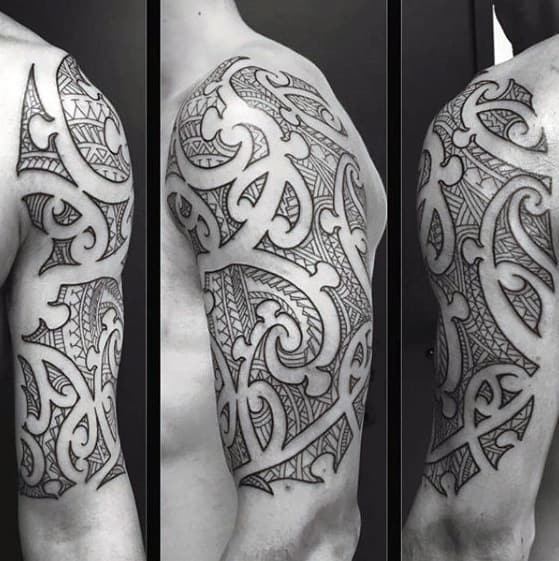
Instead of the dense black ink that is often seen in these Polynesian tattoos, this artist uses bold line work and negative space to create these complex patterns with large, swirling designs exposing blank skin and making for a more interesting tattoo.
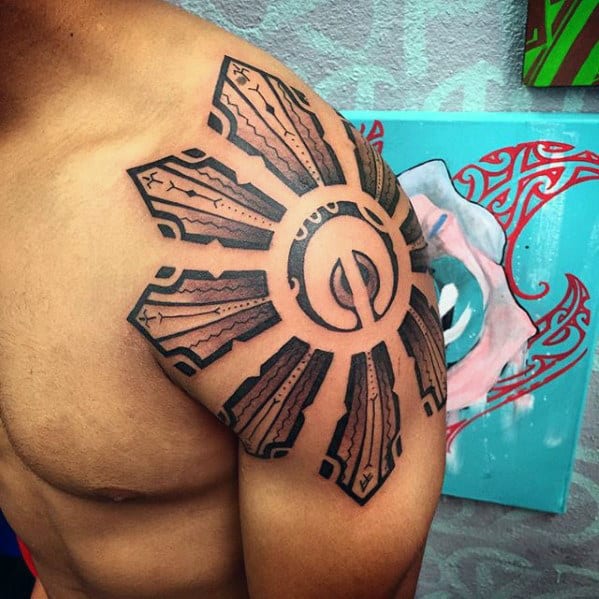
Here is a unique piece that takes the familiar patterns of the tribal designs and uses them to create a stylized sun that, while non-traditional, leaves no doubt about the South Pacific inspiration for this tattoo.
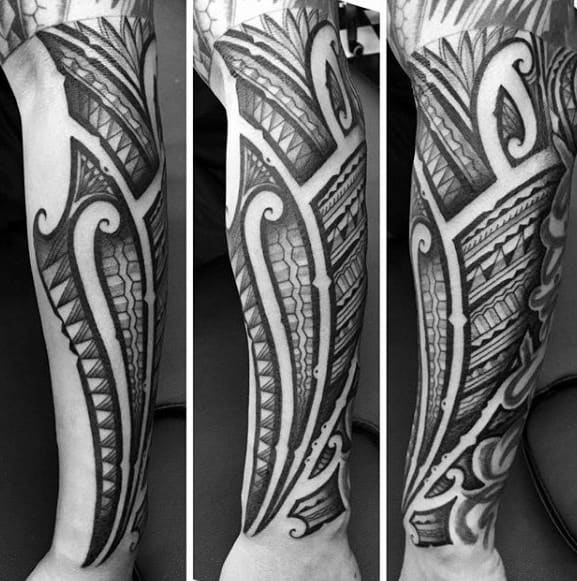
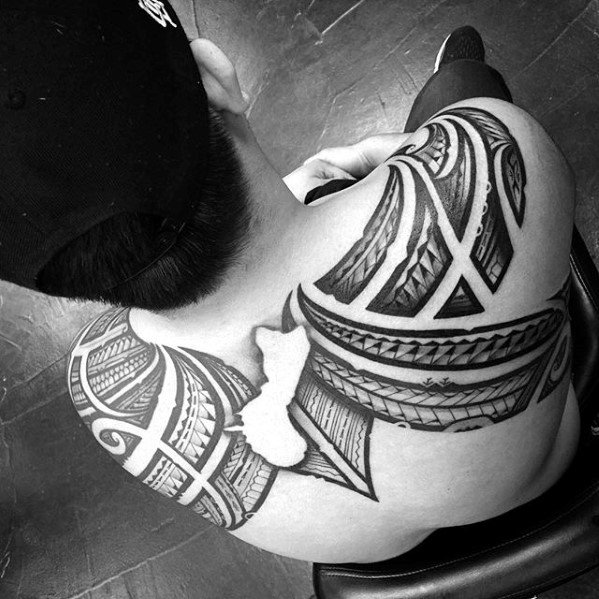
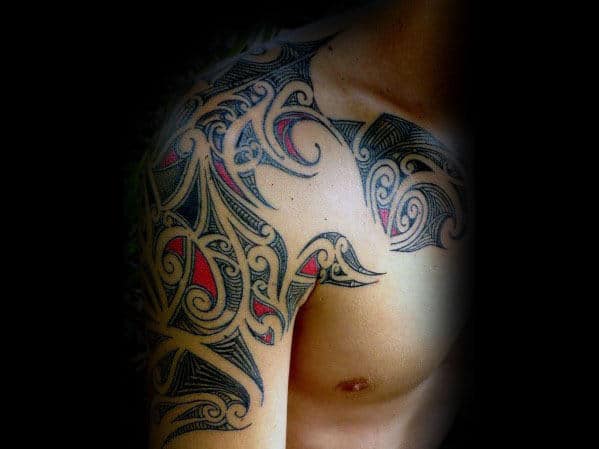
This piece takes the classic Polynesian patterns and uses negative space to create an interesting composition along with a limited use of color to set this piece apart from more traditional black and gray tattoos.
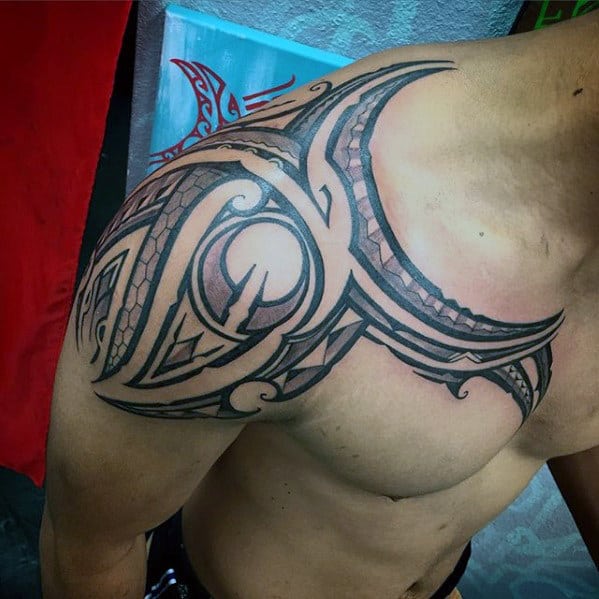
Bold lines and consistent shading are used in this shoulder piece to create the tribal patterns, while the placement and composition brings to mind stylized armor.
As with all mediums and styles, tattoos are constantly changing and evolving. Given the incredibly personal nature of this permanent art form, it makes sense that designs get tweaked, with existing patterns and shapes getting altered and upgraded to suit each individual’s varying taste and style. This is what makes the art form so exciting: as more people learn to tattoo and more people get ink the variety of input push the envelope of what is acceptable and in vogue.
There is no doubt however, that there are hardliners that believe traditions are there for a reason, and who think progress is at the detriment of existing practices. Thankfully, these people are in the minority in the tattoo world and innovation is valued higher than adherence to rules.
These neo-traditional tribal pieces incorporate many of the patterns and shapes that are used in more traditional Polynesian tattoos while altering composition and bringing other elements from different cultural legacies into the picture. One style that has been growing in popularity in recent time is the incorporation of elements from Sacred Geometry into the existing structure of Polynesian design.
3. Body Suits
Here are some great examples of tribal body suits from a number of different styles and traditions.
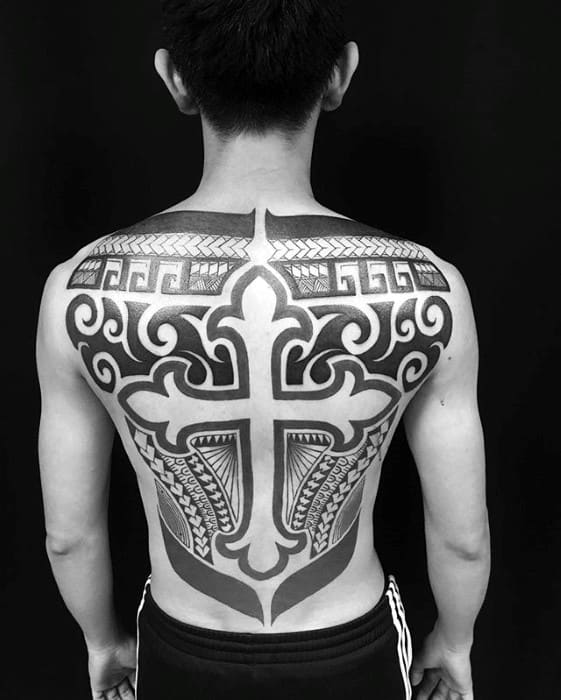
Here is a stunning, full back piece that takes Polynesian patterns applied in dense black ink and uses negative space to create a large, stylized cross at the center of the piece, completing this one of a kind tribal inspired tattoo.
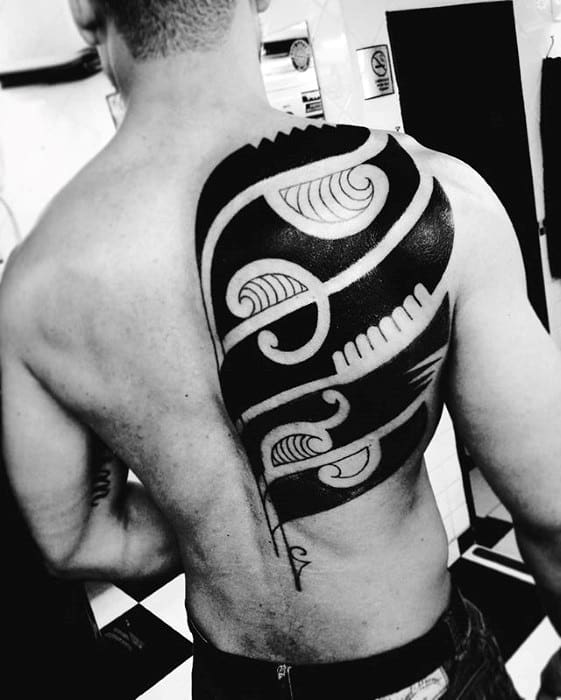
Here is an interesting piece that pulls some design elements from Polynesian work but uses large size and fully saturated black ink to create a tattoo that, while taking inspiration from tribal pieces is, a striking one of a kind back piece.
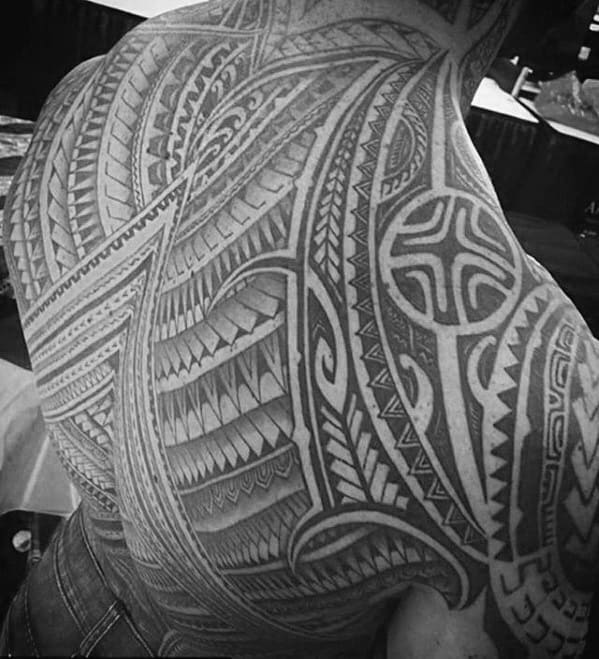
This is a stunning, full back tribal piece that perfectly creates the layered patterns that are reminiscent of fish scales, palm fronds and turtle shells that highlight the powerful ties to the natural world that these traditional tattoos represent.
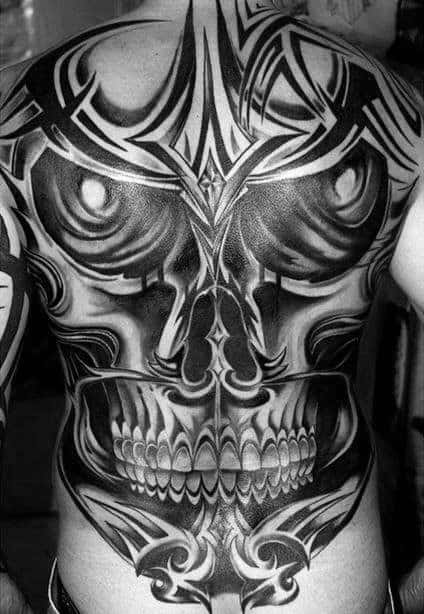
While this is definitely not a traditional tribal piece, this wild, full back tattoo takes elements of modern tribal tattoos like the elaborate swirls and edges, using them to create a massive black and gray skull.
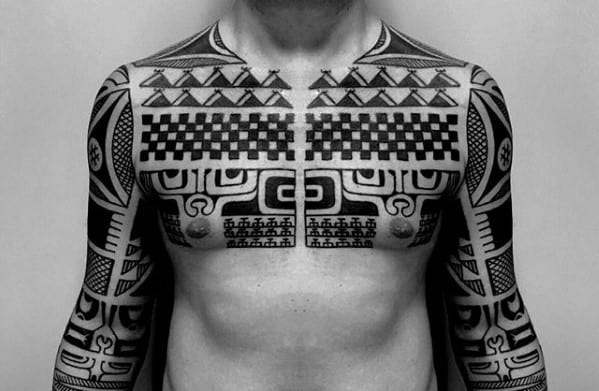
Here is an interesting half body suit that uses classic Polynesian designs and clean, consistent application of fully saturated black ink to create the layered patterns that are instantly recognizable in this striking tattoo.
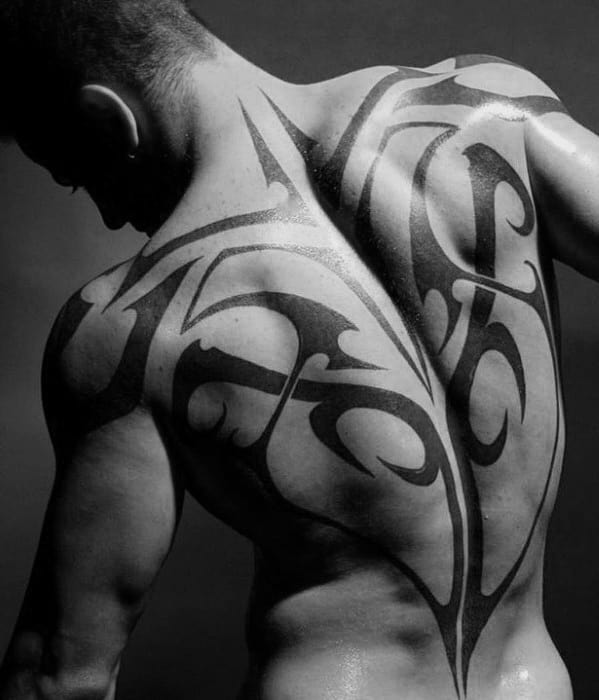
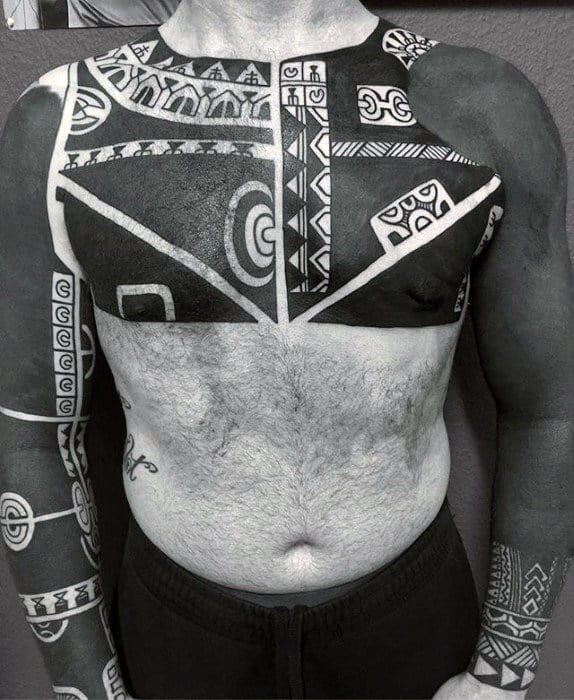
This piece is interesting for the limited use of tribal patterns that appear to be drawn from a number of different indigenous traditions—Polynesian patterns on the left wrist along with shapes that are more reminiscent of Mesoamerican designs on the chest and right arm—as well as large swaths of black ink to create an interesting tattoo.
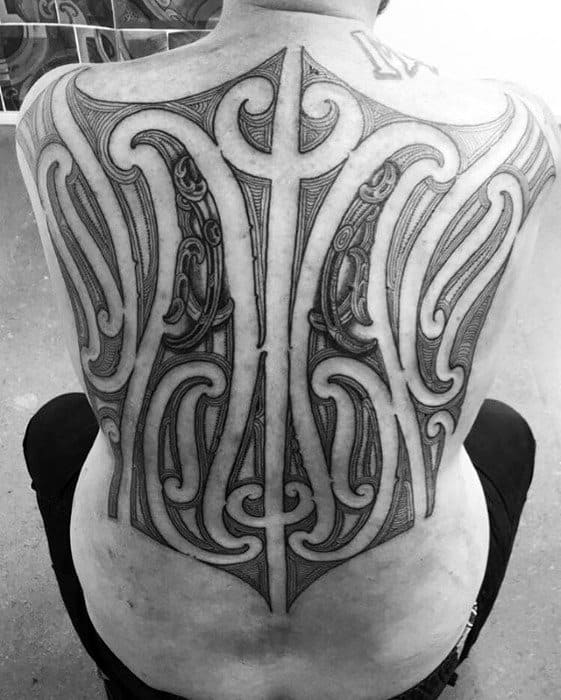
Along with the striking tattoos of the native Polynesians, there are many different tattoo styles that fall under the umbrella of “tribal”. The tattoos inspired by the Aztecs of ancient Mexico, the floral designs of the Iban people native to Sarawak and the intricate knots of the Celts are all considered tribal. This is not to mention the myriad of modern permutations of these ancient patterns and designs that have become popular around the globe.
That being said, all of these disparate styles have one thing in common: they make for excellent, large tattoos. Some tribal patterns—specifically Polynesian pieces—have a long history of body suits and full back pieces, while others simply contain all the necessary elements to translate perfectly into large full body tattoos.
Whether we are looking at the modern tribal designs that took over in the early 2000’s or a traditional Ta Moko of the fierce Maori people, large pieces of body art are sure to turn heads.
4. Textured Tribal Tattoos
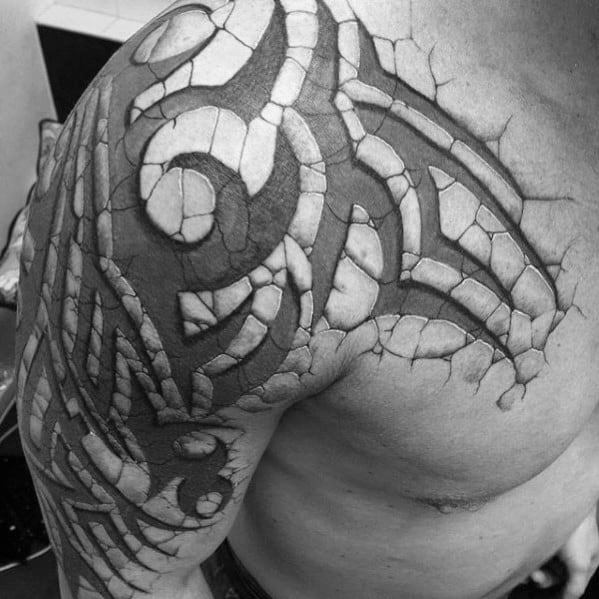
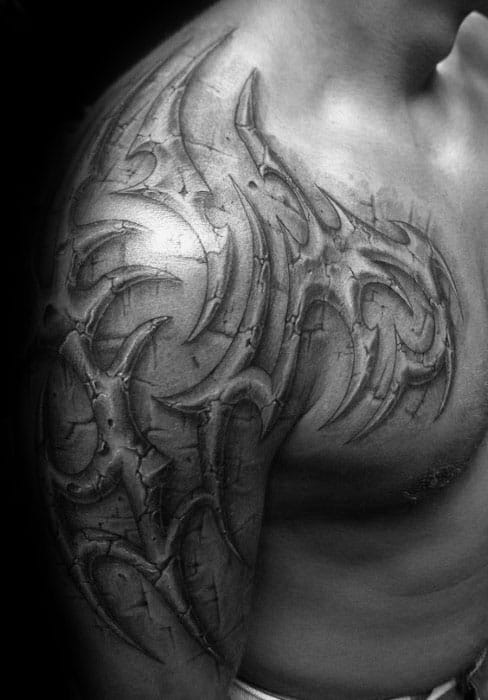
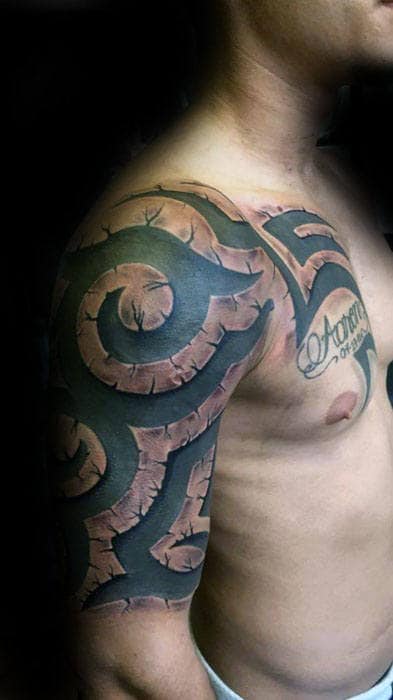
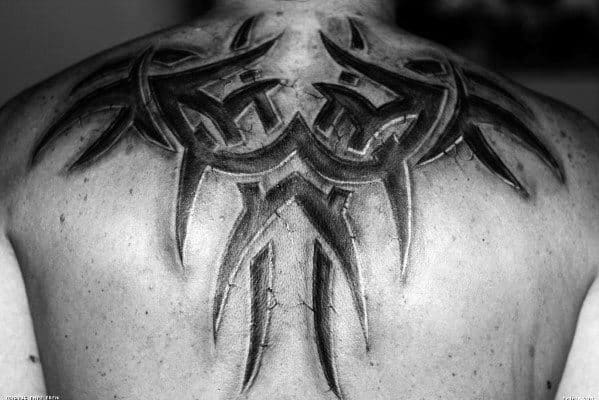
The following tattoos are great examples of how a talented artist can create a more unique tattoo by applying layers of ink that give the impression of a textured surface.
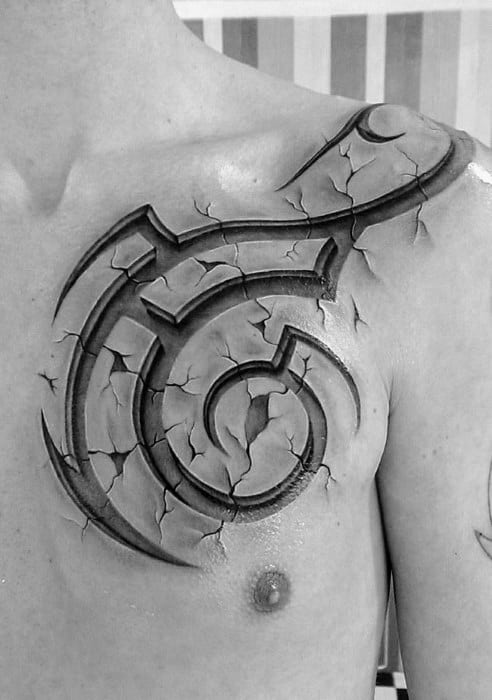
In this excellent piece, a modern tribal design is applied to the skin, although the most interesting aspect of this tattoo is the way that the artist uses drop shadows, a subtle gradation of tones and fine line work to perfectly recreate the effect of the piece being chiseled into weathered stone on the wearer’s chest.
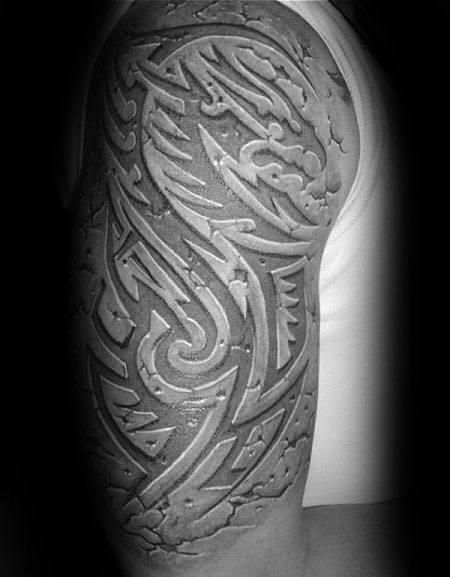
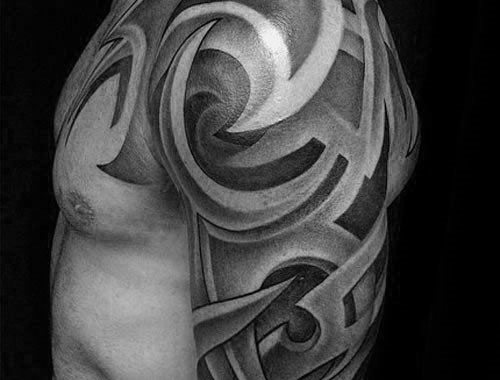
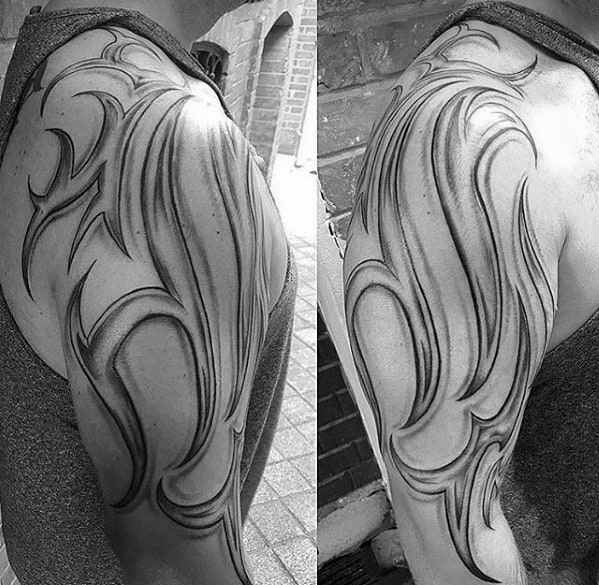
One of the best things about tattoos is the ability to draw inspiration for designs from just about anywhere. If you see an interesting image in a magazine, or on a TV program you can do a bit of research, bring it to an artist and they can create a tattoo that incorporates the design. What if you absolutely love the patina on an old sign board and want to recreate that effect in a tattoo? What about patterns carved into stone? A talented artist can capture the look and feel of different textures through various techniques.
When it comes to tribal work, an additional layer of texture on a tattoo can enhance the piece and take a relatively common design to the next level. Through the application of drop shadows, fine line work and clever shading the effect of weathered stone is achieved, giving these tribal tattoos the effect of being ancient glyphs, carved into cave walls.
5. Modern Tribal Tattoos
While these pieces are known as tribal they aren’t associated with any specific tribe, instead they take different aesthetics from tribal pieces and blend them into a new composite style. The following tattoos are some great examples of this style, though for some, they may serve as a lesson in why it is important to find a design that is timeless, and not part of a passing fad.
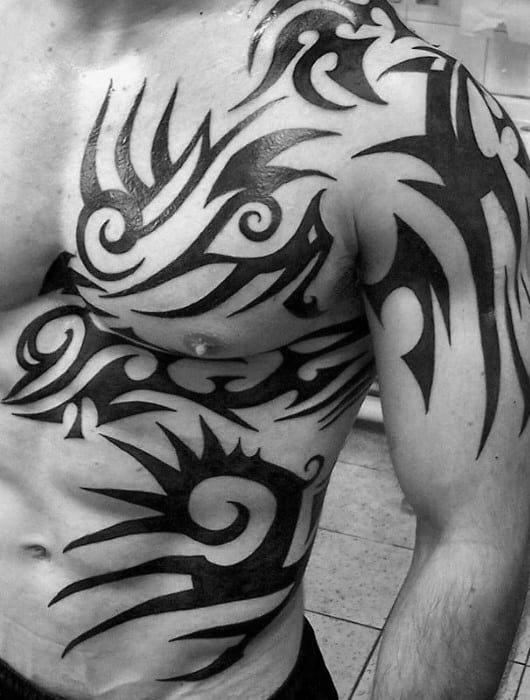
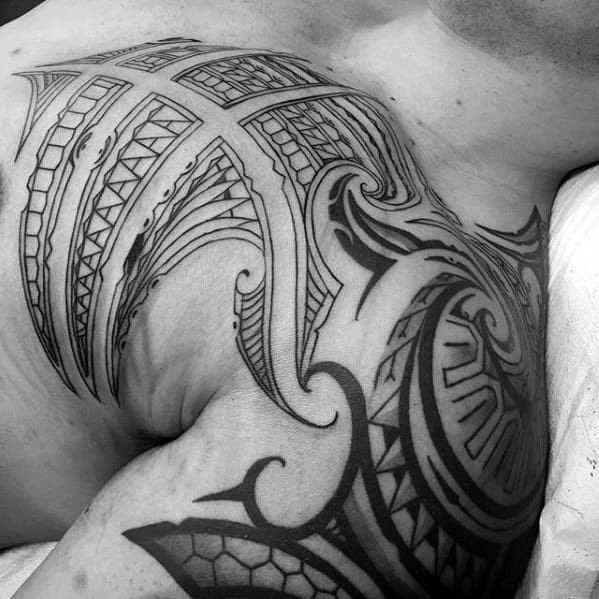
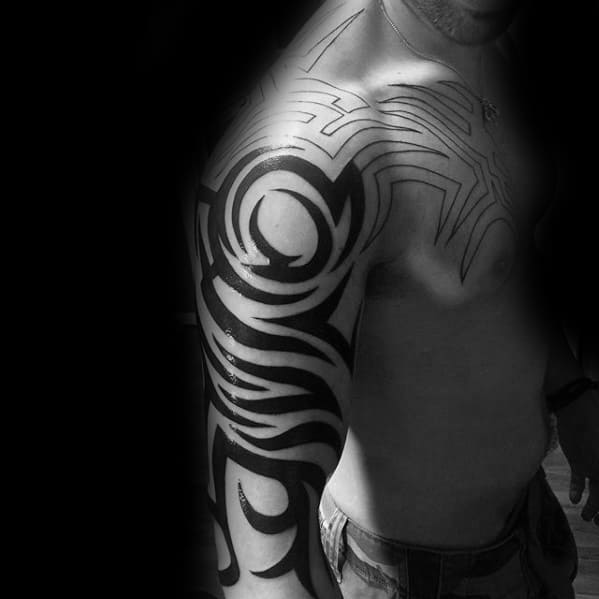
This large, black work piece is an excellent example of modern tribal designs with the swirls and whorls following the musculature of the wearer’s body and the sharp pointed edges of the patterns enhancing the aggressive look of this well applied tattoo.
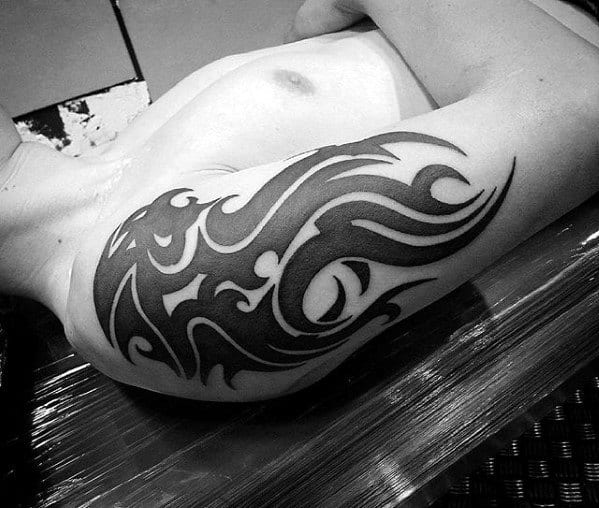
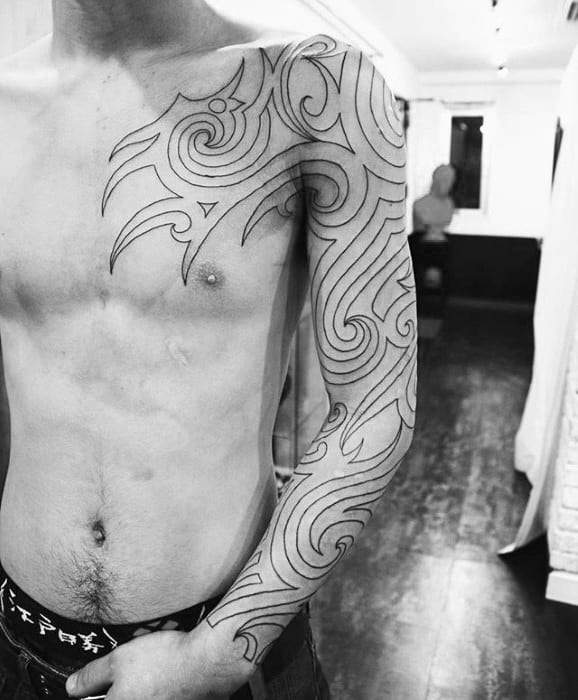
This piece is interesting for the way that it bucks the trend in modern tribal tattoos to fill the patterns in with dense black ink, instead opting for negative space and line work to create the patterns making for a more interesting tattoo and helping set this piece apart from similar work.
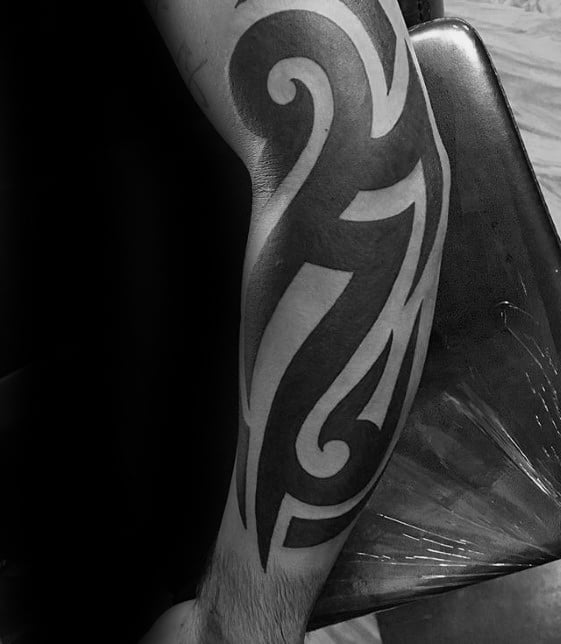
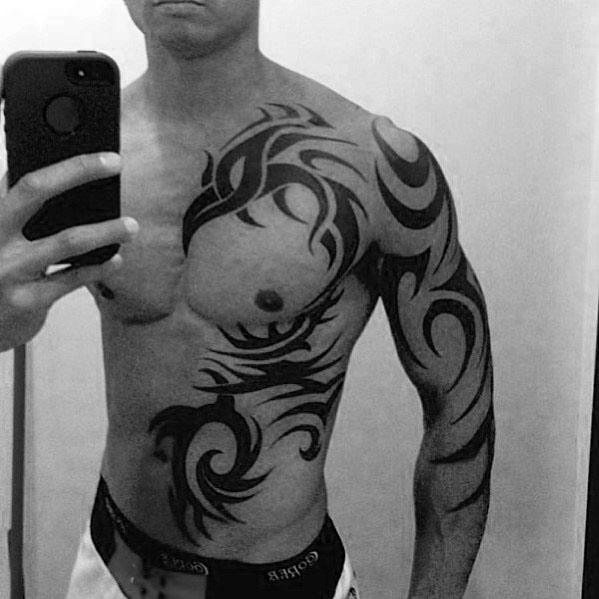
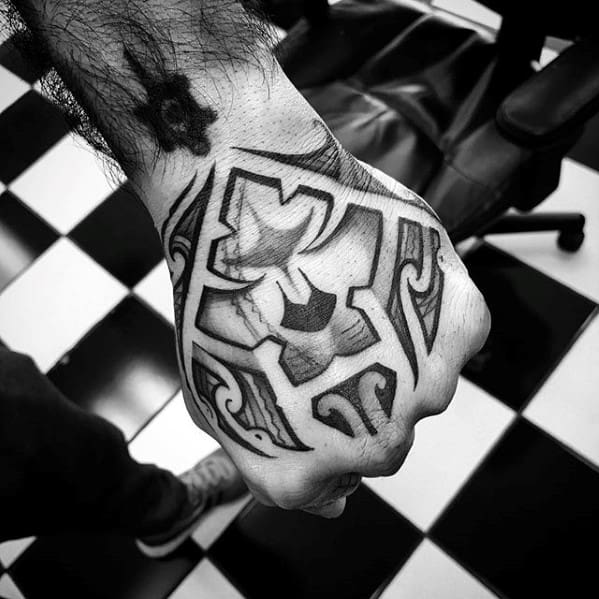
The late 90’s and early 2000’s were an interesting time. Japanese imports were gaining a new domestic market thanks to the Fast and the Furious, nu-metal was the musical revolution that was decidedly non-revolutionary, and bravado and swagger were the name of the game. In the same way as fads and trends from the past, different elements of existing culture were taken, twisted and something new and different was created.
Enter the modern tribal tattoo. These pieces, almost exclusively black and regularly large, utilize swirls and whorls but give them an aggressive feel by incorporating sharp edges reminiscent of decorative daggers. These pieces are usually designed to wrap around the wearer’s body, often in a way that emphasizes different muscle groups, further enhancing the aggressive look of these tattoos.
6. Unfinished Tribal Pieces
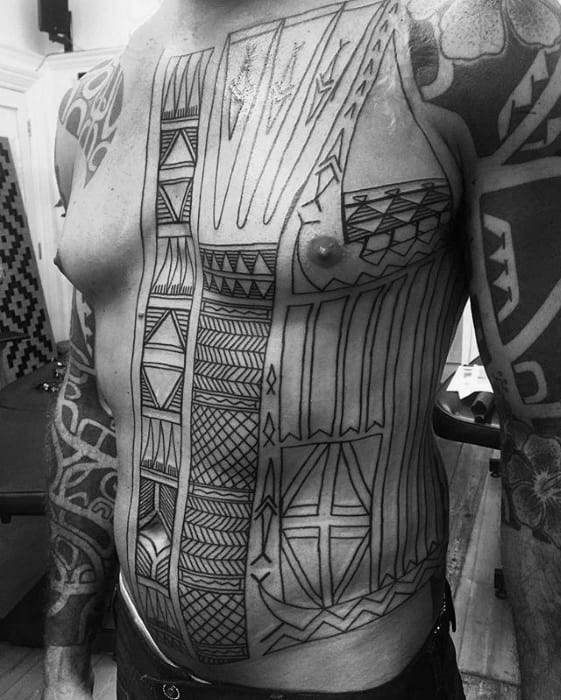
To emphasize the time it takes to sit for one of these impressive pieces, here are a few unfinished pieces that are well on their way to becoming striking tribal tattoos…just not yet.