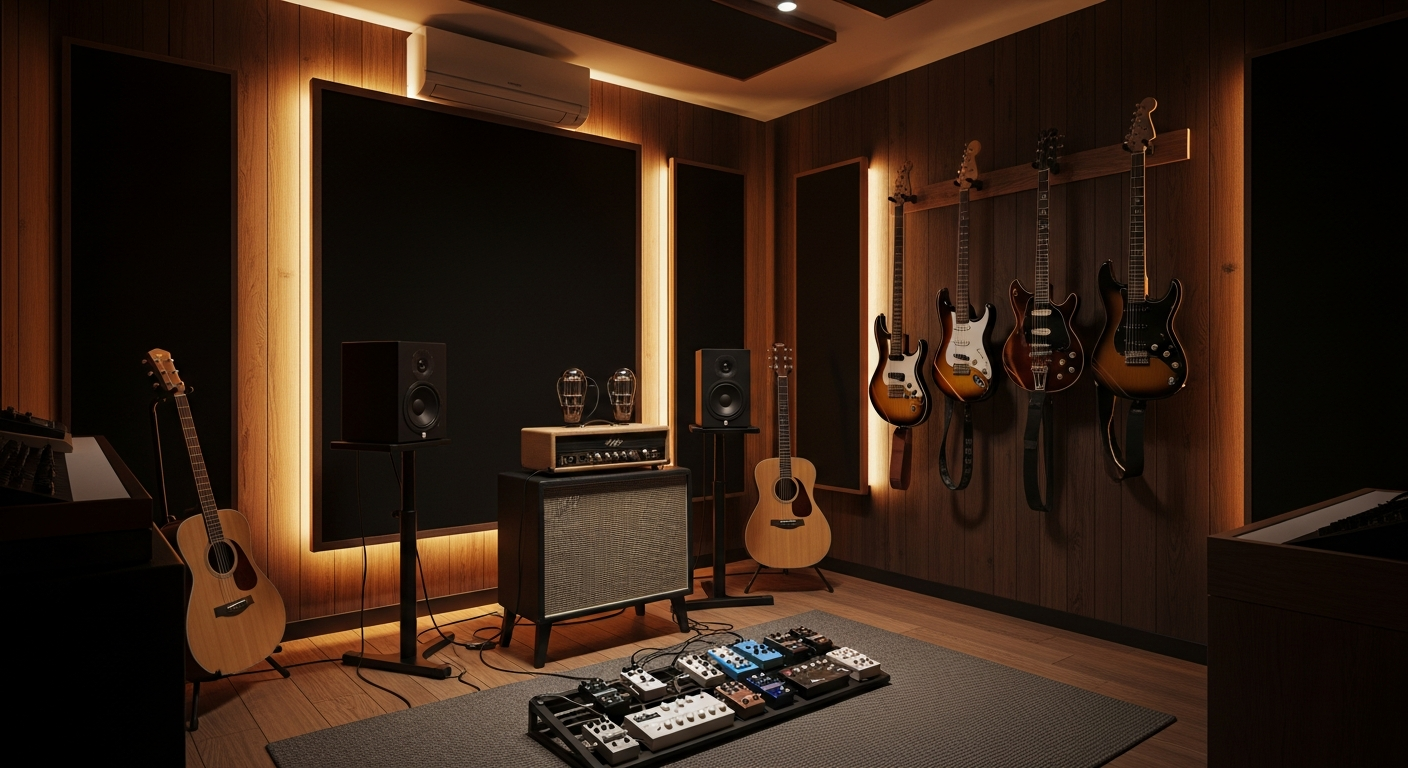

Every guitarist remembers the moment they finally carved out a room of their own. A place where the amp stays plugged in, the pedals don’t get shoved into a drawer, and inspiration doesn’t depend on whatever’s happening in the living room. A dedicated music room gives you something invaluable: consistency. When your gear is ready, your mind is ready.
But there’s also the emotional part. A personal space changes the way you play. You pick up your guitar more often. You experiment without feeling watched. You get lost in riffs you never had time for before. And once you start thinking seriously about soundproofing music room setups, the whole experience becomes even more immersive. Your room stops being four walls and becomes a creative engine.
Over time, this space starts to shape your sound. The lighting, the layout, even the chair you use—all of it influences how long you play and how deeply you sink into that flow state. When you walk in and feel something spark, that’s when you know you’ve built the right environment.
Picking the Right Room
Start with the basics: location. The space you choose will shape how you play and how often you play. If your home has a basement, you’re already ahead. Basements swallow noise better than any other room, and the sense of privacy makes long, late-night experiments feel effortless. If you don’t have one, look for a room tucked away from busy paths in your home. A corner room usually wins. It has fewer shared walls, fewer footsteps outside the door, and just feels calmer the moment you walk in.
Ceiling height plays a bigger role than people expect. Lower ceilings keep your sound tight, almost intimate, which is great for practice or recording. Higher ceilings feel inspiring in a different way. They make the room feel open and creative, though you may need more acoustic treatment to keep things balanced. Either one can work beautifully if you understand its strengths.
And then—windows. Players often ignore them until the moment their tone starts bouncing around the room like a rubber ball. Large, bare windows reflect sound in sharp, distracting ways. Even a simple set of thick curtains changes everything. Smaller windows are easier to manage, but don’t underestimate how much natural light affects your mood. A beam of afternoon sun can make a quick practice session turn into a full hour without you realizing it. Light anchors you in the space. It makes the room feel alive.
You should also think about longevity. Your music room is going to grow with you. Maybe you start with two guitars and a modest amp. Give it a year, and suddenly there’s a pedalboard, a loop station, a second amp, maybe even a synth or a small recording desk. Pick a room that has room to breathe. A space that gives you freedom to rearrange, upgrade, and evolve as your gear collection and your playing style change.
The right room doesn’t just hold your equipment. It holds your attention, your energy, and your inspiration. When a room supports all of that, it naturally becomes the place where your best ideas start.
Acoustic Treatments That Matter
You don’t need a professional studio setup to make your room sound great. Most guitarists can transform their space with just a few smart choices. Start simple. Absorption panels placed at ear level or across the first reflection points instantly smooth out the harsh edges in your tone. Everything feels warmer, more controlled, more intentional. Even two or three panels can make a noticeable difference.
Rugs are another easy win. Hardwood floors look beautiful, but they bounce sound around in unpredictable ways. A thick rug under your feet softens the room immediately. It’s especially helpful if you play bright single-coils or crank up high-gain tones. Suddenly, the room stops fighting you and starts working with you.
Then there are bass traps—those humble corner blocks that many players overlook. Low frequencies naturally gather in corners and create that muddy, unfocused rumble that makes your amp sound worse than it actually is. Treating those corners tightens everything. Chords feel clearer. Palm-muted riffs hit harder. Your tone becomes more honest.
When you start thinking about acoustic treatment, think in layers instead of quick fixes. Soft textures help calm the room and absorb the excess. Hard surfaces keep the space lively and bring clarity. A balanced mix of both makes your guitar sound truer to itself. It’s the difference between hearing your instrument and hearing the room distort it.
And whatever you do, resist the urge to foam every wall. A completely dead room feels strange and uninspiring. It’s like playing inside a pillow. You don’t want silence—you want control. You want a room that supports your sound without smothering it. When you hit that balance, your music room becomes a place where your guitar finally sounds the way you always imagined it could.
Gear Setup and Layout Tips
Your layout should support the way you play, not get in the way of it. Think of the room as part of your instrument. Start with the essentials. Keep your main guitar stand close to your chair, the one you reach for without thinking. If picking up a guitar takes effort, you’ll do it less. Make it effortless.
Pedals deserve the same attention. Set them up where your hands naturally fall when you lean forward. When you can tweak a knob or hit a switch without shifting your whole body, you stay connected to the music instead of getting distracted by logistics. Place your amp at ear level if you can. Even a small elevation change everything. Suddenly, you hear subtle harmonics, pick attack, the way your tone blooms or tightens. Details you never noticed start revealing themselves.
Also, give yourself actual space to move. It’s tempting to cram every piece of gear into one tight corner, but clutter kills creativity. If you’re stepping over cables or dodging cases every time you stand up, your mind stays tense. A bit of open floor makes the whole room feel lighter, calmer, more inviting.
A clean, intentional layout does something quiet but powerful. It shifts the way you feel when you enter the room. When every cable is wrapped, every pedal has its place, and every guitar sits ready, the space almost calls you to pick one up. You play more often. You stay longer. You explore sounds you wouldn’t have touched if the room felt chaotic.
That’s where the best riffs come from—not just talent or gear, but an environment that quietly tells you: go ahead, create something.
Smart Storage for Guitars and Gear
A music room can turn into chaos faster than you expect, especially when inspiration strikes and you start leaving things everywhere. Staying organized isn’t about being neat for the sake of neatness. It’s about keeping your space functional, so you actually want to spend time there. Wall mounts are an easy win. They keep your guitars within arm’s reach and instantly make the room look more intentional, almost like a personal gallery. A dedicated rack for cases frees up precious floor space and keeps you from tripping over hard-shell boxes every time you walk in.
Shelves placed a little higher than eye level do wonders. They’re perfect for pedals you’re not using right now but aren’t ready to part with. They also hold all those small-but-essential things—tuners, strings, capos—without crowding your main workspace.
And then there are cables. They have a mind of their own if you don’t tame them early. A few Velcro ties, a simple hook on the wall, and a small drawer for picks, adapters, and spare parts make your whole setup feel smoother. Choose one spot for power supplies and stick to it. You’ll thank yourself every time you swap gears without tearing apart the room.
When everything has its place, switching from acoustic to electric, or from a mellow clean tone to a high-gain sprint, becomes effortless. The room stops slowing you down and starts supporting the way you play. That tiny shift makes a noticeable difference in how often you plug in and get lost in the music.
Read also: 50 Gaming Man Cave Design Ideas
Making It Look as Good as It Sounds
A music room should match your personality. Add framed posters of your favorite albums. Display a vintage amp even if it’s retired from active duty. Use colors you actually enjoy looking at for hours. Style isn’t an afterthought—it’s fuel.
A visually striking space keeps you coming back. It reminds you why you started playing in the first place. And when the room looks sharp, it naturally becomes the spot where friends gather, admire your setup, and inevitably ask you to play something. That tiny push of pride changes everything.
The best music rooms aren’t expensive or complex. They feel lived-in, personal, and built with intention. When the look, the sound, and the energy line up, your creativity expands. You play more. You write more. You enjoy the craft on a deeper level. And at the end of the day, that’s the real goal.
Read also: Creative Bonus Room Ideas for Maximizing Your Space