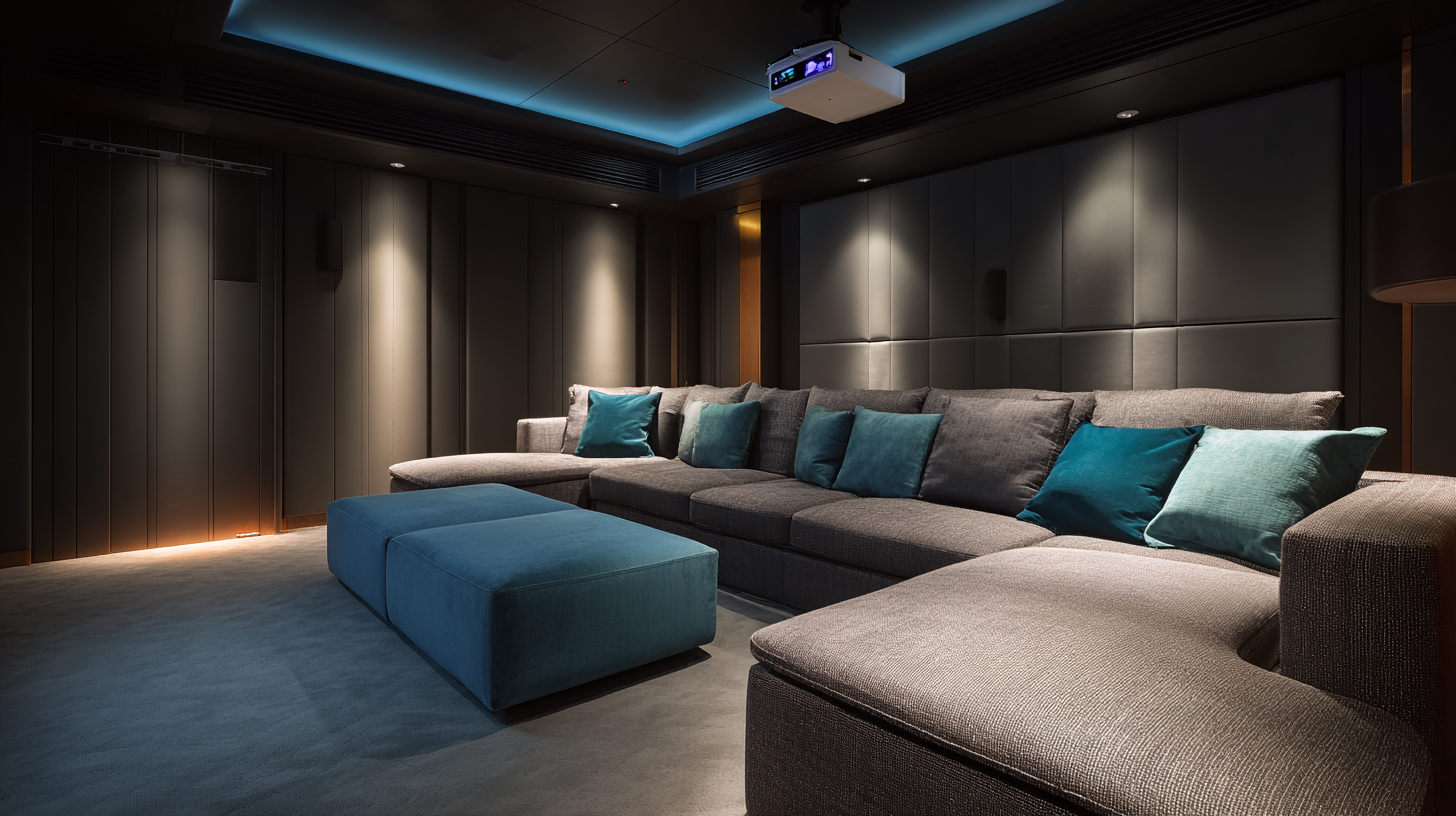

It’s one of the most frustrating moments for any home theater fan. You finally finish your setup. You unbox the projector you’ve been saving for. You install the speakers. You pick out the seating. Everything looks incredible. Then you hit play… and something is missing. The picture feels fine. The sound is loud, but not immersive. The room doesn’t pull you in the way a real theater does. It feels expensive, but not magical.
This happens more often than people want to admit. Great gear can’t compensate for a room that works against it. Shape, surfaces, even furniture choices all affect how your system performs. That’s why so many high-end home theaters rely on premium design elements like an acoustic panels frame setup. It solves acoustic problems and doubles as visual décor, blending into a masculine, curated space instead of looking like leftover studio equipment.
Once you start treating the room itself as part of the system, everything changes. Dialogue becomes clearer. Bass stops rattling the wrong parts of the space. The image feels sharper because the environment is finally supporting it. The whole experience becomes richer, deeper, and far more intentional.
Choosing the Wrong Room to Begin With
Not every room deserves to be a home theater. People often pick the space that is available, not the one that actually works. A perfectly square room creates sound reflections that collide and muddle dialogue. Long, narrow rooms push everything forward and make rear speakers feel distant. Huge open spaces swallow bass and let sound escape without impact.
Windows create a different problem. They reflect light onto the screen, washing out dark scenes. They reflect sound too, adding harshness you won’t notice until the first action sequence hits. Even a beautiful room isn’t always the right room. You want one that can hold sound, control light, and keep viewers focused.
When you start with a room that already supports the experience, every upgrade lands harder. Every improvement feels more dramatic.
Ignoring Acoustics Until It Is Too Late
This is the mistake almost everyone makes. You buy the gear first. You install it. You arrange the furniture. Only then do you realize the room sounds like a gymnasium. Echo everywhere. Bass booming but not in the right way. Speech fluctuates between too quiet and too sharp.
Fixing acoustics after everything is in place is far more expensive and far more complicated. Acoustic treatment should be part of the design, not an emergency step when things already sound disappointing. Even small changes in the beginning — soft materials, intentional placement, controlled reflections — would have delivered a better experience from day one.
A home theater without acoustic planning is like a sports car with flat tires. The potential is there. The performance is not.
Screen Size That Does Not Match Viewing Distance
A massive screen looks impressive, but that doesn’t mean it fits your space. If you sit too close, you’ll catch every pixel and feel overwhelmed. Sit too far away and the cinematic immersion fades. There’s a simple rule: your viewing distance should be roughly 1.2 to 1.6 times the screen’s diagonal size for a projector setup.
If you’ve ever felt fatigued watching a movie at home, this is usually why. The screen isn’t the problem. The distance is. Getting this math right makes every scene feel balanced and engaging rather than chaotic or distant.
Lighting That Kills the Cinematic Mood
Lighting can make or break your home theater before the movie even starts. Harsh overhead lights flatten the room and destroy contrast. Reflections from windows or glossy fixtures create distracting glare on the screen. And rooms without dimmers force all-or-nothing lighting that ruins the vibe.
You want soft, layered lighting. Wall sconces. Hidden LED strips. Warm pools of light that set the tone without competing with the screen. Creating atmosphere is part of the experience. If your lighting feels like an office, the movie will too.
Speaker Placement Based on Guesswork
Most people place speakers where they “look right,” not where they sound right. That’s why so many home theaters end up with beautiful equipment performing at half its potential. Front speakers get pushed into corners. The reins sit too high or too far apart. Subwoofers land wherever there’s open floor space instead of in a position that balances the room.
Sound doesn’t spread evenly. It reacts to walls, furniture, and distance. A few inches in placement can completely shift the clarity of dialogue or the impact of bass. Following recommended angles and heights, and testing a few subwoofer locations, turns a loud movie into an immersive one. Guesswork never wins here. Intention does.
Furniture That Looks Great but Sounds Terrible
A good-looking home theater can still sabotage itself. Leather recliners reflect sound and can create subtle slap-back echo around your head. Glass tables bounce high frequencies back toward the seating area. Huge empty walls make everything feel sharper and less controlled.
Comfort matters. Style matters. But materials matter too. Soft fabrics absorb reflections naturally. Upholstered furniture calms the room without sacrificing aesthetics. When you combine comfort with sound-friendly surfaces, the movie feels more intimate, more focused, and far less fatiguing.
Treating Acoustic Panels as an Eyesore
A lot of homeowners know they need acoustic treatment, but they hate how traditional panels look. They picture plain foam squares or studio-style setups that clash with the décor. So they either skip treatment entirely or hide panels behind furniture where they barely do anything.
Modern designs change everything. Fabric-wrapped panels, custom prints, and purpose-built frames can look like artwork. High-end setups integrate panels into the architecture. Even a simple acoustic panel frame can transform treatment into a premium design element instead of something you feel forced to tolerate.
When you stop fighting the idea of acoustic treatment and start embracing it as part of the visual identity of the room, both the style and the sound level up at the same time.
The Details That Separate Good from Great
A home theater doesn’t become great through one giant upgrade. It becomes great through a hundred small decisions that work together. Cable management that disappears into the design. Seating is positioned at precisely the right height. Blackout curtains that kill every stray reflection. Bass traps are tucked into corners where sound tends to pile up. Even paint color matters more than people expect. Darker tones reduce reflections and make the screen feel deeper and more cinematic.
Great theaters don’t shout for attention. They draw you in quietly. Every detail builds toward immersion. Every design choice supports the experience instead of competing with it. When everything aligns — the lighting, the acoustics, the furniture, the screen — the room stops being a room. It becomes a world.