
Psychological phenomena refer to the ways in which individuals perceive, think, feel, and behave in response to various stimuli in their environment. These phenomena can be both positive and negative and can have a significant impact on our lives. Understanding these phenomena is essential for individuals who wish to better comprehend their own thoughts and behaviors, as well as those of others.
In this article, we will explore some of the most common psychological phenomena and provide examples to help illustrate how they manifest in everyday life. From cognitive biases to social influence, this article aims to provide an informative overview of these phenomena and their impact on our thoughts, feelings, and behaviors.
1. Cognitive Dissonance

Cognitive dissonance is a psychological phenomenon that transpires when a person encounters contradicting attitudes, behavior, or opinions. Sometimes people have a tough time holding two opposing beliefs simultaneously. These individuals unconsciously alter one idea to fit with the other. For example, many people opt not to put on sunscreen despite evidence it prevents skin cancer.
In 1957, Leon Festinger conducted the first experiment on a doomsday cult that believed the great flood would destroy the world. When the flood didn’t happen, a few cult members felt dumb and moved on with their lives while many rationalized that their devotion and sacrifice preserved humanity and the world, preventing doomsday.
2. The Pratfall Effect

In 1966, Elliot Aronson described a new psychological phenomenon, the pratfall effect. Also known as the blemishing effect, the study proposes the different reactions to a favorably capable person making a mistake versus an average individual. When a competent person makes a mistake, their likeability increases, while an average person making the same mistake sees their likability decrease.
A simple blunder can have a profound impact in ways people don’t anticipate. A good example is John F. Kennedy’s failed Bay of Pigs invasion. Despite the significant blunder and embarrassment for the administration, Kennedy’s approval ratings increased following the mistake.
3. Broken Escalator Phenomenon

In shopping malls across the world, people step onto escalators every day. But there are some individuals who find themselves feeling uncomfortable on a stationary escalator. The broken escalator phenomenon refers to the feeling of imbalance when stepping onto an escalator that’s not working. Despite being fully aware the escalator isn’t moving, people tend to feel dizzy and hazy, as if they’re about to fall over.
4. Social Proof

For some people, social situations can be awkward and unsettling. It’s so tough for some individuals that they fall into a psychological phenomenon known as social proof. First coined in Robert Cialdini’s 1985 book Influence: Science and Practice, social proof describes how people behave in social settings.
When individuals are uncertain of how to behave in vague social environments, they often copy the behavior of the surrounding people. They assume that other individuals have some type of knowledge they lack. For instance, sitcoms often employ a laugh track. Despite being viewed as “annoying,” audiences tend to laugh harder with canned laughter.
5. Groupthink

When groups of people strive for unity and harmony, it can lead to an unreasonable decision-making process. Often a cohesive group will agree to maintain a similar train of thought, meaning the group will refrain from disagreeing, critical thinking, or offering a counterpoint so as not to risk upsetting the delicate group balance. Groupthink prevents opposing voices from speaking up, often to the detriment of the situation. Conforming usually replaces the need to focus on the greater good.
An example that comes up frequently is the Bay of Pigs Invasion. President John F. Kennedy and his administration agreed they had to invade Cuba for moral reasons. One member disagreed, but Kennedy’s circle ignored him. Following this blunder, Kennedy avoided groupthink and “yes men” in the future by inviting opposing voices when making big decisions.
6. Dunning-Kruger Effect

In 1999, David Dunning and Justin Kruger published a study dealing with a psychological phenomenon known as the Dunning-Kruger effect. The study proposes that the effect is a type of cognitive bias. In this case, people with low skills, experience, and ability overrate their expertise in a specific area. The effect also relates to high-level performers who downplay their abilities.
The Dunning-Kruger effect can manifest itself as overconfidence. This is why it is important that pilots, physicians, and others in high-level jobs give honest assessments of their skills. Their overconfidence might result in taking on a task they’re not qualified to perform that could have deadly consequences.
7. The Google Effect

The Internet and search engines like Google have entirely changed the world. Information is right at our fingertips, from world news to pop culture and obscure facts. The downside is this paved the way for the psychological phenomenon known as the Google effect. Also called digital amnesia, the Google effect refers to individuals forgetting information that’s easy to search using Google or other search engines.
It suggests that individuals are more likely to forget information that is easy to find with a click of a button. Experts agree it changed how people learn to a degree, although individuals’ ability to learn offline is still the same.
8. The Bystander Effect
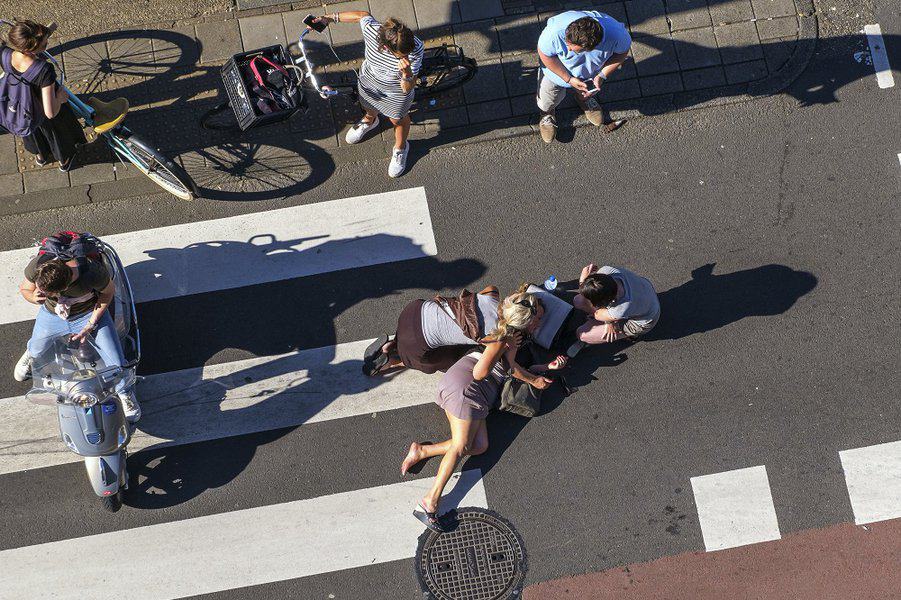
On March 13, 1964, Winston Mosley murdered 28-year-old bartender Kitty Genovese outside her apartment. Two weeks later, the New York Times published an article stating that 38 witnesses refused to phone the police or help Genovese. The shocking revelation prompted social psychologists John Darley and Bibb Latane to examine the phenomenon, with the dup coming up with the bystander effect.
The concept proposes that an individual is more likely to help a victim than a group. They explain several reasons a group is less likely to help, such as groupthink, diffusion of obligation, and ambiguity. The group has a weak sense of responsibility to intervene. However, in 2007, the New York Times admitted it exaggerated the number of witnesses in the Genovese case. Plus, many of the witnesses did in fact call the police. Further research indicates that a group is just as likely to provide help as an individual, devaluing Darley and Latane’s theory.
9. The Overview Effect

The Overview Effect is a fascinating concept that’s extremely rare. This psychological phenomenon only impacts astronauts that have been in space. Astronauts that view the Earth from space feel a sense of awe, appreciation, and overwhelming emotion at the sight of the planet’s beauty. The experience often transforms the astronaut’s values, principles, and environmental concerns, making them better people.
[see_more_about title=”Depression Through Art: How It Helps People Cope With Mental Health Issues” link=”https://nl.jahaweb.com/interesting/depression-through-art/”]
10. Cryptomnesia

Artists and celebrities sometimes accuse each other of plagiarism. Turns out this is an actual psychological phenomenon. Better known as cryptomnesia, it’s a form of memory bias where a person incorrectly recalls a tune, idea, story, or joke as a memory that inspires their own material.
One famous example is composer Ronald Mack claiming George Harrison stole parts of Mack’s “He’s So Fine” for his song “My Sweet Lord.” Harrison, of course, claimed Mack’s accusations false, saying he copied the song subconsciously. Harrison used the cryptomnesia defense in court, although the judge still ruled in Mack’s favor.
11. Online Disinhibition Effect

Terms like “keyboard warrior” or “Internet tough guy” often refer to individuals who behave in ways they wouldn’t in other situations online. Better known as the online disinhibition effect, the concept deals with people who act differently online than in the real world due to having fewer restrictions.
The ability to remain anonymous often leads to cyberbullying and fosters a toxic environment online. Although it’s not all bad. Introverted or shy individuals feel free to express and reveal things about themselves online that they can’t in the real world. The online disinhibition effect has both positive and negative connotations.
12. The IKEA Effect

The IKEA effect is a psychological phenomenon named after the famous Swedish manufacturer. The concept is a cognitive bias whereby individuals overvalue a piece of furniture or item they partially assembled.
In most cases, the consumer views these items as priceless, while they’re most likely poorly constructed. The Build-a-Bear company took the model to the next level. Often customers pay a high price to build their own teddy bear while the company saves a ton on costs and labor. This is known as good business.
13. The Cocktail Party Effect

Despite loud music and a rowdy atmosphere, most individuals can still converse at a wild party. They can somehow zone in on a person and block everything else out.
Better known as the cocktail party effect, this psychological effect refers to the brain’s ability to concentrate its auditory engagement on a specific stimulus. They can filter out sound and noise to maintain a single conversation. At the same time, they filter out sounds that are important to them.
14. The Spotlight Effect

It’s common for people to feel like the center of their world. We’re all the stars of our own movie like The Truman Show, right? Individuals often feel like everyone’s watching them, a phenomenon known as the spotlight effect. This psychological phenomenon revolves around people incorrectly assuming everyone is noticing them.
They’ll perform a basic task and believe others are closely watching them. For example, a person in a group competition may view themselves as being the center of attention instead of the entire team.
15. Reverse Psychology

Most people have heard the phrase “reverse psychology” before. It’s commonly used to refer to a psychological phenomenon called reactance. The concept notes the impulse to do the opposite of what an individual wants you to do. It is often used to get people to do something you want without them realizing it.
Reverse psychology is a common tactic used with kids and teenagers that often backfires. For example, a teenager will likely stay in a relationship if a parent disapproves of the significant other.
16. Tetris Effect

Some people love playing Tetris so much that they see it everywhere. It’s a common psychological phenomenon known as the Tetris effect. Individuals dedicate so much time to one activity that they begin seeing the patterns and shapes in real-life situations. For instance, people who play a lot of Tetris begin to see different ways shapes fit together, like the boxes on a shelf or buildings on the street.
17. Social Loafing

When working on a solo project there’s nobody to blame when things go wrong. It’s much easier to hide from responsibility in a group. Social loafing is a psychological phenomenon where people are more likely to work harder on their own than in a group.
A 1970s study using blindfolded participants in a tug-of-war found they’d use less effort if they thought they had teammates. In a group dynamic, they put in far less effort.
18. Déjà Vu

At one point in our lives, we all experience an eerie moment we swear we already experienced. The psychological phenomenon Déjà Vu translates to “already seen.” It often happens when a person has an intense feeling that they have already lived through a moment they are currently experiencing. In most cases, that strange and unsettling experience is likely a dream.
[see_more_about title=”Mass Hysteria Examples: 11 Bizzare Cases” link=”https://nl.jahaweb.com/interesting/mass-hysteria-examples/”]