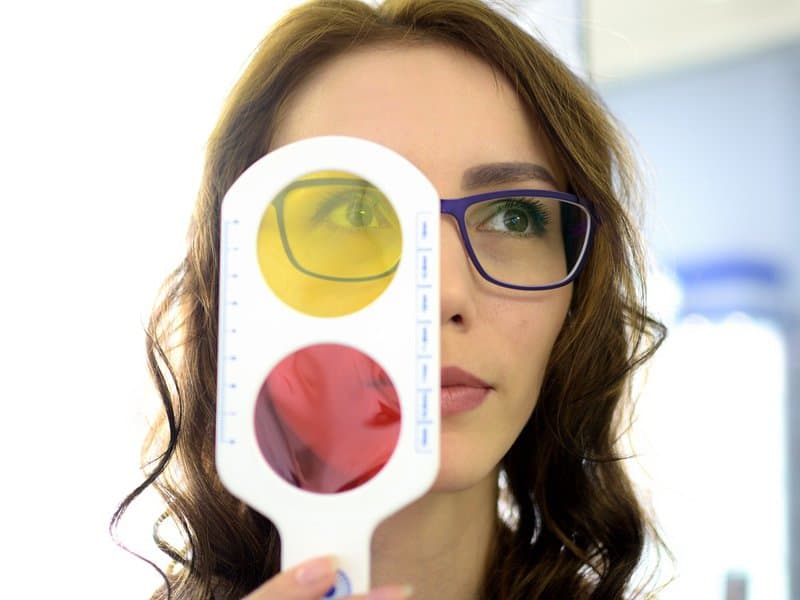

When most people hear the word “color blind,” they assume it means seeing the world in black and white. This is misleading and makes for a misunderstood term. Color blindness is much more complex than black and white. It often makes everyday tasks difficult, such as shopping, playing sports, and driving. What you might not know is that color blind people actually see in color.
There are varying versions of color blindness, with evidence suggesting that a person with normal vision can see roughly one million distinct colors. However, a person with color blindness might only be able to see ten thousand. They often have a narrow perception of color. Which begs the question, what do color blind people see?
What Is Color Blindness

Color blindness is the lack of seeing color or the distinction in color. The cause is usually a decrease or change in the sensitivity of the eye’s light-sensitive cone cells. The cone cells translate light into neural signals sent to the brain’s optic nerve creating the sensation of color. Sometimes, an individual inherits color blindness or gains it after an eye injury. In some cases, colorblind people can’t see a difference between specific colors. Color blindness breaks down into several different categories resulting in various problems.
Types of Color Blindness

Achromatopsia
The rarest form of color blindness is achromatopsia. Individuals with achromatopsia suffer from complete color blindness. They can only see shades of black, white, and grey. Cone dystrophy and other low vision disorders cause colors to decrease until total color blindness or achromatopsia takes over.
Deutan Color Blindness
Deutan color blindness is the most common form. Also called red-green color blindness, it causes green-sensitive cone cells to move closer to red light-sensitive cells. These individuals have difficulty with the color green.
Protan Color Blindness
Protan color blindness is another form of red-green color blindness. In this case, red-sensitive cone cells shift closer to green-light-sensitive cone cells. People suffering from protan color blindness can’t see the color red or distinguish it from green.
Tritan Color Deficiency
Tritan color deficiency is a decrease in the sensitivity of the blue-light sensitive cones. It’s one of the rarest forms of color blindness occurring because of medical issues or aging. These individuals have difficulty seeing the color blue as it appears darker than usual.
History

Since the 17th century, there has been speculation that not all people perceived color the same way. In the late 1700s and early 1800s, chemist John Dalton wrote the first account of color blindness.
However, it was the Lagerlunda rail accident in the 1870s that brought widespread attention to color blindness. In 1875, two trains collided in a head-on collision in Sweden. The blame fell on the station master, who went to prison for six months. Swedish Doctor Frithiof Holmgren had a different theory. He proposed that the driver of the train suffered from color blindness, contributing to the accident. All drivers were required to take a color blindness test from that point forward.
Color Confusion

Individuals with color blindness struggle with everyday tasks that people with normal vision take for granted. Depending on the type of color blindness, simple tasks such as grocery shopping or picking out an outfit become difficult due to color confusion. Color confusion often pops up in life for the color blind.
- Traffic lights – Color blind people frequently have difficulty driving due to the traffic lights, especially those with red-green color blindness. For example, red lights seem closer to an orangish color, while green appears white. It’s usually a stressful experience for a color blind driver. To manage the situation, color blind drivers focus on the position and order of the traffic lights. A single traffic light or reverse order further complicates driving for the color blind.
- Cooking and shopping for fruit – Color blindness makes a simple task like shopping for fruit complex and frustrating. A color blind person has difficulty checking for rot or mold on food. Checking for the ripeness of fruit is challenging, especially bananas when they are transitioning from green to yellow. Individuals with color blindness also have a tough time with artificial flavors.
- Missing the sunset – The color of the sky and clouds is an unforgettable memory. Watching the sunset or rise is a beautiful experience. Unfortunately, color blind people have vastly different experiences. They cannot enjoy the bright orange, pink, red, purple, and yellow colors that fill that sky as the sun sets. For a color blind person, the sunset is likely a dull and bland experience. With the abundance of red, there’s very little to enjoy about the sun setting.
- Architectural marvels – The world is full of outstanding architectural marvels. Specific eras have unique styles with influences from different types of architecture. These buildings use lots of vibrant colors, causing them to pop in the skyline. Sadly these buildings rarely impress the color blind. They might find the design impressive, but the colors won’t have the same impact.
- Color blindness in children – While color blindness is difficult for anyone, children have a particularly challenging time. In many cases, color blind children go undiagnosed. Fun activities like coloring and drawing become extremely difficult. They also have a difficult time explaining the problem to adults. Doctors and teachers sometimes mistake color blindness for a learning disability.
- Nature – Going for a walk in a gorgeous forest doesn’t have the same impact on a colorblind person. While they can enjoy the walk, they don’t see bright green grass, changing leaves, or vibrant flowers. Instead, it’s another dull and bland experience.
- Fashion – Individuals with normal vision take picking out an outfit for granted. They can match the most eye-pleasing combination of colors. Of course, nobody wants to mismatch colors or clash. Therefore, color blind people stick to wearing black, grey, and other neutral colors to avoid mismatching.
Color Blind Artists
One would assume that color blindness and art wouldn’t mix well. Well, it turns out that a few artists have proven that theory wrong. Throughout history, several famous artists have claimed they’re also color blind.
South Korean animator Jin Kim didn’t let color blindness stop him from working with the best studios in the world, notably Disney. He worked for Disney from 1995 to 2016 as the first South Korean animator and character designer. Kim had color blindness or red-green deficiency for most of his life. He attempted to get into art school but had to take a different route on his journey to becoming an animator due to his color blindness.
Clifton Pugh is one of Australia’s greatest painters. Heavily influenced by German Expressionism, the three-time Archibald Prize winner was best known for portrait painting and landscapes. It’s believed Pugh was color blind. His brother and grandnephew inherited color blindness as it ran in the family. They both had a red-green deficiency. Speculation arose that Pugh had the same condition. Furthermore, he once failed a color test to enlist in the navy.
In the 1850s, French artist Charles Meryon became the top etcher in Paris. His initial dream was to be a painter, but his color blindness prevented him from pursuing that career. At that point, Meryon reluctantly turned his attention to etching. By this time, etching was no longer on the same level as an elite painter. However, Meryon was at the forefront of the etching revival. His etches of Paris remain his most significant works.
Managing Color Blindness

While there’s no known cure for color blindness, there are techniques and methods for managing the condition. Some individuals try using color blind lenses. The lenses aid with seeing specific colors, but it doesn’t resolve color blindness. The lenses can also make it difficult to see other colors.
EnChroma glasses are a popular option for color blind people too. While the glasses are effective in helping individuals see more vibrant colors, they also won’t restore normal vision. The glasses prevent certain wavelengths of light where the cone cells overlap. It separates the red and green cones allowing the wearer to see the color clearly. It can aid in everyday tasks such as driving, shopping, and getting dressed.
Technological advancement plays a vital role in aiding color blindness. A majority of computers provide programs and software to help color blind people. Several programs increase the contrast of specific colors to help the person see color better. Other programs use the computer’s camera to identify and label the colors.
[see_more_about title=”12 Rare Body Features You Won’t Believe Are Real” link=”https://nl.jahaweb.com/interesting/rare-body-features/”]