

The crypto market has revolutionized the entire trading approach and given investors a new option to embrace digital innovation. Is that still better than pursuing traditional assets? Gold has remained a valuable asset for those looking for financial preservation. But what about other options, such as cryptocurrencies? For example, what is Dogecoin, and can it be a valuable digital investment?
Meme coins are unique investment options because they rely on the community, market sentiment, and social media hype. If you buy Dogecoin at the right time and find a suitable time to sell it, profit can be made even in a short timeframe. Key metrics to guide your strategy include price history, return on investment, tax factors, and others.
This guide covers these crucial metrics, but also compares Dogecoin with the proven traditional asset, gold. Here are some actionable insights to help you select the right allocation mix in 2025 and beyond.
Price Performance 2015-2025
If we look at the price history during the last decade, we can see different patterns. As expected, gold has been stable and steady. Even during the 2020 pandemic, it only gained value because investors turned to it for financial preservation.
On the other hand, Dogecoin has been far more volatile. However, crypto adoption has the potential to increase the overall industry’s value. Investors can buy crypto with a credit card quickly, making digital assets easy to acquire. Let’s learn more about the prices of both assets in the past.
Dogecoin Growth
If we go ten years into the past, you will see that Dogecoin was only worth $0.00018. As the crypto market progressed, DOGE started gaining value. It reached its all-time high in 2021 when it was worth $0.7376. During the last several years, Elon Musk has affected DOGE’s value directly by tweeting or commenting about it to the public.
In 2025, the peak was $0.41 for DOGE. The estimate of the average return on investment during the decade is relatively high. However, the problem is the enormous volatility that Dogecoin is prone to, which is similar to other cryptocurrencies.
Gold ROI
Gold was valued at approximately $1,170 per ounce in 2015. If we fast forward to 2025, we can see that the asset’s value went over $3,400 per ounce in certain moments. Gold has gained significant worth during the COVID-19 pandemic in 2020, considering that it’s the first time its value soared over $2,000.
In 2024, geopolitical unrest has turned investors’ attention to gold again. There were times when DOGE and the crypto market had great cycles and outperformed gold, but this asset has remained a way to protect investments during turbulent times.
Liquidity and Market Access
Gold is hard to beat in terms of liquidity, considering that daily trading usually exceeds $120 billion. As for Dogecoin, its daily volume across several major exchanges is $0.6 billion. In the crypto industry, this makes DOGE’s position reputable.
The typical bid-ask spread for DOGE is minimal since we are only talking about a fraction of a cent. It’s different with gold, considering that you can expect a spread that goes from $0.5 to $1 per ounce.
As for market access, DOGE is available around the clock. On the other hand, gold depends on the exchange hours of the chosen exchange, which means you can expect limited trading times.
Dogecoin Liquidity
Dogecoin has a market cap of over $20 billion. It’s tradable around the clock, with the average transaction validation time being under 60 seconds. The average transaction fee is under $0.01, which is great for large investors. Big OTC desks like CoinJar and CoinsPaid cater to whales, allowing large-sum investments. However, there’s a risk of slippage when placing market orders over $1 million. Executing these orders can adjust the price by up to 2%.
Gold Turnover
The estimate is that the London Bullion Market Association has a clearing level of approximately $50 billion in gold trades. And if you add COMEX futures, the clearing levels increase to $90 billion.
If you trade physical bars, you can expect a slower rate than when using futures. However, futures are those that secure more depth and instant exposure. Let’s say that you want to open a gold position worth over $5 million. It can take weeks if you use physical delivery, but with futures, that can be finished in minutes.
Volatility Index 2025 Comparison
If we compare annual volatility, we get some surprising information. The estimated annualized volatility chart ranges from 80% to 90% over a year, while the rates for gold are about 10-13%.
Average daily movement for gold is rarely over 0.6%, while it can go up to 10% for DOGE. The conclusion is simple — DOGE is excellent for day and fast-paced trading, but gold is far better for capital preservation. Let’s learn the details about each asset’s risk profile.
Dogecoin Swings
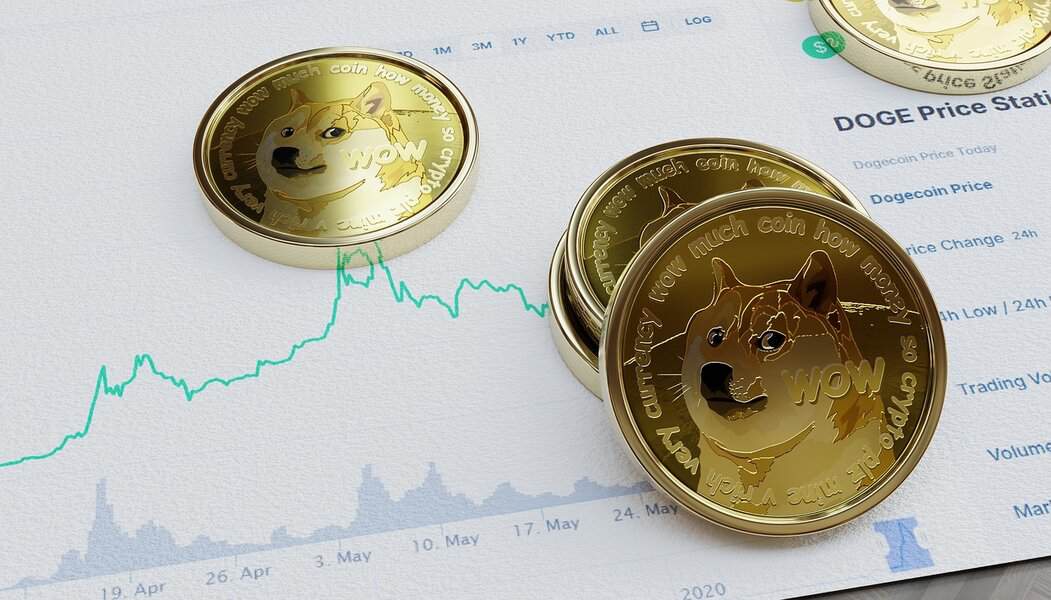
At one point in 2025, DOGE jumped about 13% during a single day. The reason behind this jump is the launch of the U.S. Department of Government Efficiency website featuring the Dogecoin logo.
According to statistics, there’s lower liquidity on weekends. That makes these times much more convenient for surprising price surges. Leveraged futures are another thing to consider since they can lead to big surges or crashes. Many traders use leverage trading to amplify potential returns, but this also magnifies risk, especially with highly volatile assets like Dogecoin.
Gold Stability
During a single day, the gold price usually doesn’t move more than 1%. Major changes usually occur due to large global events, such as geopolitical tensions or interest rate decisions. During an entire month, gold volatility can be from 3 to 5%, which is in line with USD and EUR as stable fiat currencies.
Gold stability has natural dampeners in the form of central banks and jewelry markets. All this makes gold a better choice for conservative portfolios.
Regulation and Tax Rules
Gold has regulations that have been established decades ago, and they are well-understood among investors. The crypto market, on the other hand, has evolving frameworks. That includes new regulations regarding taxes, privacy, and other considerations. Let’s dive into tax rules for each of the assets we observe.
Dogecoin Tax Path
Depending on the market, different taxable events might occur in the DOGE market. You might need to pay taxes when you acquire Dogecoin with USD and other fiat currencies, but also if you stake or earn coins for income.
In the United States, long-term capital gains are up to 20%. But short-term gains are taxed as ordinary income, which goes up to 37%. Let’s say that you’ve earned $50K in Dogecoin over a single year. It depends on the country, but the usual taxation rates are 15% to 20%. It’s worth noting that crypto harvesting can help to offset profit, so you can consider using it as a tax strategy.
Gold Gain Rules
If we analyze bullion in the United States, you will notice that short-term gains are considered regular income. If you hold them over a year, the rate goes up to 28%.
Some exemptions exist — for example, in the UK and the EU, there’s no VAT applied on investment-grade bars. If you hold gains over 12 months in Germany, they become tax-free. In the United States, investors must report all cash transfers that exceed the $10K value. Gold doesn’t have the same level of transparency as blockchains, so audit trails are harder to trace.
Start Your Investment Today!
It ultimately comes down to whether you are looking for long-term capital preservation or a riskier investment. Gold has been an asset that investors have turned to for decades when they want to preserve their capital. Its steady increase shows it can lead to gains, especially in the long run.
Dogecoin is less certain, but it can lead to bigger short-term gains. Ultimately, there’s no actual winner. You can combine both, using gold as a stable asset and risking with DOGE to pursue gains in the short run.