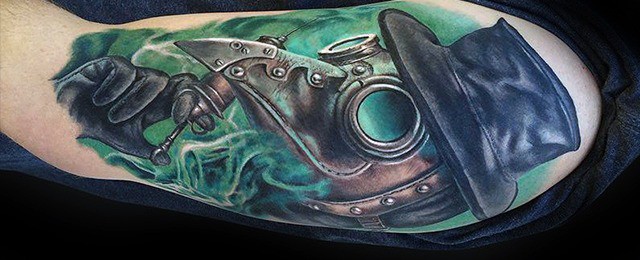

Throughout the centuries when the bubonic plague ravaged Europe, doctors and self-proclaimed physicians donned an eerie uniform intended to shield them from the deadly miasma.
Adorned in long dark robes and tall hats or heavy hoods, plague doctors wore beak-like masks stuffed with pleasant smelling herbs, spices, perfumes, and dried flowers that would “filter” and ward off the stench of disease.
As surgical and medicinal knowledge advanced, such a costume was eventually deemed impractical and downright grotesque.
The image of the plague doctor abounds in Gothic folklore, a symbol of cruder times and fatal lack of knowledge, as well as a decadent figure of the most nightmarish scenarios. For that reason it was only a matter of time before the tattoo world eagerly committed the plague doctor to ink-and-flesh portraiture, resulting in some magnificently macabre designs.
Like something straight out of a Tim Burton movie, the plague doctor can be depicted in various styles, so long as the trademark “beak” is left intact. Dramatically cast in deep shadows and dark ink, or shaded in richly medieval colors, this figure is sure to send a delicious chill down the spine of those who catch a glimpse of what many once presumed to be death himself.
1. Linework Plague Doctor Tattoos
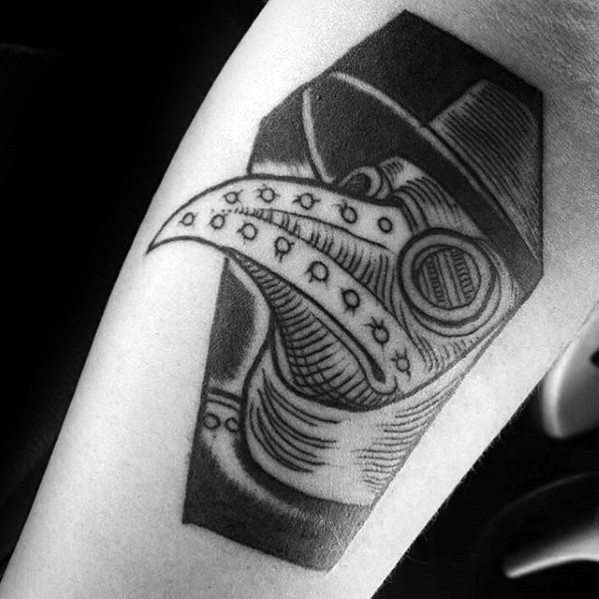
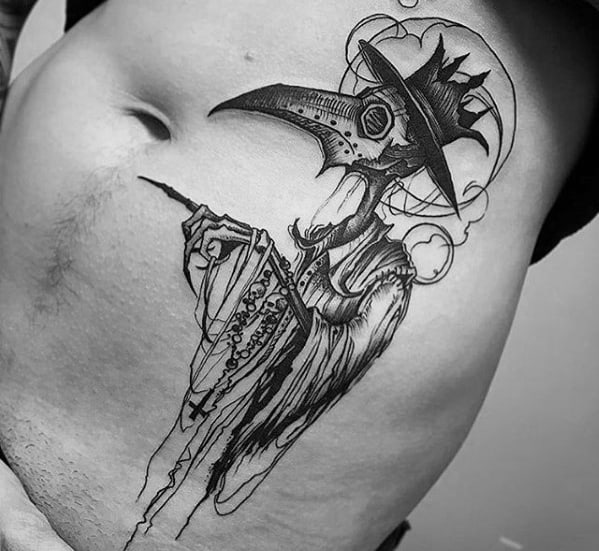
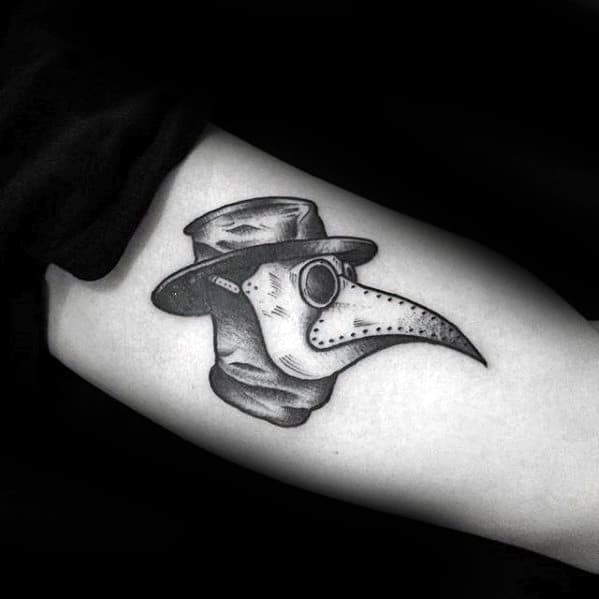
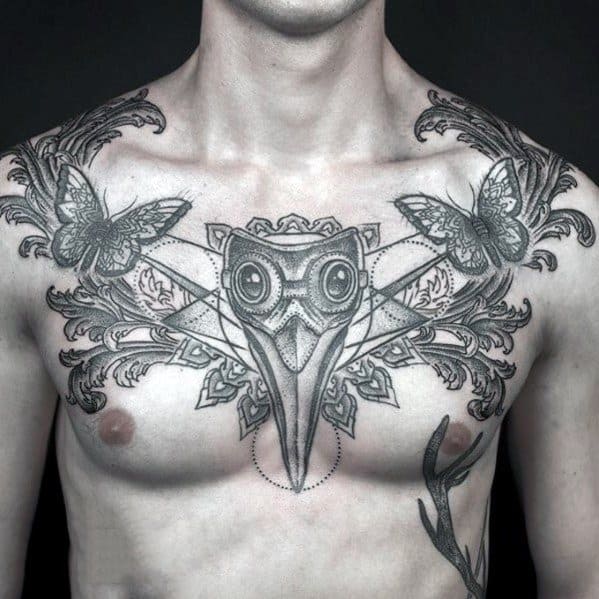
Lines are an essential element of any tattoo that has the hopes of standing up to the test of time. However, many people choose to apply images that only use lines to produce images, and in the hands of a talented artist this approach can be surprisingly effective.
One style that utilizes line work and has become increasingly popular uses a precise application of hatching to create images that are reminiscent of hand etched lithographs from the 18th century. As these excellent tattoos demonstrate, this approach is especially effective for the macabre images of plague doctors.
2. Bad Ass Technical Plague Doctor Tattoos
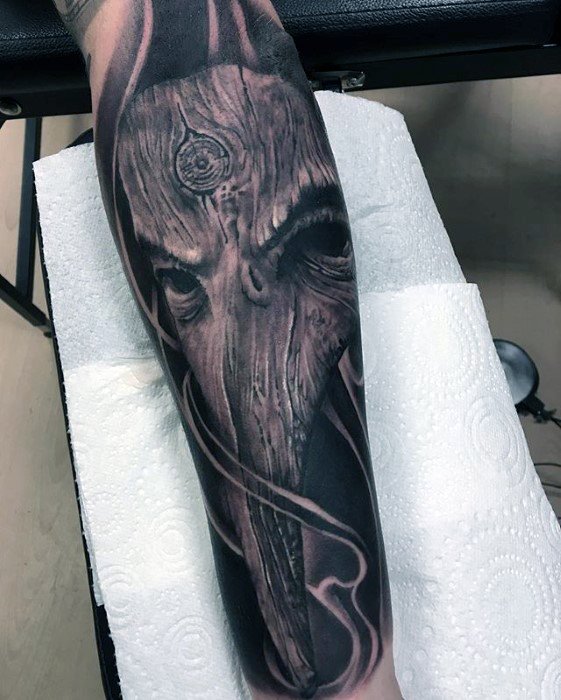
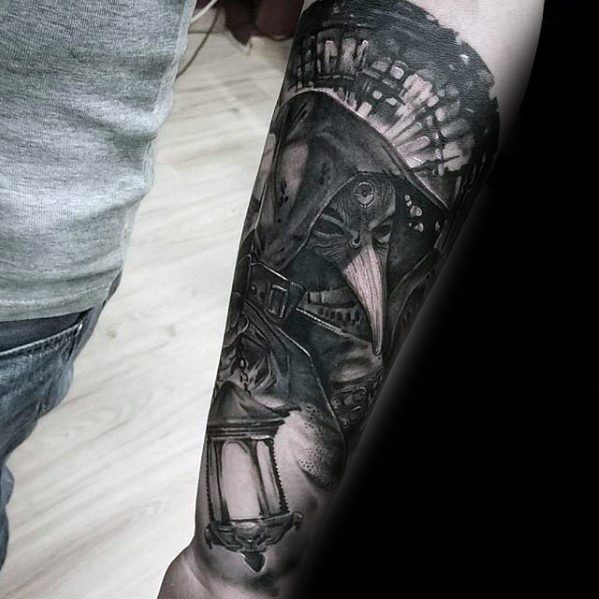
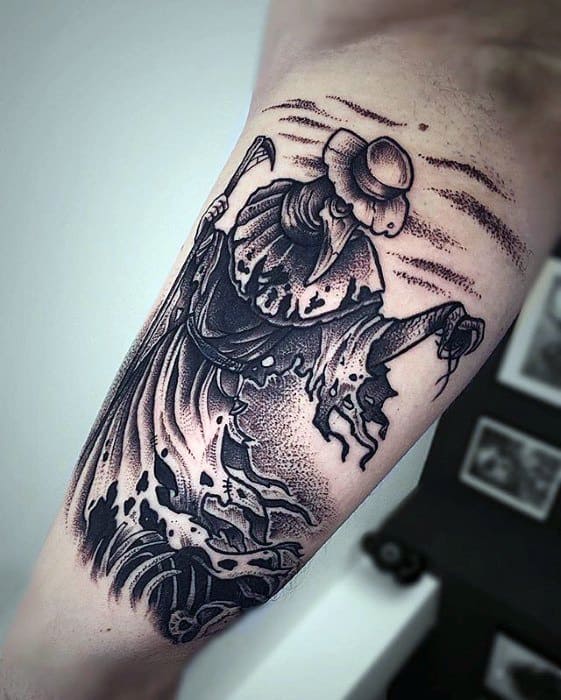
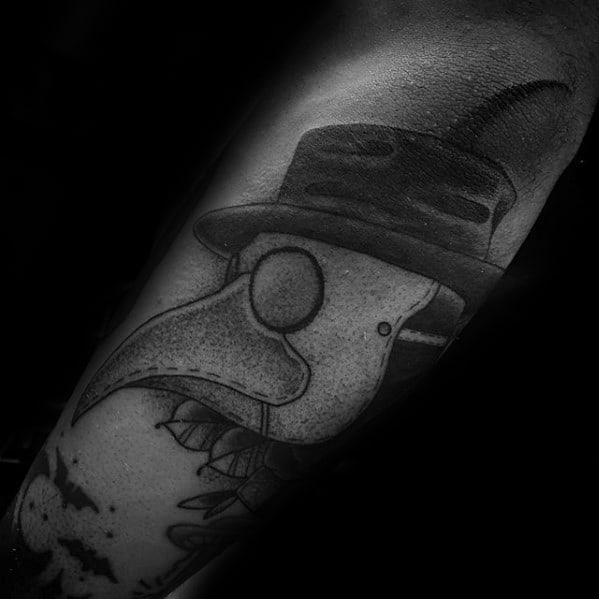
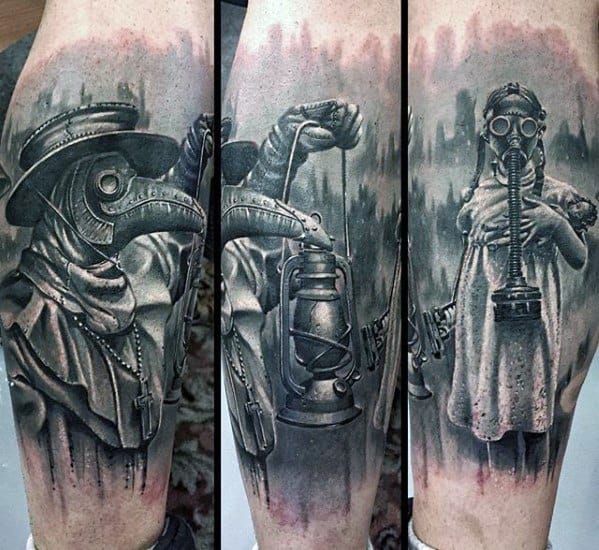
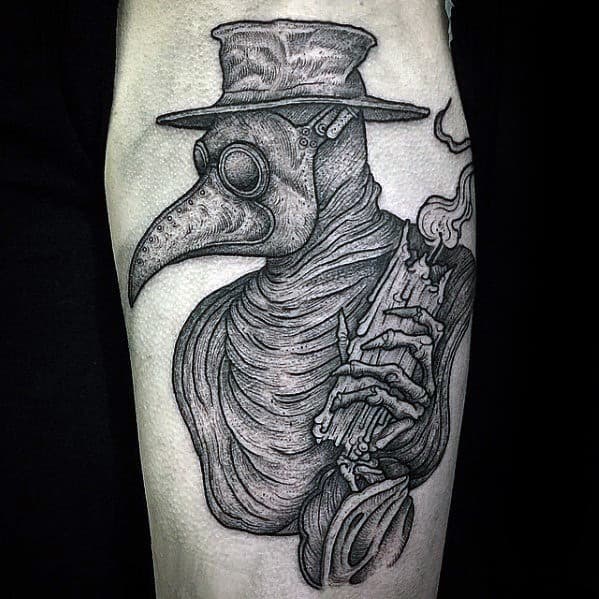
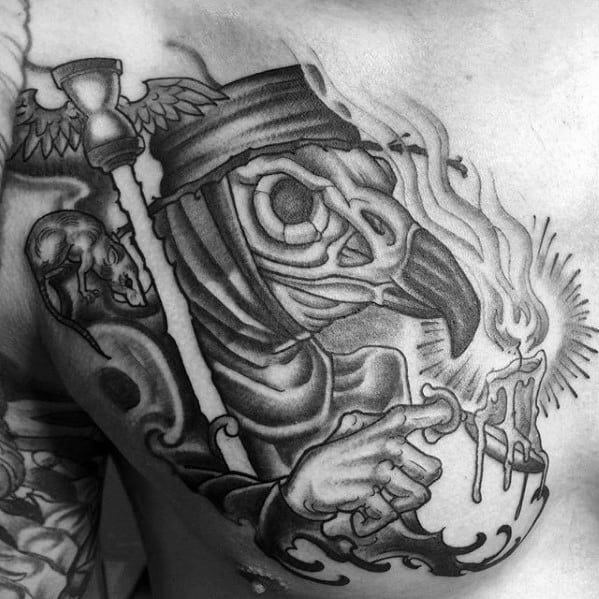
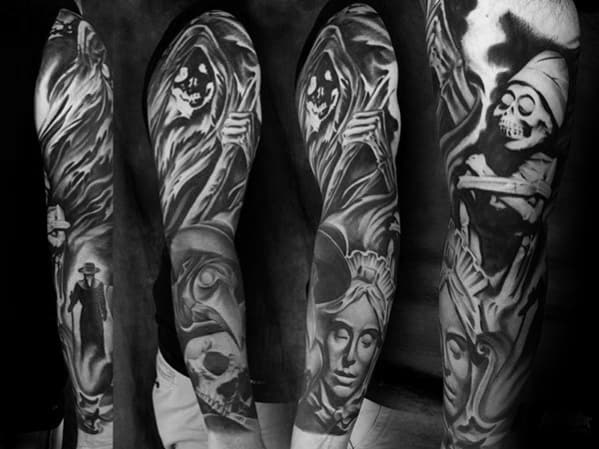
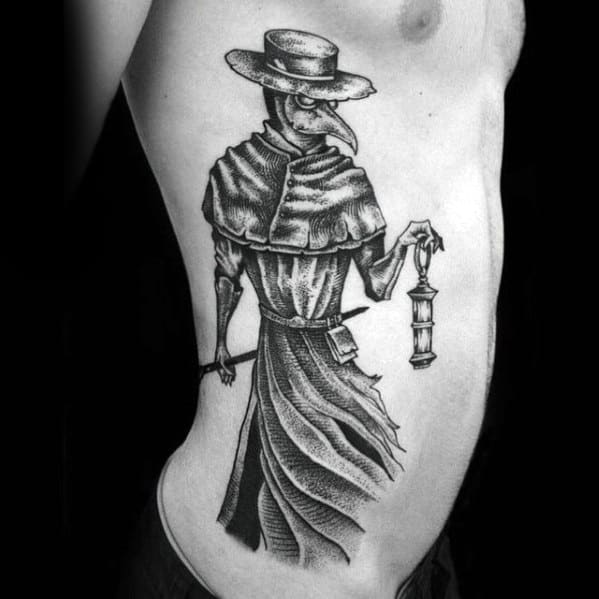
Some people prefer their tattoos in a simple style that eschews intricate details for bold lines; these tattoos are not for those people. Even without the use of vibrant colors, the level of detail in these plague doctor tattoos is impressive: notice the excellent whip shading and application of fine lines to create wood grain. While these tattoos are applied using a variety of styles and approaches, they are bound by the technical skill required to complete these ghoulish symbols of primitive medicine.
3. Black Bold Traditional Plague Doctor Tattoos
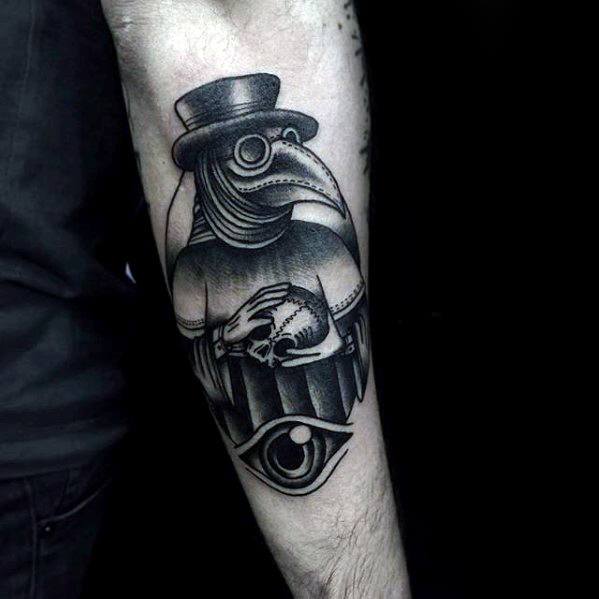
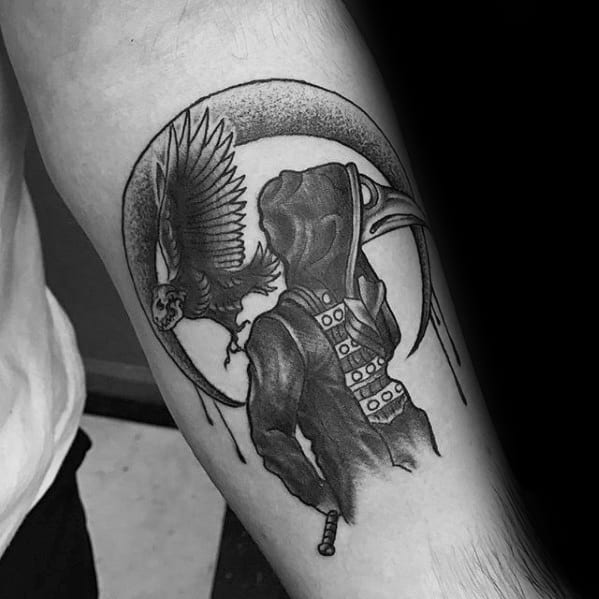
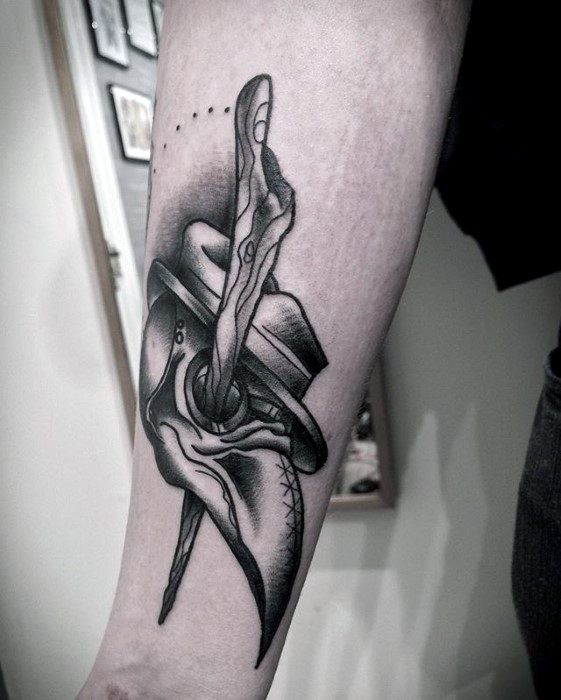
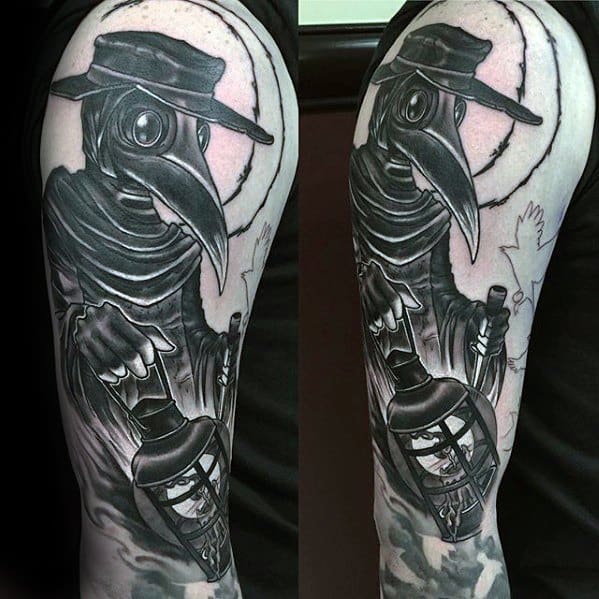
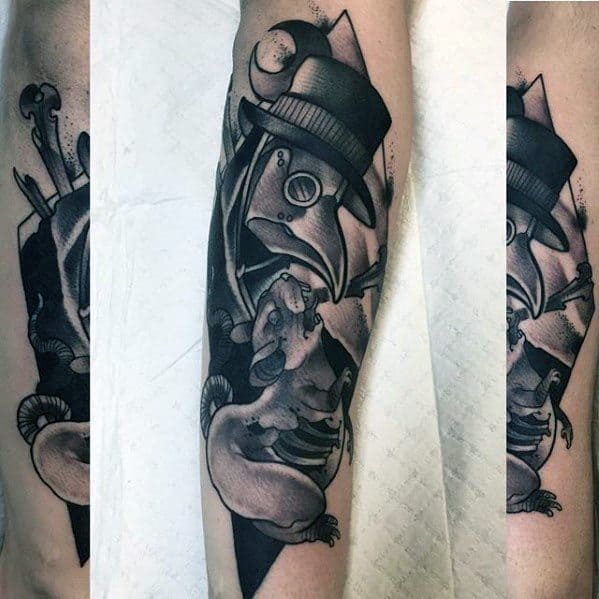
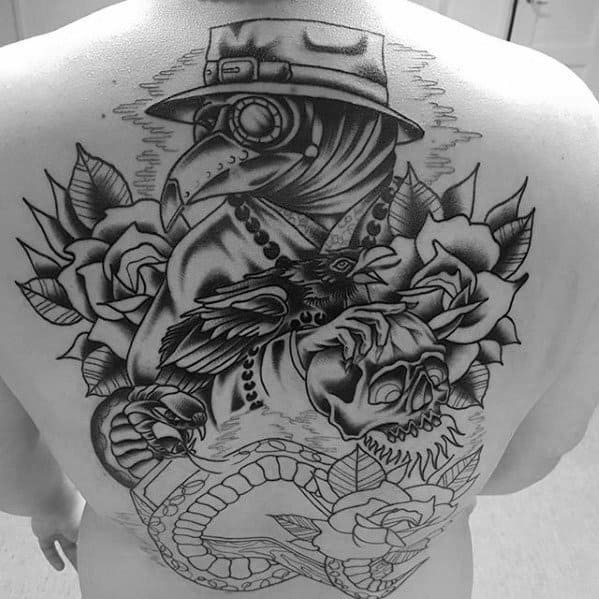
Given their monochromatic color scheme, it is no surprise that many people choose to get plague doctors applied in dense black ink, and the bold lines of American traditional are put to good use in these morbid designs.
These pieces also demonstrate the variety of elements that can be successfully incorporated into plague doctor tattoos. Rats, lanterns, and ravens are all expertly applied using bold black ink to enhance these designs and set them apart from other medieval inspired tattoos.
4. Upper Arm Plague Doctor Tattoos
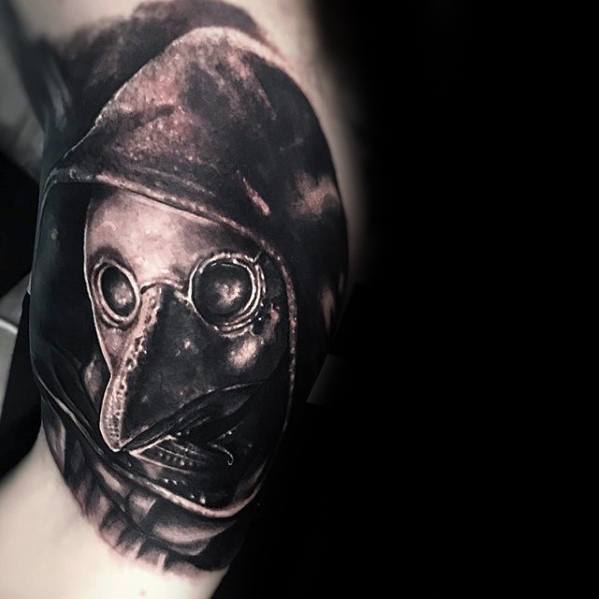
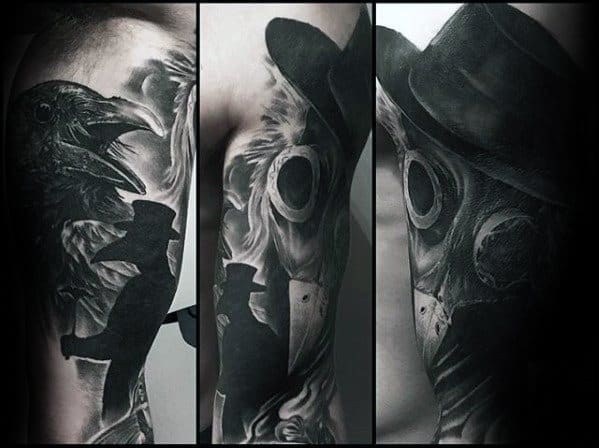
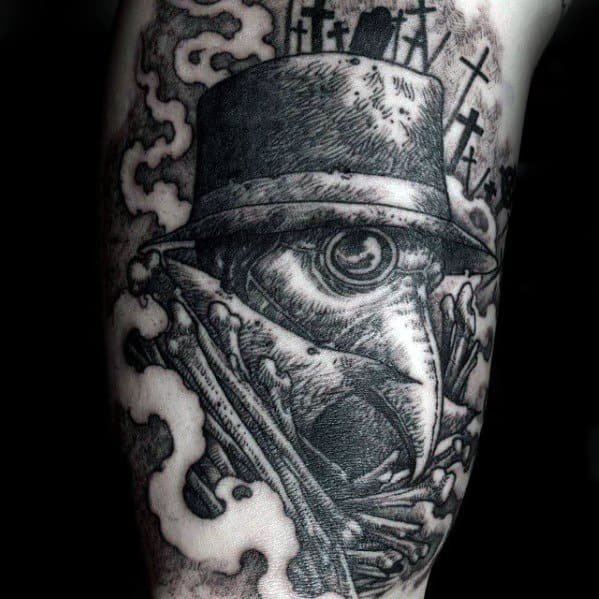
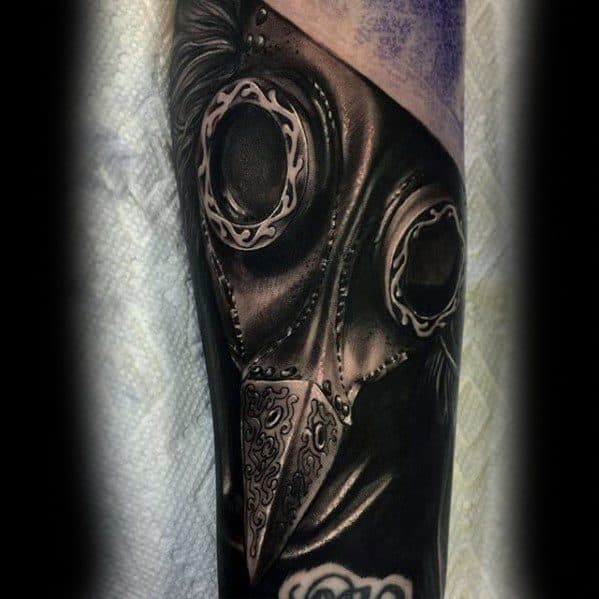
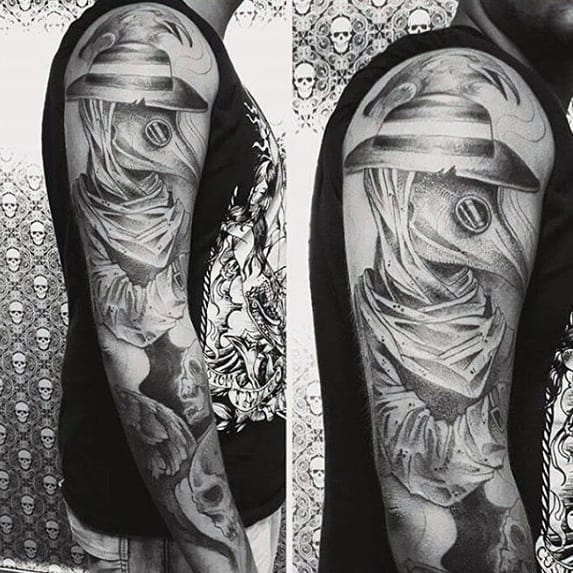
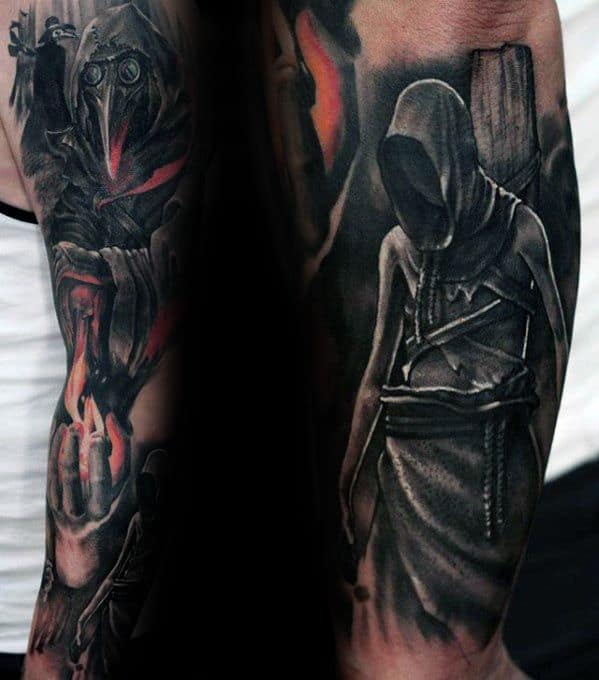
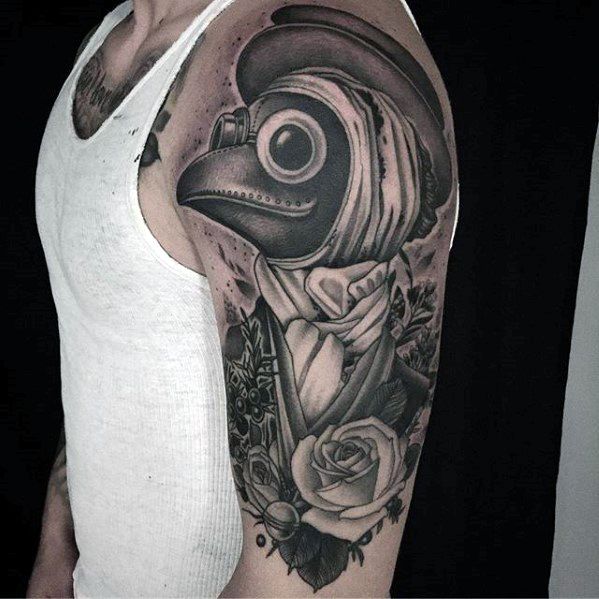
One of the more popular locations for tattoos, the upper arm remains a great spot for large designs. The prominent musculature of the biceps and triceps provides artists with a bigger canvas than that of the forearm, while the higher placement on the arm gives the wearer an added level of discretion regarding who can and cannot see their ink.
These plague doctor tattoos are applied in a variety of styles and use different approaches: from photo-realistic depictions that capture tiny details like texture and reflections to more illustrative pieces that use hatching to create different tones. These pieces demonstrate just how successful these images can be when applied to the upper arm.
5. New Wave Plague Doctor Tattoos
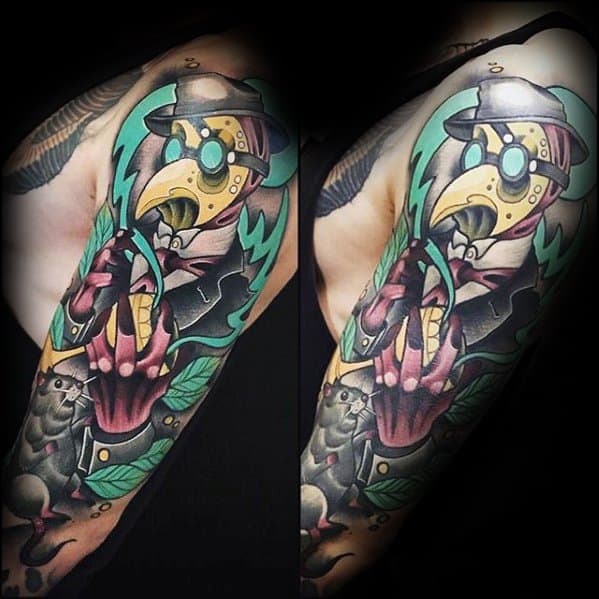
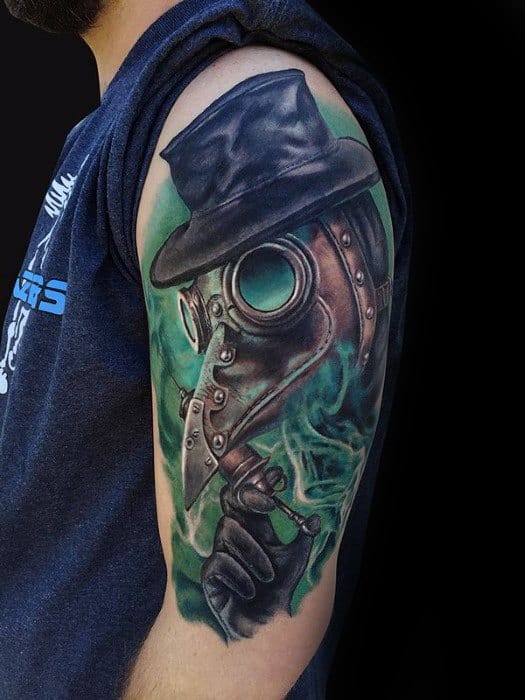
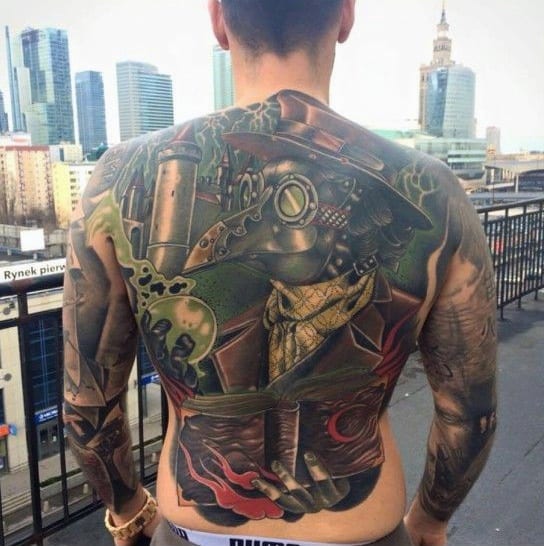
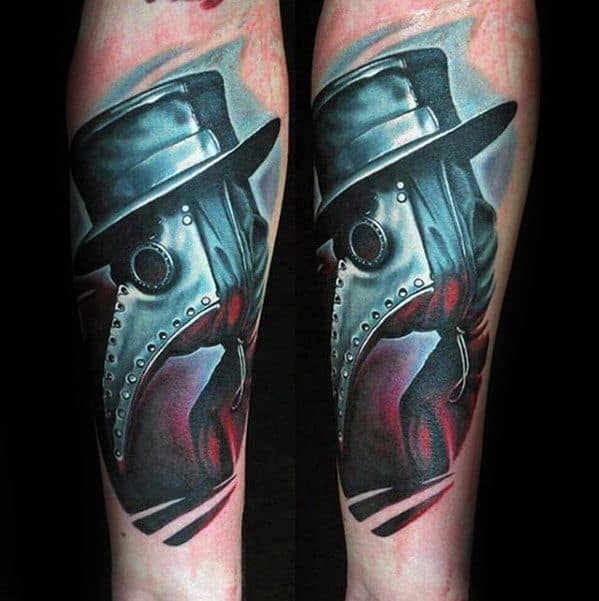
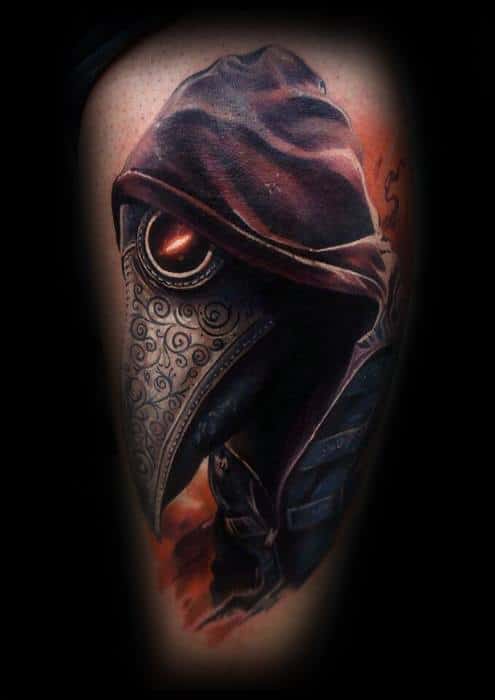
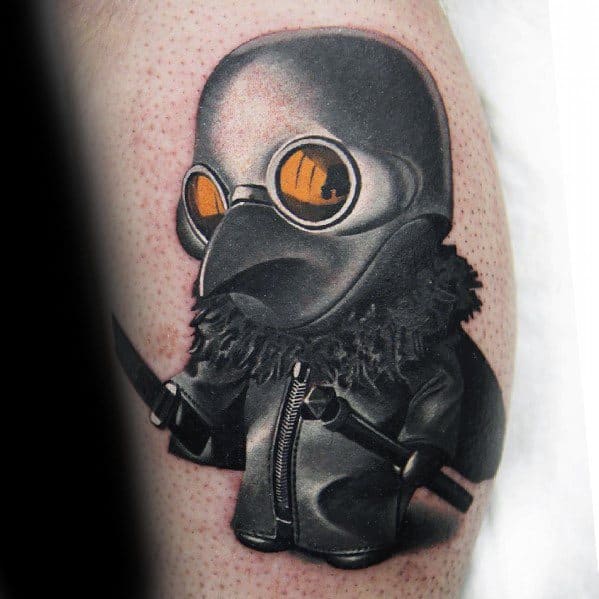
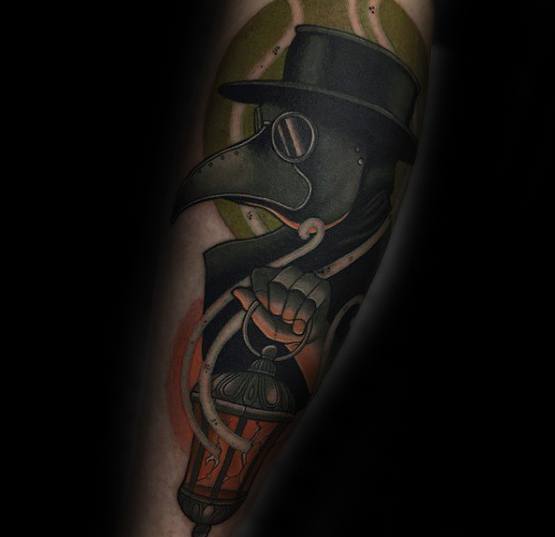
New wave, or new school, is a tattoo style characterized by vibrant colors and an approach that is reminiscent of animation. While many people choose a more subdued color palette that utilizes heavy black tones, these pieces demonstrate how successful plague doctor tattoos can be when given a full color makeover.
Several of these designs use a color scheme heavy on greens that are perfect for creating a sense of noxious air and completing these tattoos inspired by the pestilence and death of medieval plagues.
6. Mock Portraiture Plague Doctor Tattoos
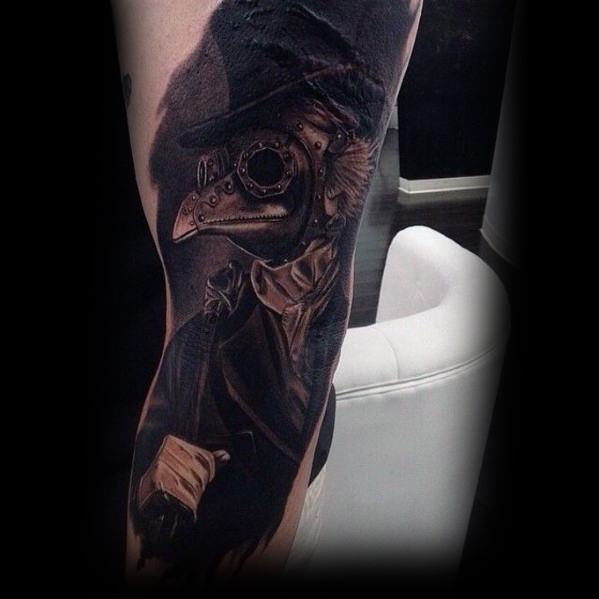
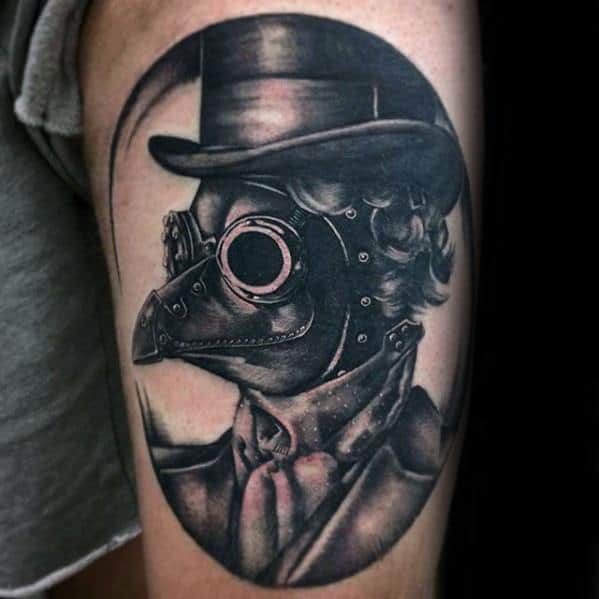
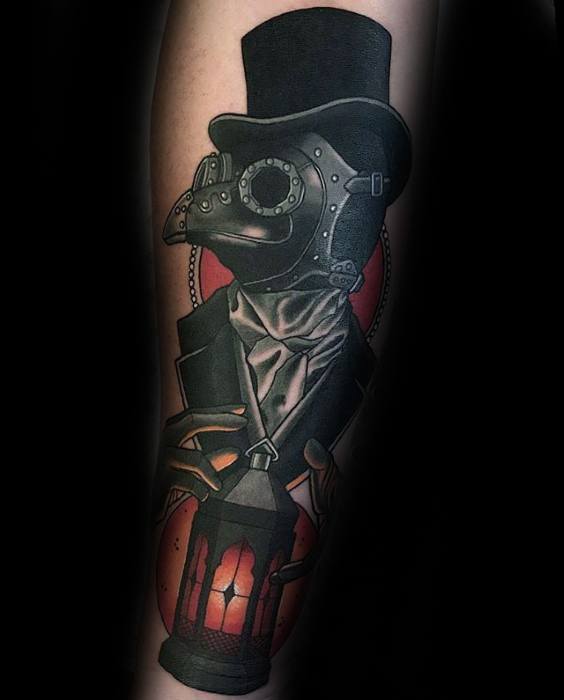
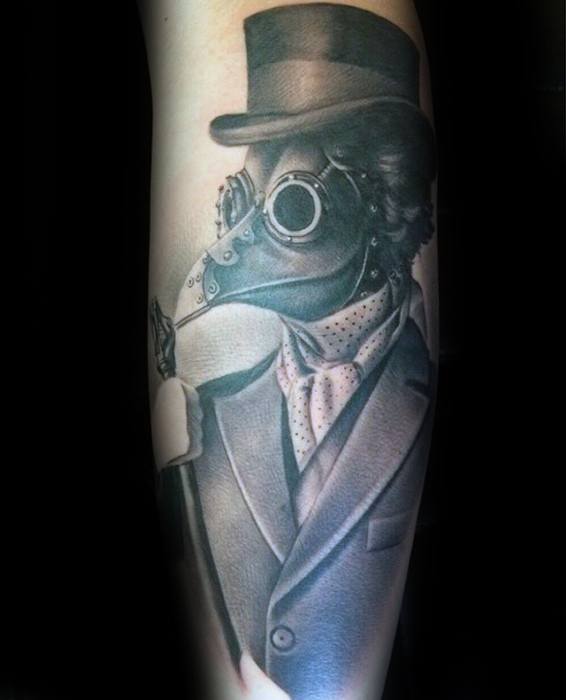
These are interesting tattoos that take a tongue-in-cheek approach to plague doctors by placing them in the stiff poses, starched colors and top hats that were common themes in turn of the century portraits. An interesting and playful juxtaposition is created when these elements of aristocratic fashion are applied to these morbid symbols of death and disease. While these pieces may not be everyone’s cup of tea, the skill and creativity involved is impressive.
7. Black and Gray Plague Doctor Tattoos
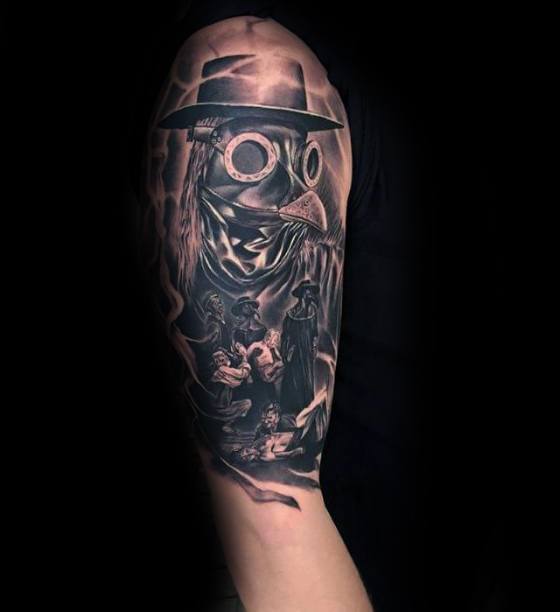
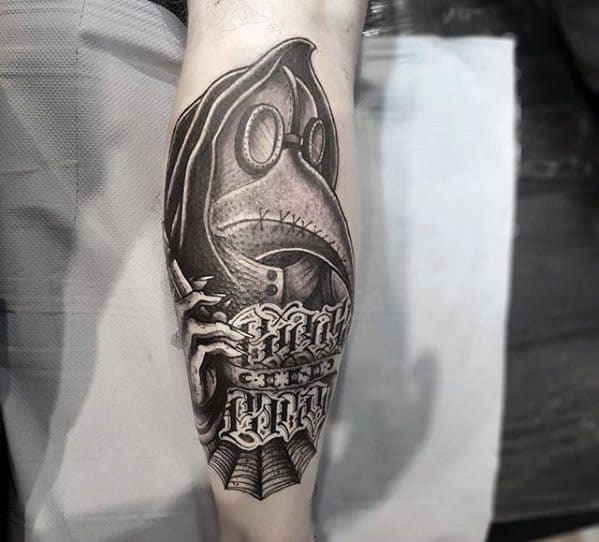
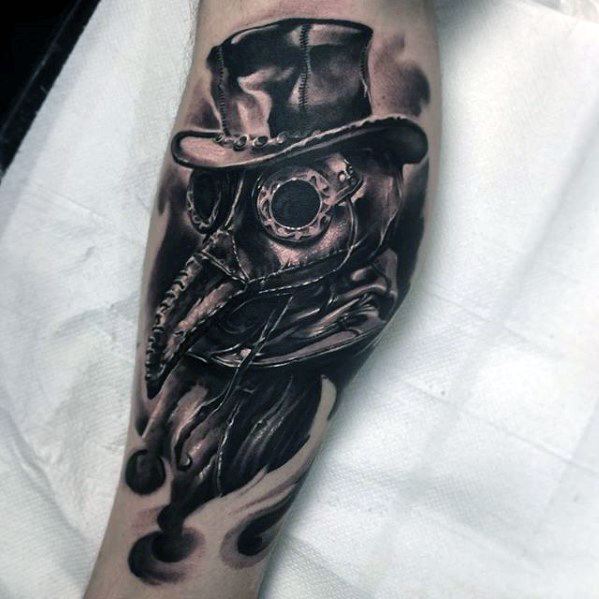
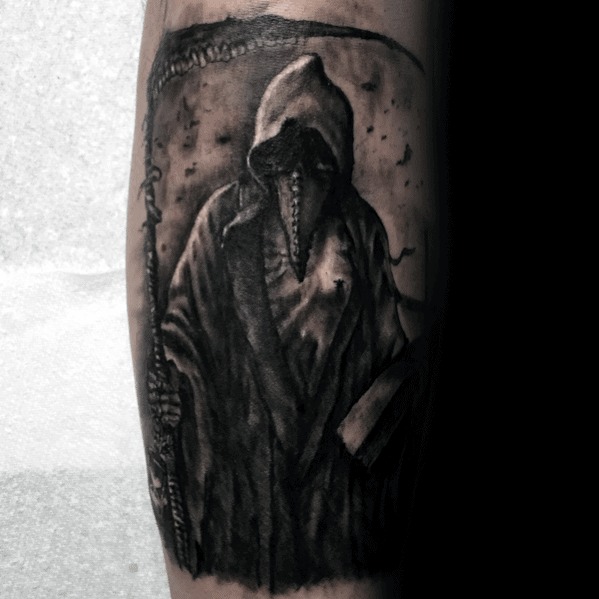
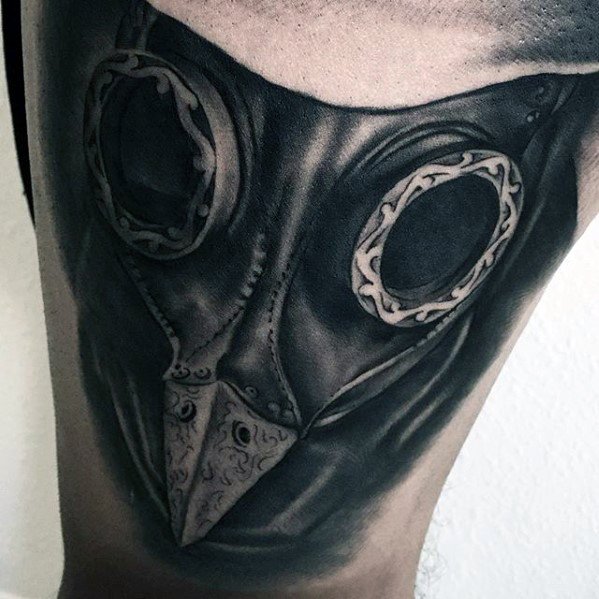
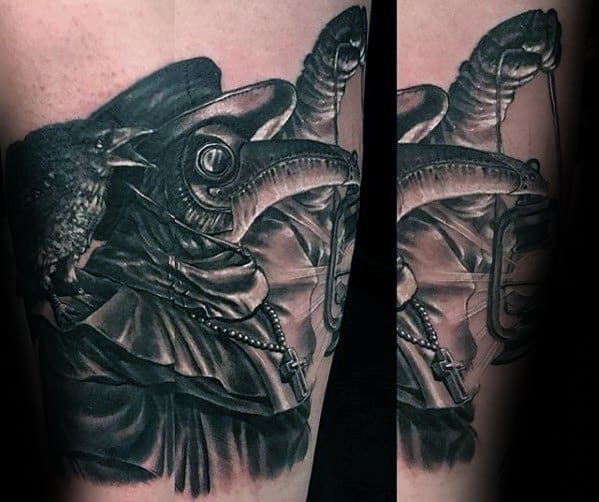
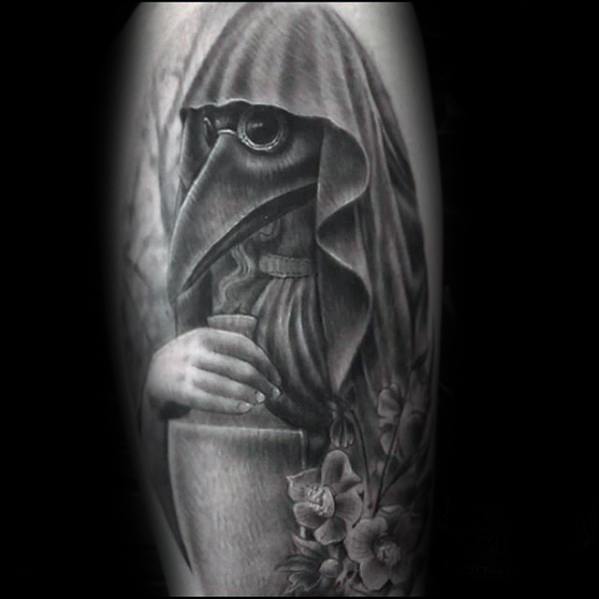
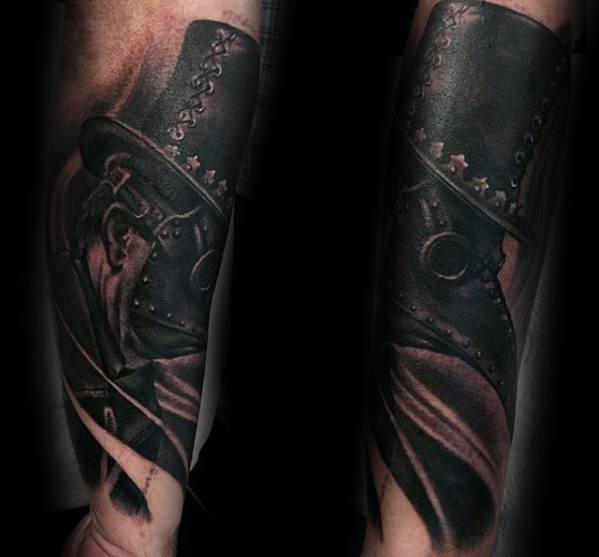
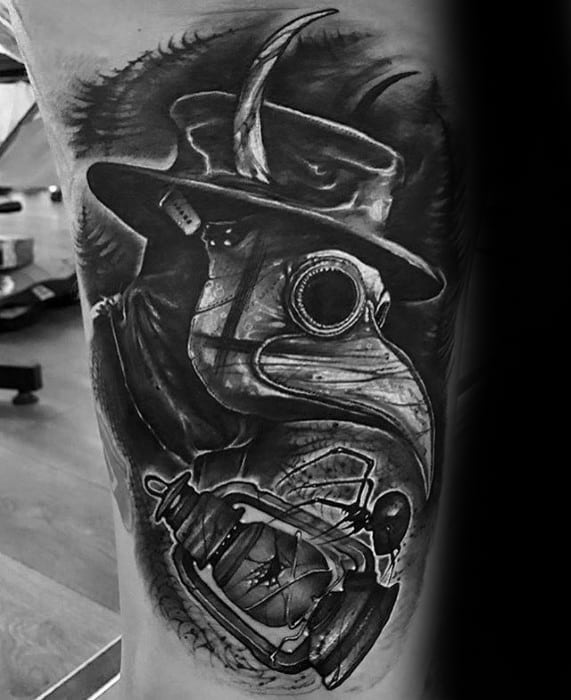
For some people, color tattoos just don’t fit with their personality, and thankfully for them, plague doctors are perfectly suited to a black and gray approach. These tattoos represent a variety of different styles, from black and gray portraiture and lettering that borders on the Chicano style, to photo-realistic pieces that don’t spare even the smallest of details. These pieces demonstrate what is possible with a talented artist, armed with black and gray ink.
8. Neo Traditional Plague Doctor Tattoos
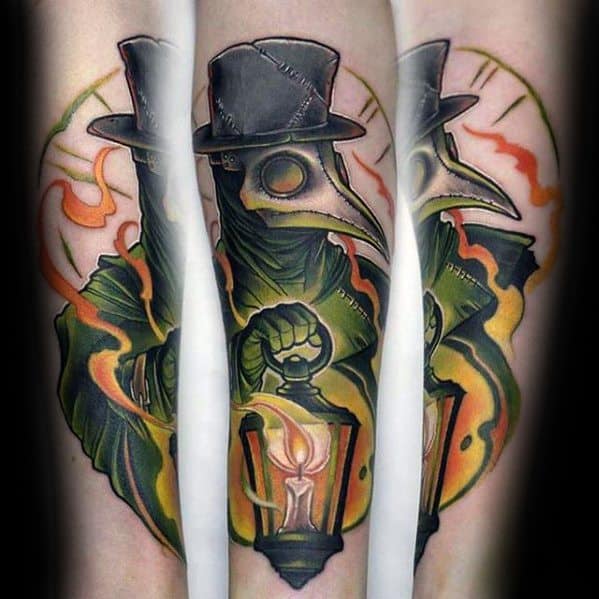
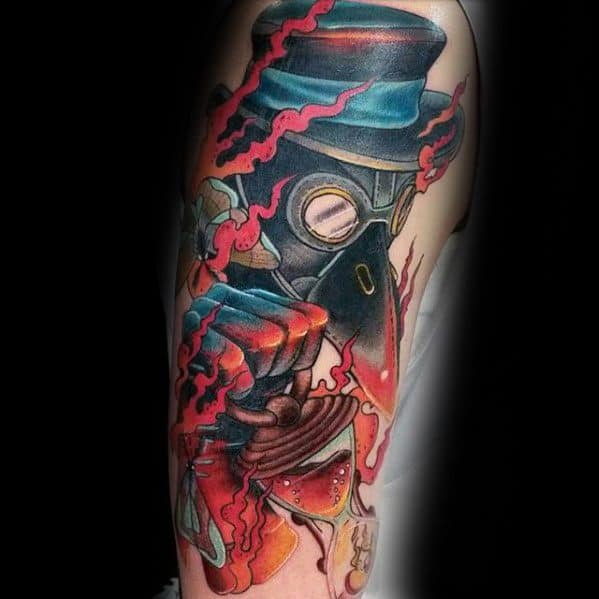
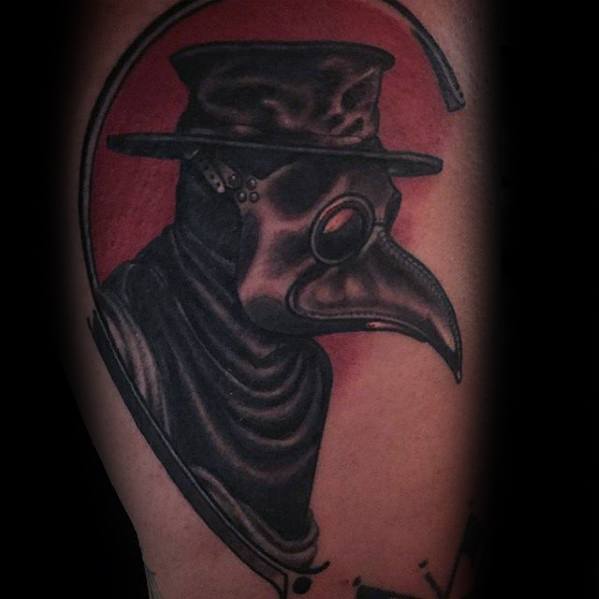
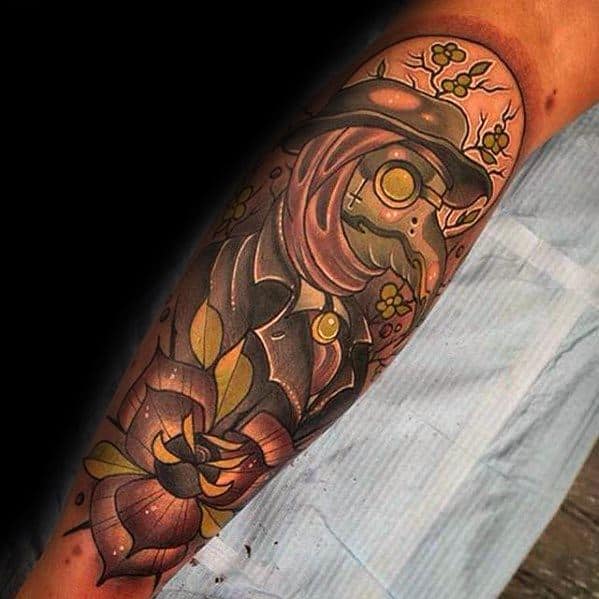
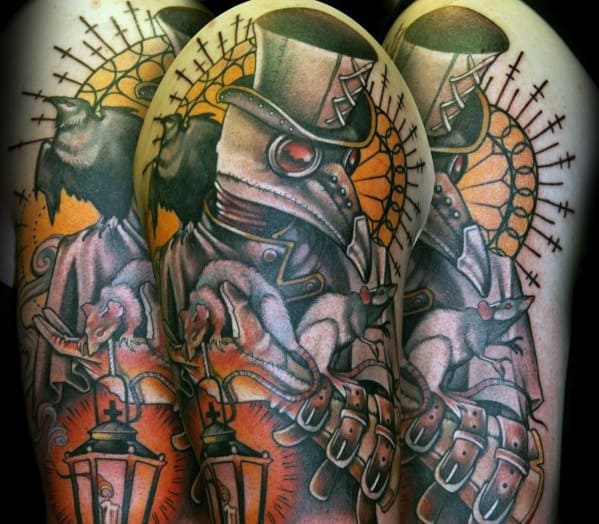
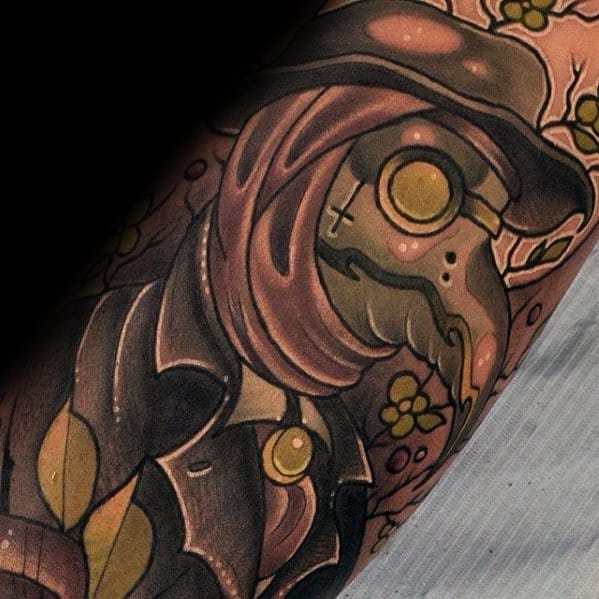
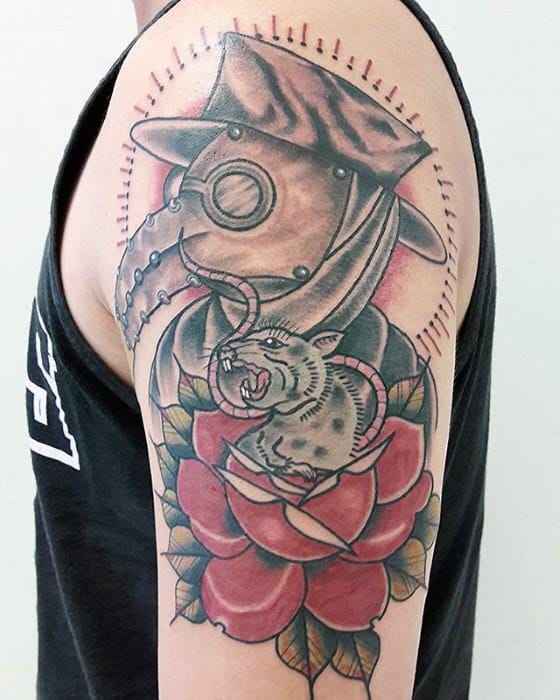
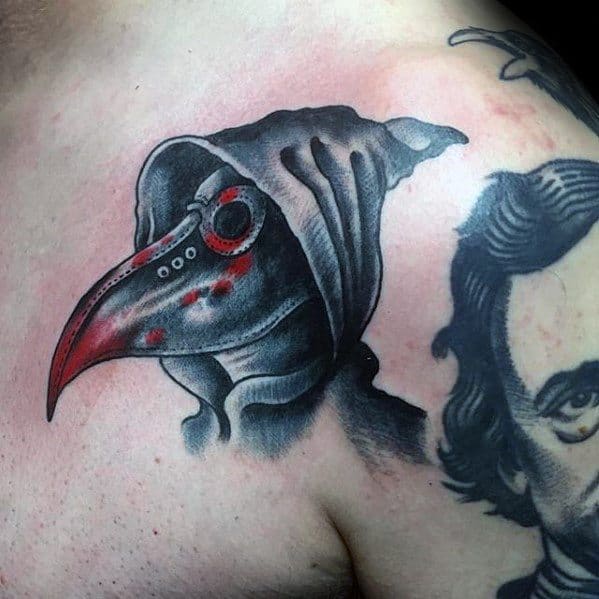
Neo-traditional utilizes the bold line work and vibrant colors of American traditional tattooing without any of the rules and limitations that the older style is known for. These tattoos are excellent examples of the style, with bright colors used to create a noxious green miasma as well as incorporating other design elements like rats, roses and lanterns. They are great examples of the style and the level of detail in these neo-traditional plague doctor tattoos is impressive.